The DOJ and Congress share responsibility for presidential accountability: Congress can impeach and remove a president, and the DOJ can pursue criminal charges after the president leaves office. The Supreme Court’s 2024 decision in Trump v. United States narrowed which actions may be criminally prosecuted and left open how far presidential immunity extends. Political control of Congress and the DOJ strongly influences whether either institution will act, and unresolved questions—like whether a president can pardon himself—remain unsettled.
Is the President Above the Law? Who Can Hold Them Accountable
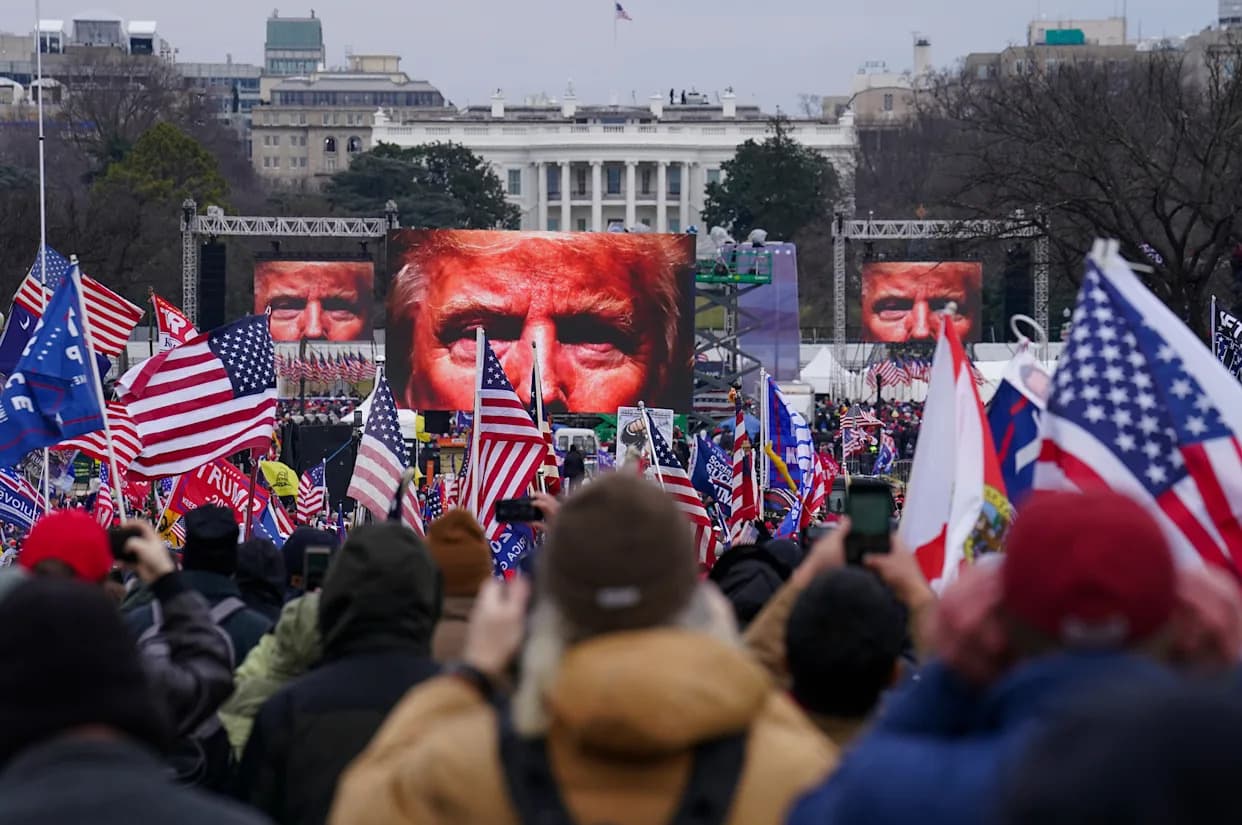
Supporters of President Donald Trump participate in a rally on Capitol Hill, immediately before some supporters stormed the U.S. Capitol on Jan. 6, 2021.(John Minchillo / AP Photo)
Bill —
The Department of Justice and Congress each play distinct but overlapping roles in holding a president accountable. The Justice Department’s long-standing internal policy—rooted in Office of Legal Counsel guidance—generally advises against indicting a sitting president, while Congress has the constitutional power to impeach and remove a president from office. That structure is meant to allow a sequence in which Congress acts first (impeachment and removal) and the DOJ may pursue criminal charges only after the individual leaves office.
How the Supreme Court’s 2024 Ruling Affects Accountability
The Supreme Court’s 2024 decision in Trump v. United States complicated that framework by narrowing the range of conduct for which a former president may be prosecuted. Crucially, the Court said a president can be impeached and removed for actions that might nonetheless be shielded from later criminal prosecution. The decision did not set clear, comprehensive boundaries for what criminal immunity covers; we will only learn more if and when another prosecution of a former president reaches the Court.
Chief Justice John Roberts: “The president is not above the law. But Congress may not criminalize the President’s conduct in carrying out the responsibilities of the Executive Branch under the Constitution.”
Justice Clarence Thomas (concurring): “The President’s immunity from prosecution for his official acts is the law.”
Justice Sonia Sotomayor (dissenting): “The President is now a king above the law.”
Politics, Personnel, and Practical Limits
Whether Congress or the DOJ takes action often depends as much on politics and personnel as on law. A Congress controlled by the president's political opponents is more likely to pursue impeachment, while a Justice Department led by allies of the president is unlikely to bring charges. That means changes after elections can alter whether accountability occurs — a reality that makes outcomes unpredictable even where legal authority exists.
Key Unresolved Legal Questions
Important legal questions remain unsettled, including the precise scope of criminal immunity for former presidents and whether a president can pardon himself. Those issues have not been definitively resolved by the Court and could resurface in future cases.
The bottom line: Accountability can come through impeachment by Congress and potential later prosecution by the DOJ, but the Supreme Court’s recent ruling and the prevailing political landscape substantially shape how, and whether, that accountability will be applied.
Please submit “Ask Jordan” questions through this form for a chance to have your question featured in a future edition of the Deadline: Legal newsletter.
The post appeared first on MS NOW.
Help us improve.