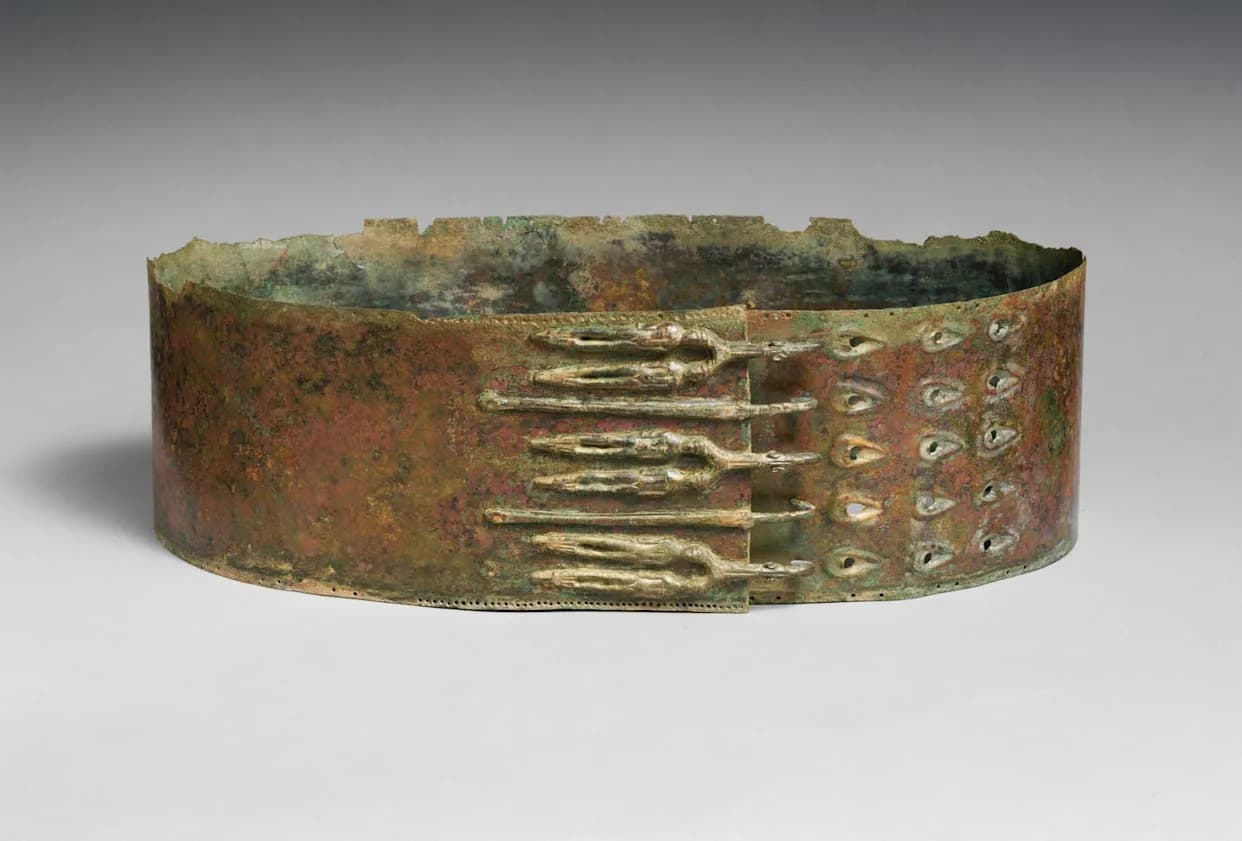
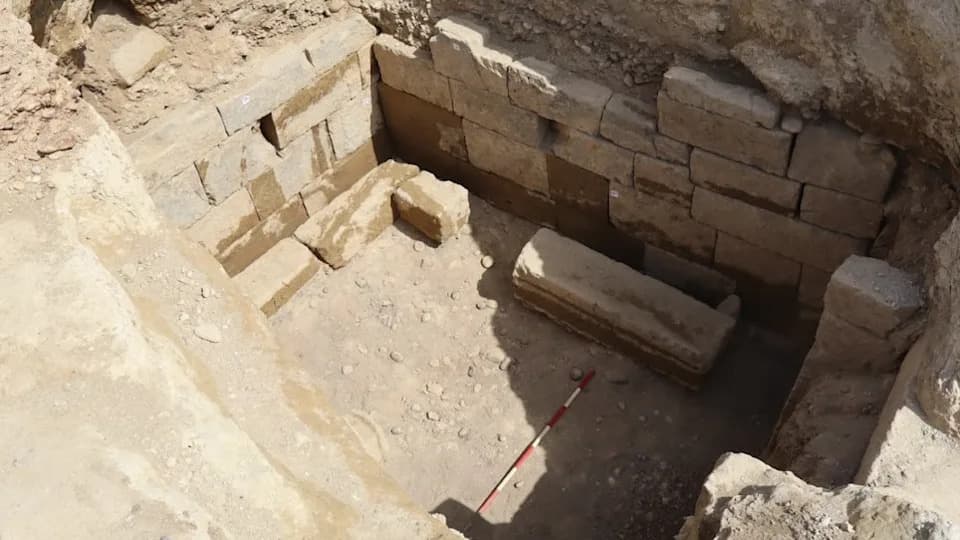
Archaeologists carrying out preventive excavations at the site of a former tobacco factory in Pontecagnano Faiano, southeast of Naples, have uncovered a 2,300-year-old Samnite necropolis containing 34 burials. The most striking discovery: two children aged about five to ten were buried wearing broad, decorated bronze belts normally associated with adult male warriors.
Context and Dating
The Superintendency of Archaeology, Fine Arts and Landscape of Salerno and Avellino dated the cemetery to the fourth and third centuries B.C.E., a period when the Samnites—an independent Italic people—contested Roman expansion in southern Campania. Pontecagnano has long been an archaeological hotspot, with more than 10,000 graves uncovered there since the 1960s spanning the ninth century B.C.E. through the Roman era.
What Was Found
In total, excavators recovered 34 individuals, including 15 children between the ages of two and ten. Most tombs were modest earthen pits capped with tiles arranged like little pitched roofs. Two tombs were built as travertine-block chambers and another contained a tufa (limestone) coffin, suggesting social differences among the buried families.
Grave Goods and Gendered Patterns
- Male burials commonly included weapons such as spearheads and javelin points and, in some cases, bronze belts.
- Female burials featured jewelry—rings and fibulae (brooches).
- Pottery was widespread across graves: libation bowls, two-handled drinking cups, handleless cups, and slender vessels for perfumed oils used in funerary anointing rites.
The Belt Mystery
Broad, decorated bronze belts are depicted in fourth-century B.C.E. imagery as part of a Samnite warrior's attire; they functioned both to hold a tunic and to signal martial status. Finding such belts on two small children—items clearly oversized for their bodies and typically reserved for adult men—raises several intriguing possibilities.
Possible interpretations include inherited or ascribed status (a family's claim to warrior rank), symbolic initiation, or the use of belts as protective talismans to safeguard the children in the afterlife.
This is not entirely unprecedented at Pontecagnano: earlier excavations recovered a 12-year-old boy interred with a similar belt, a discovery archaeologist Gina Tomay described as "of great significance" in 2021.
Why This Matters
Because the Samnites left few written records—the Oscan Tablet is one of the rare examples—archaeological cemeteries are a primary source for understanding their society. These burial patterns illuminate social roles, gender distinctions, and how communities expressed rank and identity. The presence of warrior accoutrements on children suggests Samnite concepts of status, childhood, and the relationship to warfare were potentially more complex than previously assumed.
Fieldwork and laboratory analyses are ongoing, and researchers caution that fuller interpretations will await final reports and publication of results. For now, the image of two small skeletons laid to rest with oversized bronze belts remains the most compelling takeaway from this necropolis.