At the partly damaged al-Shafii Mosque in Khan Younis, 256 Quran memorisers gathered during Ramadan to recite the entire holy book before sunset, turning the annual Safwat Al-Huffaz event into an act of communal resilience. Organisers and participants described the nearly two-year conflict as devastating, with more than 75,000 reported deaths and over 89% of mosques damaged. Despite displacement and scarce resources, makeshift prayer spaces and education centres such as the Dar al-Quran and Sunna Institute are working to preserve Quranic teaching and comfort communities.
256 Quran Memorisers Unite in Gaza: Recitation at Al-Shafii Mosque Becomes Act of Resilience
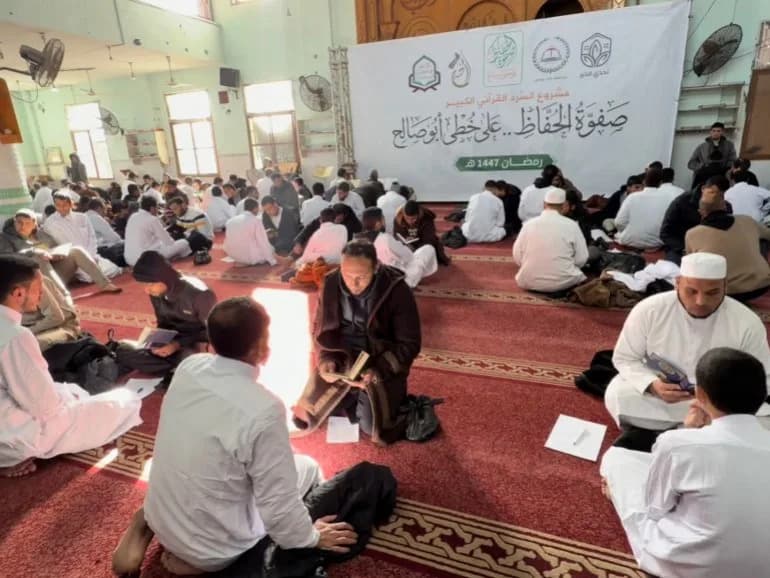
Crowd of Quran memorisers sitting in the al-Shafii Mosque hall reciting the Quran by heart [Courtesy of Dar al-Quran and Sunna Institute]
Dawn at the partly damaged al-Shafii Mosque in western Khan Younis marked the start of another Ramadan day as 256 Quran memorisers gathered to recite the entire holy book before sunset. The persistent hum of drones overhead contrasted with a solemn chorus of voices: verses of the Quran recited aloud, line by line, in a ritual of faith and endurance.
Safwat Al-Huffaz: A Collective Observance
The event, titled "Safwat Al-Huffaz" (The Elite of Quran Memorisers), brings together men and boys who have memorised the Quran to perform a continuous communal recitation. Some participants sat on chairs, others on the ground, while companions followed each verse carefully to preserve the accuracy and musicality of the recitation.
Faith Amid Destruction
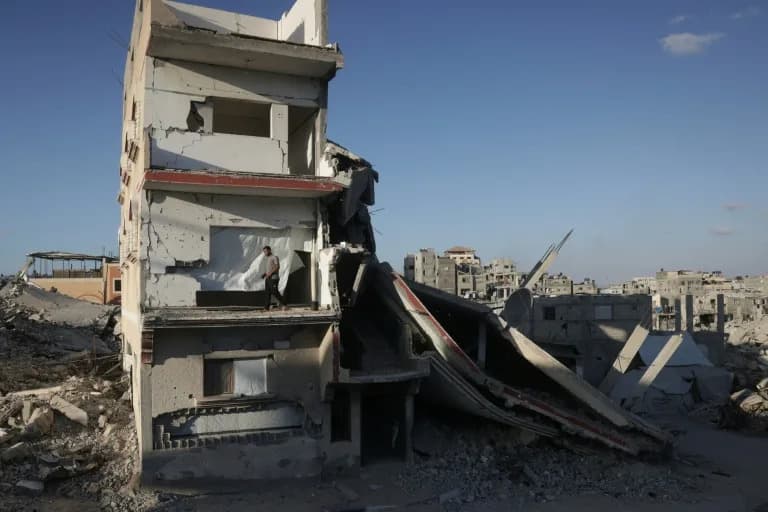
Organisers and participants described the conflict that has gripped Gaza for nearly two years as a "genocidal" war; they say it has claimed more than 75,000 Palestinian lives and severely damaged the territory's religious infrastructure. According to Gaza's Ministry of Endowments and Religious Affairs, more than 89% of mosques—over 1,000 buildings—have been destroyed or badly damaged by strikes. That destruction has forced many worshippers into displacement camps and makeshift shelters.
Despite those hardships, displaced communities have improvised places of worship made from wood, tarps or fabric scraps. In these fragile spaces, people continue to pray, study and recite the Quran, often sharing scarce copies of the holy book.
Personal Stories of Perseverance
Mohammad al-Qiranawi, 51, who has been blind since childhood, described the Quran as his constant companion. “The Quran has always been my best companion,” he said, explaining that he relied on his hearing to memorise and later taught students, including his own children.
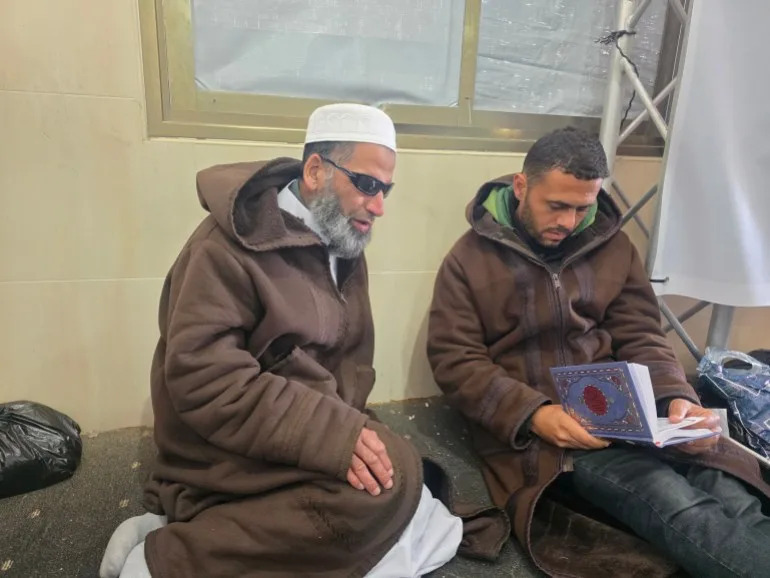
Mohammad al-Qiranawi, left, was able to memorise the Quran despite being blind [Ahmed al-Najjar/Al Jazeera]
“Despite these hardships, I held on to my companion. I kept reciting and joined sessions whenever I could to preserve the Quran in my heart.” — Mohammad al-Qiranawi
Abdul Rahman Abu Nimr, 13, finished nearly eight hours of revision at the gathering. He said he completed his memorisation while displaced and has lost family and friends in the fighting. “The Quran circles with other displaced students consoled me during these times,” he said.
Wasim Abu Sahloul, a former detainee released in a February 2025 prisoner exchange, recounted severe restrictions on religious practice while in custody but said prisoners still taught and memorised chapters together. After his release, an air strike killed nine members of his family; he dedicated the day’s recitation to their memory.
Institutions Working to Rebuild
The Dar al-Quran and Sunna Institute is among roughly 30 religious education centres heavily affected by the conflict. Director Ahmed al-Saafin said staff and materials were lost, but the institute has worked to reestablish teaching spaces. By the start of the October 2025 ceasefire they had opened 67 teaching spaces; within five months that work had expanded to reach some 300 children, women and men.
“With so many mosques destroyed, we could no longer run our programmes as we once did,” al-Saafin said. “But even in displacement camps, people gather to revise the Quran together. They cling to it as a path to healing from the trauma they have endured.”
What the Gathering Signifies
Organisers say the Safwat Al-Huffaz session is more than a religious observance: it is a statement of resilience. By completing the recitation before sunset, the memorisers reaffirmed spiritual continuity and community ties despite loss, displacement and ongoing uncertainty.
By preserving these traditions in makeshift settings, Gaza’s memorisers and institutions aim to pass Quranic knowledge to younger generations and to hold fast to a source of comfort and identity in the most difficult of circumstances.
Help us improve.