
California school districts warn a new $100,000 H‑1B sponsorship fee will worsen teacher shortages, especially in dual‑language immersion and special education. Districts filed more than 300 H‑1B requests for 2023–24 as international educators helped fill hard‑to‑staff roles, but many districts lack the budget to cover the surcharge. Lawsuits from states, unions and the U.S. Chamber of Commerce are pending, and districts await court outcomes before deciding who — if anyone — will absorb the cost.
New $100,000 H‑1B Sponsorship Fee Threatens California’s Foreign Teachers and Dual‑Language Programs

California school districts that rely on international educators to fill hard‑to‑staff roles are facing a steep new barrier: a presidentially mandated $100,000 sponsorship fee for new H‑1B visa hires. Announced in September by the federal administration and challenged in court by California and 19 other states on Dec. 12, the surcharge is layered on top of existing visa application costs that already range roughly from $9,500 to $18,800 depending on circumstances.
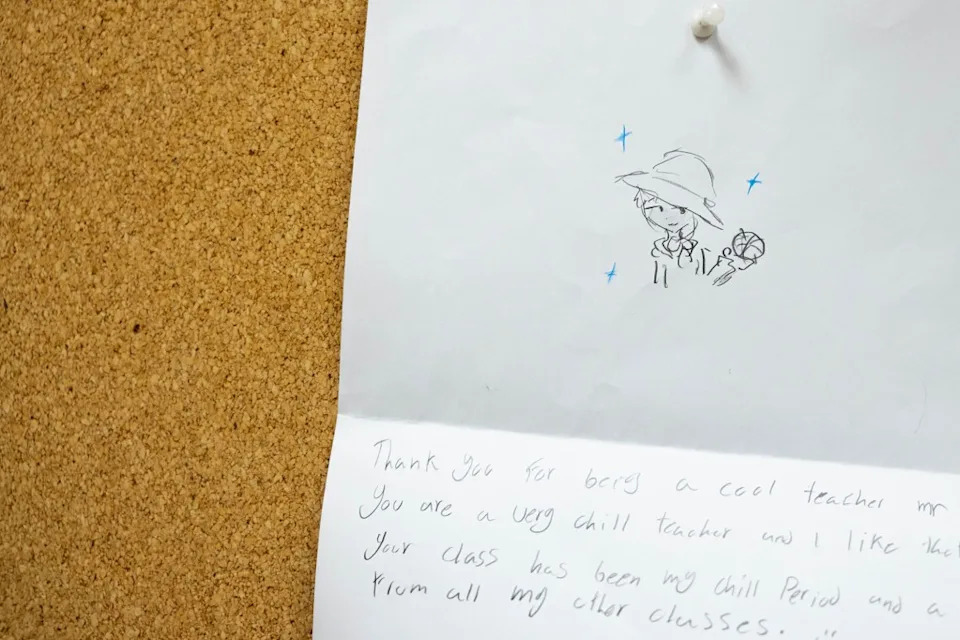
A piece of paper pinned to a corkboard with a thumb tack. The paper has a cartoon person drawn on one half, with a fold in the middle and a letter written on the bottom half.
Why Schools Use H‑1B Teachers
Although H‑1B recipients in California are most commonly employed in the tech sector, school leaders increasingly use the visa category to address an ongoing teacher shortage and to staff high‑need areas such as dual‑language immersion and special education. According to the California Department of Education, districts filed more than 300 H‑1B visa applications for the 2023–24 school year — about double the count from two years earlier — and administrators say these hires have been critical for multilingual instruction and special education services.

A close-up view of a row of books sitting on the shelf of a bookshelf, with the spines of two white books in focus, reading “Physical Education Athletic Fitness” on their spines.
Scale Of The Staffing Crisis
State data from the California Commission on Teacher Credentialing for 2023 show 46,982 K–12 positions were staffed by employees whose credentials did not match their assignments, and another 22,012 positions were vacant. Of the combined misassignments and vacancies, roughly 28% involved English language development and about 11.9% involved special education. Research from the Learning Policy Institute also shows districts sometimes hire teachers without full credentials rather than leave classrooms empty.
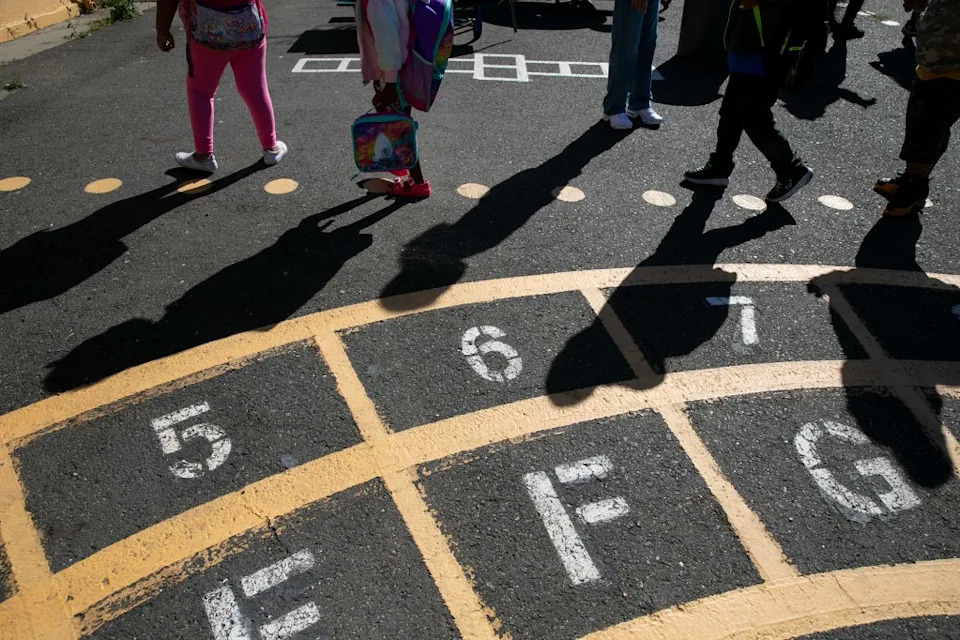
First-grade students walk to their classroom at the start of the day during summer session at Laurel Elementary in Oakland on June 11, 2021. Photo by Anne Wernikoff, CalMatters
Local District Examples
West Contra Costa Unified, east of San Francisco, reported 381 misassigned positions and 711 vacancies in 2023. To respond, the district recruited roughly 88 H‑1B teachers, mainly from the Philippines, Spain and Mexico, to teach primarily in dual‑language immersion and special education programs. Superintendent and human resources leaders say a $100,000 fee would be difficult or impossible for many districts to absorb.
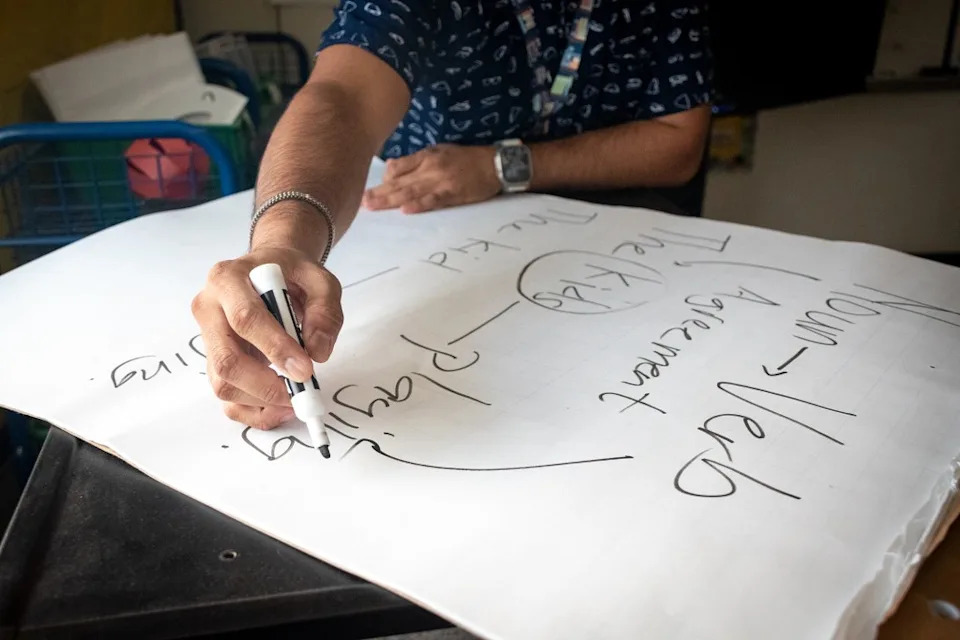
A.F., an elementary school teacher who works on a H-1B visa at West Contra Costa School District, writes out a list of grammar rules he will teach his students the next day. Photo by Alina Ta, CalMatters
Pasadena Unified — which filed around a dozen H‑1B sponsorship applications in 2024 and is confronting a roughly $27 million budget shortfall — announced it will require foreign hires to pay the new fee themselves and will stop covering other immigration supports such as legal or filing assistance.
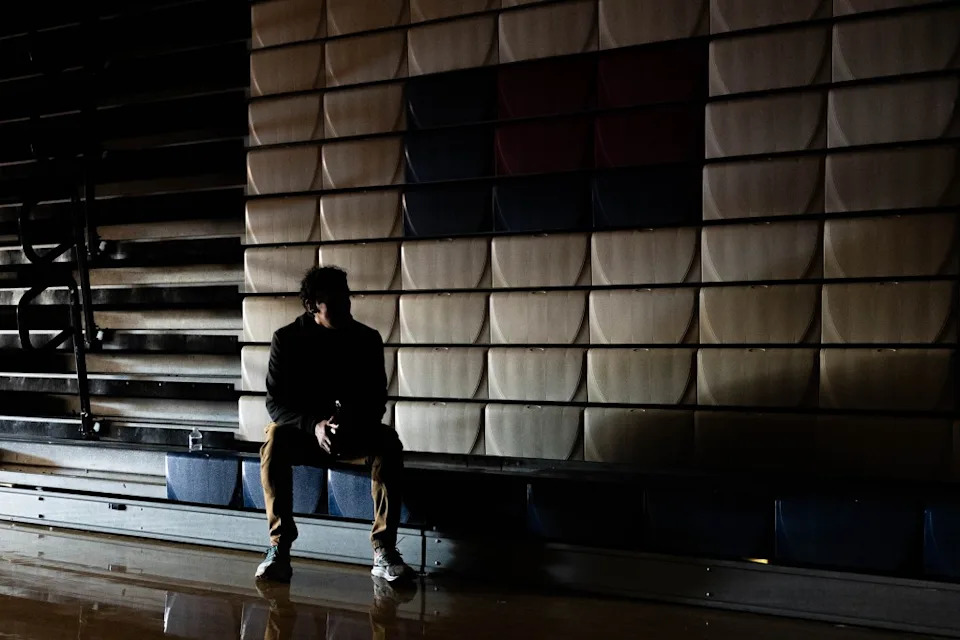
H.R., a physical education teacher at a high school in the West Contra Costa Unified School District, on Nov. 7, 2025. H.R., who immigrated to the U.S. two years ago, may have to return to his home country due to a new H-1B visa fee implemented by the Trump administration. Photo by Manuel Orbegozo for CalMatters
Human And Cultural Costs
Districts and families emphasize the cultural cost of losing international teachers. H‑1B educators are often central to dual‑language programs that give students lifelong bilingual skills and help families maintain linguistic and cultural ties. Parents like Kelleen Peckham say immersion programs made the difference when choosing a school for their children.
“With our shortages in special ed, they were a good fit for our district. And so, therefore, we kept that pipeline open and brought teachers here from the Philippines to support our students and our students with special needs,”
Teachers’ Perspectives
Some international teachers say the fee and the broader political climate have undermined their sense of welcome. An elementary teacher identified only as A.F. said colleagues worry future policy changes could force them to leave the U.S.; another teacher, H.R., plans to return to Mexico when his current J‑1 permit expires in June 2026 because his district is unlikely to pay H‑1B fees.
Legal Challenges And Next Steps
Within weeks of the fee announcement, a coalition of international worker groups, unions and religious organizations filed suit against the administration, arguing the surcharge will impede staffing across education, health care and ministry services. California and 19 other states also sued, and the U.S. Chamber of Commerce has launched a separate challenge claiming the proclamation conflicts with the Immigration and Nationality Act. No hearings have been scheduled yet.
For now, many districts are left weighing whether they can continue recruiting internationally, who — if anyone — will pay the new sponsorship cost, and how to sustain programs that serve English learners and students with disabilities.


