
Admiral Alvin Holsey, who led U.S. Southern Command beginning in November 2024, abruptly retired after announcing his decision in October as maritime operations in the Caribbean intensified. Reporting indicates Holsey raised concerns about strikes on suspected drug-smuggling vessels, which reportedly strained his relationship with Pentagon leadership and led to pressure to step down. Air Force Lt. Gen. Evan Pettus has succeeded Holsey as SOUTHCOM commander while Congress weighs a war powers resolution amid more than 20 strikes since September.
SOUTHCOM Commander Admiral Alvin Holsey Abruptly Retires Amid Scrutiny Over Caribbean Strike Campaign

Department of War Secretary Pete Hegseth visits the Panama Canal on April 08, 2025, in Panama City, Panama. Panama Canal Administrator Dr. Ricaurte Vasquez Morales welcomes Pete Hegseth.
The head of U.S. Southern Command (SOUTHCOM), Navy Adm. Alvin Holsey, unexpectedly retired on Friday amid rising scrutiny of U.S. strikes on suspected drug-smuggling vessels in Caribbean waters. Holsey, who assumed command in November 2024, announced his decision to leave in October as operations in the region intensified.
Background
The Trump administration designated several cartel organizations, including Tren de Aragua and the Sinaloa cartel, as foreign terrorist organizations in February. Under Holsey’s tenure, Washington increased naval assets in the region, including the unprecedented deployment of the aircraft carrier USS Gerald R. Ford as part of an expanded counter-narcotics effort.
Departure and Succession
Holsey, a 1988 naval commission who flew SH-2F Seasprite and SH-60B Seahawk helicopters earlier in his career, did not offer a public explanation for stepping down. His prior assignments included serving as SOUTHCOM deputy commander, deputy chief of Naval Personnel, and commander of the Carl Vinson carrier strike group.
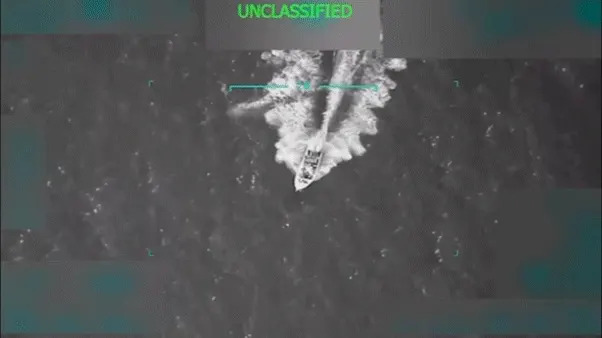
Venezuelan vessel destroyed during U.S. military strike off of Venezuela Sept. 2, 2025.
Air Force Lt. Gen. Evan Pettus, formerly SOUTHCOM’s military deputy commander, succeeded Holsey on Friday. Pettus is a combat-experienced pilot with more than 2,700 flight hours in the F-15E Strike Eagle and the A-10, and has flown missions in Operation Iraqi Freedom and Operation Inherent Resolve.
Internal Tensions
According to reporting by The New York Times, Holsey raised concerns about the maritime strikes — objections that reportedly provoked strong reactions from Pentagon leadership. The Times reported that Secretary Pete Hegseth criticized Holsey and later pressured him to step down. The Pentagon pointed media inquiries to Hegseth’s October social media post thanking Holsey for his service.
"The Department thanks Admiral Holsey for his decades of service to our country, and we wish him and his family continued success and fulfillment in the years ahead," Hegseth wrote.
Congressional Oversight and Legal Questions
The strikes have drawn scrutiny from lawmakers across the political spectrum. Critics have questioned the legal authority for some operations — a concern amplified after reporting suggested a second strike was carried out on a vessel in September after survivors remained following an initial attack.
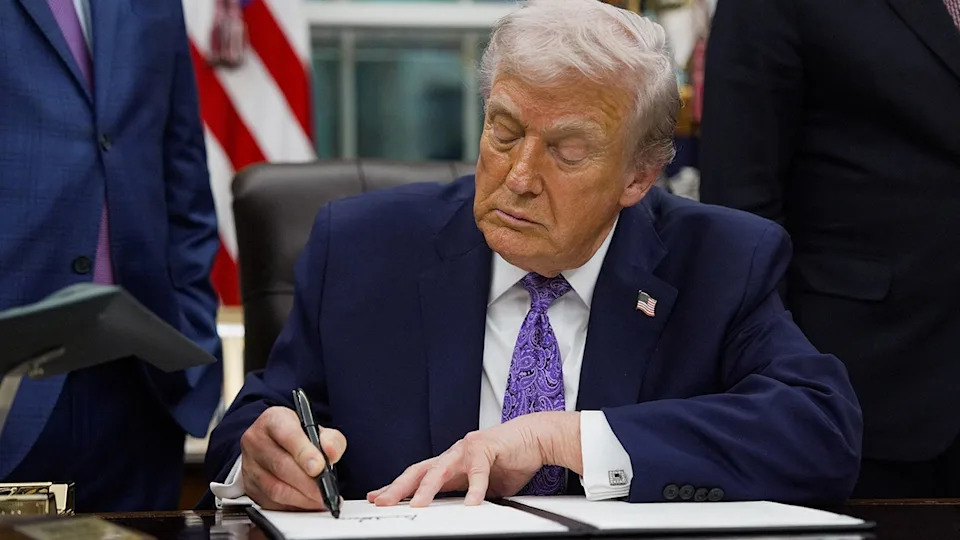
U.S. President Donald Trump signs an executive order on AI, in the Oval Office at the White House in Washington, D.C., U.S. Dec. 11, 2025.
On Dec. 3, Senate Minority Leader Chuck Schumer (D-N.Y.) and Sens. Tim Kaine (D-Va.), Adam Schiff (D-Calif.) and Rand Paul (R-Ky.) introduced a war powers resolution intended to bar the president from using U.S. armed forces to engage in hostilities within or against Venezuela.
Regional Operations
Since September, the administration has conducted more than 20 strikes in Latin American waters targeting alleged drug smugglers as part of an effort to curb the flow of illegal narcotics into the United States. Officials have also indicated that land-based strikes could follow, and U.S. forces recently seized an oil tanker off the coast of Venezuela.
"We’re knocking out drug boats right now at a level that we haven’t seen," President Donald Trump said on Dec. 3. "Very soon we’re going to start doing it on land too."
Holsey’s abrupt departure less than a year into his SOUTHCOM assignment is unusual for a combatant-command leader and has intensified attention on the strategic, legal and interpersonal dynamics shaping U.S. operations in the hemisphere.


