
The article explores how WNBA players plan and pursue second careers — often out of financial necessity. It profiles Sue Wicks, who runs an oyster farm; Devereaux Peters, who moved into affordable housing development; and Marissa Coleman, an entrepreneur and sports-industry executive. The piece situates these stories within ongoing labor talks over pay and revenue sharing and highlights programs designed to ease players’ transitions.
From Hoops to Oysters: How WNBA Stars Are Building New Careers After the Game

Retired WNBA star and Hall of Famer Sue Wicks rides her boat to check on her oysters in Moriches Bay in New York, Thursday, Nov. 20, 2025. (AP Photo/Yuki Iwamura)(ASSOCIATED PRESS)
After a week of high winds, the water in New York’s East Moriches Bay finally calms enough for Sue Wicks to steer her boat and check on the oysters she tends. Dozens of cages jut at odd angles from their lines; a few have broken free and drift away.
The former WNBA player and Hall of Famer launched an aquaculture business at age 50. Wicks, now 59, describes the work as both nerve-racking and deeply rewarding — and she often compares running a farm to the emotional roller coaster of professional basketball.
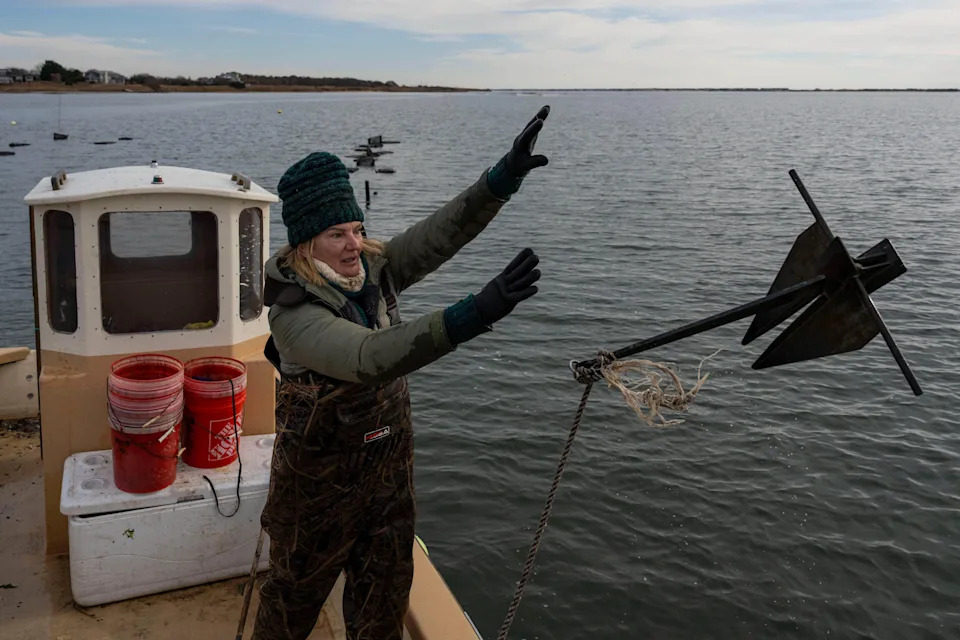
Retired WNBA star and Hall of Famer Sue Wicks throws an anchor from her boat in Moriches Bay in New York, Thursday, Nov. 20, 2025. (AP Photo/Yuki Iwamura)(ASSOCIATED PRESS)
“Some days you’re like, ‘Why am I doing this?’ You’re injured, you’re hurt, you are losing, things are going bad. And then the next day you go back and do it again because you love it,” she said.
Personal Second Acts
Since retiring from the WNBA in 2002, Wicks has worked as a commentator, a college coach and at a fitness start-up. She says she feels fortunate to have found work that "works for my soul," but her story also highlights a common reality: even outstanding professional careers in the WNBA often do not provide the lifetime financial security to stop working entirely.
Devereaux Peters, a former Minnesota Lynx forward, shifted into real estate development in 2019 and now leads an affordable housing project in South Bend, Indiana, near her alma mater Notre Dame. Peters calls the project “the hardest thing I’ve ever done,” citing bureaucracy, politics and logistics — but adds that helping people who genuinely need housing has made it worthwhile. Her affordable apartment building is scheduled to break ground next month and aims to open in August 2027.
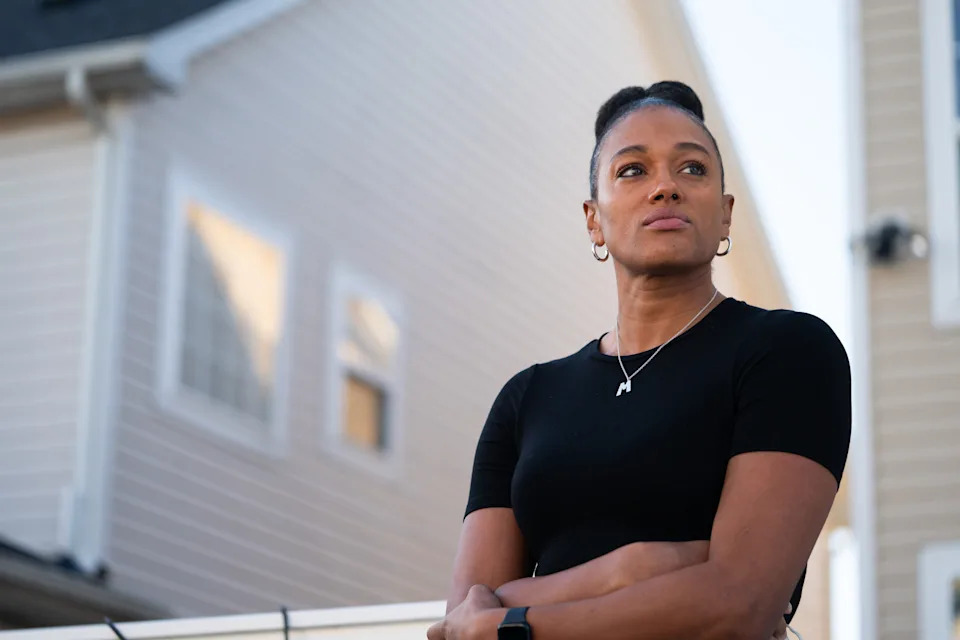
Retired WNBA All-Star Marissa Coleman poses for a photo in Mitchellville, Md., Tuesday, Dec. 9, 2025. (AP Photo/Allison Robbert)(ASSOCIATED PRESS)
Marissa Coleman, the No. 2 overall pick in 2009 and a 2015 WNBA All-Star, has pursued entrepreneurship and sports-industry roles. Alongside former teammate Alana Beard, Coleman franchised a Mellow Mushroom in Roanoke, Virginia. She also chaired a campaign to legalize sports betting in Maryland and now leads strategy and growth for the VIP team at fantasy sports platform Underdog, focusing on expanding access for women and people of color.
The Financial Reality
While the WNBA's revenue from sponsors and ticket sales has grown, many players still face financial uncertainty when their playing days end. Risa Isard, director of research and insights at women’s sports marketing platform Parity, summarized the situation: “The choice is what they do as their second career, not whether they have a second career.”

Former Minnesota Lynx forward Devereaux Peters, transitioned from basketball to real estate development, poses for a photo at her office in Chicago, Monday, Nov. 24, 2025. (AP Photo/Erin Hooley)(ASSOCIATED PRESS)
The pay gap between the WNBA and NBA is stark: the average NBA salary is about $11.9 million, according to data reviewed by The Associated Press, compared with the WNBA's reported average player salary of roughly $120,000. Analysts note differences in league size, profit margins and media contracts affect those figures, but the disparity helps explain why many WNBA players pursue new careers out of necessity rather than choice.
Labor Talks And Support Programs
The broader context includes ongoing labor negotiations over player compensation and revenue sharing. As the WNBA grows, players are pressing for a larger share of league revenue. Tensions in talks between the league and the players’ union have been high; both sides agreed on Nov. 30 to extend the current collective bargaining agreement to Jan. 9 while negotiations continue.
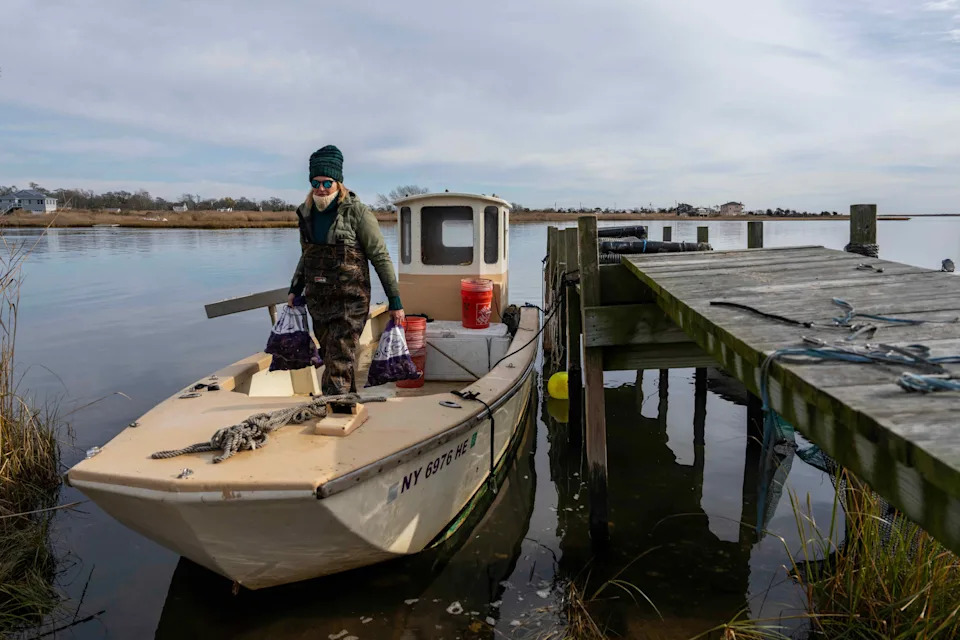
Retired WNBA star and Hall of Famer Sue Wicks carries bags of oysters off her boat in Moriches Bay in New York, Thursday, Nov. 20, 2025. (AP Photo/Yuki Iwamura)(ASSOCIATED PRESS)
To help ease transitions, the league and the players’ union have expanded programs such as tuition assistance, added internship opportunities in licensee contracts, and partnered with universities. Jayne Appel Marinelli, senior vice president of player relations for the union and a former WNBA center, emphasizes that players sometimes need help recognizing how transferable their on-court skills are to other professions. The union also offers a semester-long opportunity with Harvard Business School, which Coleman completed.
Lessons From Transitioning
Peters says one of the hardest lessons was learning that effort in a new career doesn't always yield quick, predictable results as it might on the court. She also recalls a sudden shift in household finances after leaving basketball — one that required swift budgeting and lifestyle changes. Many players say more guidance on financial planning and career readiness would help.
Wicks remembers when the league began in 1997: “There was no stability in women's sports,” she said. At the time, simply getting a paycheck and keeping the lights on felt like a victory. Now, nearly three decades later, she hopes players will be compensated in ways that give them the freedom to choose their next chapters.
Why It Matters: The WNBA’s growth has created momentum — and debate — about how that prosperity should be shared. For many players, the answer will determine whether a second career is a passion project or a financial necessity.
AP Sports Writers Doug Feinberg in New York and Tim Reynolds in Miami contributed to this report.
The Associated Press’ coverage of women in the workforce and state government receives funding from Pivotal Ventures. AP retains sole editorial responsibility for the content. For AP’s policies on philanthropy and a list of supporters and funded coverage areas, visit AP.org.


