
Ales Bialiatski, the 63-year-old Nobel Peace Prize laureate, described his return to freedom in Vilnius after more than four years in Belarusian prisons. He recounted limited medical care — including routine tooth extractions for dental problems — solitary confinement and arbitrary punishments. Bialiatski was among 123 detainees released in a transfer tied to the U.S. lifting potash-related sanctions, but he warned that more than a thousand political prisoners remain and vowed to continue campaigning for their release.
Nobel Laureate Ales Bialiatski Recounts Harrowing Belarus Prison Ordeal After Sudden Release

Nobel Peace Prize laureate Ales Bialiatski, one of the Belarusian prisoners released on Saturday, speaks during an interview with the Associated Press in Vilnius, Lithuania, on Sunday, Dec. 14, 2025. (AP Photo/Mindaugas Kulbis)(ASSOCIATED PRESS)
Vilnius, Lithuania — Nobel Peace Prize laureate Ales Bialiatski arrived in Vilnius on Sunday for an interview with The Associated Press, coming straight from a dentist appointment as he adjusts to life after more than four years in Belarusian prisons.
The 63-year-old rights defender was abruptly released on Saturday after serving part of a 10-year sentence. In his first extended interview since his release, Bialiatski described harsh conditions inside the penal colony and the limited medical care available to inmates.
Prison Conditions and Treatment
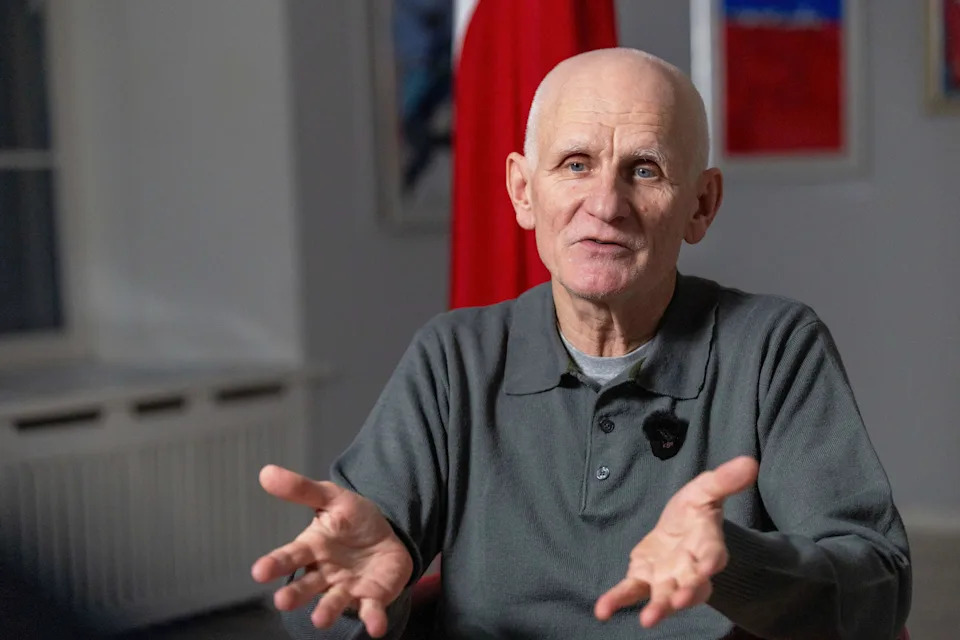
Nobel Peace Prize laureate Ales Bialiatski, one of the Belarusian prisoners released on Saturday, gestures during an interview with the Associated Press in Vilnius, Lithuania, on Sunday, Dec. 14, 2025. (AP Photo/Mindaugas Kulbis)(ASSOCIATED PRESS)
Bialiatski said medical assistance at the penal colony was minimal. 'For dental problems there was effectively one remedy — pulling teeth,' he told reporters. He described experiencing routine hardships common to political detainees in Belarus: prolonged solitary confinement, arbitrary punishments for minor infractions, restricted contact with family and rare opportunities to receive letters.
'We can definitely talk about inhumane treatment, about creating conditions that violate your integrity and some kind of human dignity,' he said.
Bialiatski was held at a penal colony in Gorki, a facility that has been accused of beatings and forced labor. He said he personally was not beaten in custody and suggested his international profile as a Nobel laureate may have offered some protection from physical abuse.
The Release
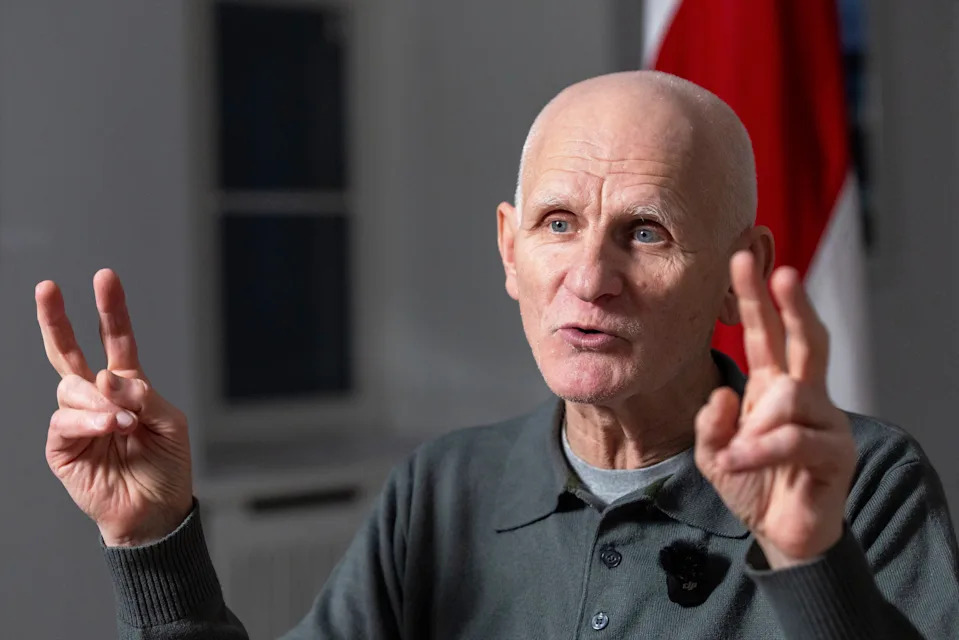
Nobel Peace Prize laureate Ales Bialiatski, one of the Belarusian prisoners released on Saturday, gestures during an interview with the Associated Press in Vilnius, Lithuania, on Sunday, Dec. 14, 2025. (AP Photo/Mindaugas Kulbis)(ASSOCIATED PRESS)
He recounted the moment of his release: in the early hours of Saturday he was told to pack while inside an overcrowded cell at Penal Colony No. 9 in eastern Belarus. Blindfolded and transported without explanation, he realized only occasionally that the convoy was heading west. In Vilnius he embraced his wife — their first reunion in years.
Bialiatski was among 123 detainees released in a transfer that coincided with the United States lifting sanctions tied to Belarus's potash sector — a critical part of the country's economy. Since July 2024, Belarus has freed hundreds of prisoners as part of its attempts to mend ties with Western countries.
Background And Ongoing Campaign
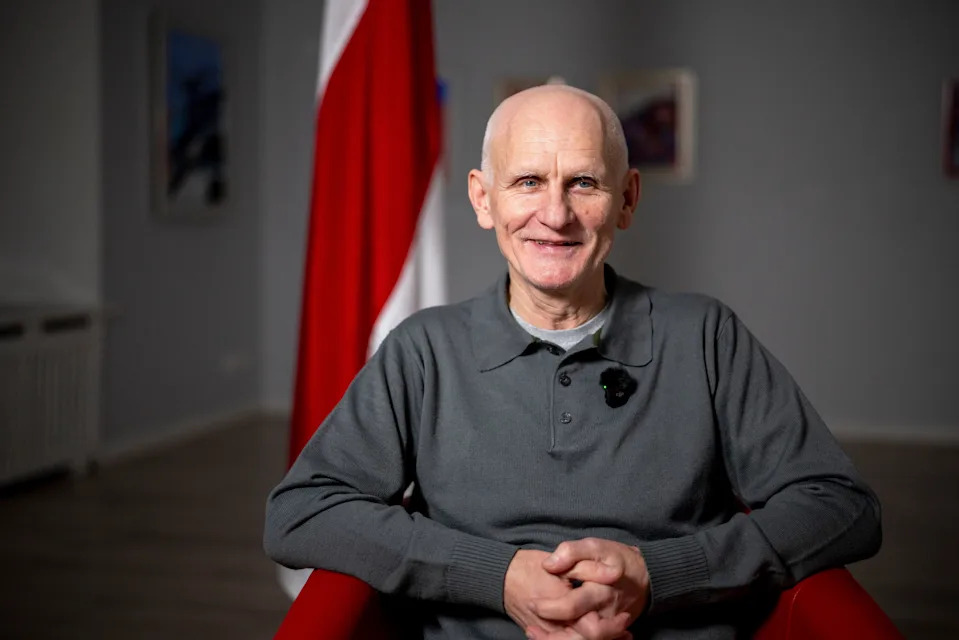
Nobel Peace Prize laureate Ales Bialiatski, one of the Belarusian prisoners released on Saturday, smiles during an interview with the Associated Press in Vilnius, Lithuania, on Sunday, Dec. 14, 2025. (AP Photo/Mindaugas Kulbis)(ASSOCIATED PRESS)
Ales Bialiatski was awarded the Nobel Peace Prize in 2022 along with Russia's Memorial and Ukraine's Center for Civil Liberties. The prize was announced while he was jailed awaiting trial; he was later convicted on charges of smuggling and financing actions that violated public order — charges widely condemned as politically motivated — and given a 10-year sentence.
He urged continued attention to those who remain behind bars. According to Viasna, the human rights organization he founded, 1,110 political prisoners remain in Belarus, including Viasna colleagues Marfa Rabkova and Valiantsin Stefanovic.
'Despite the fact that prisoners are being freed right now, new people regularly end up behind bars. Some kind of schizophrenia is taking place: with one hand, the authorities release Belarusian political prisoners, and with the other they take in more prisoners to trade,' he said.
Bialiatski vowed to keep campaigning for the release of all political detainees, emphasizing that freeing earlier prisoners has little point if new people are continually jailed. He said he will use his Nobel laureate status — news he first learned of while imprisoned — to support Belarusians 'who chose freedom' and to press for political change.
Context
Belarus, a close ally of Russia, has been subject to Western isolation and repeated sanctions under President Alexander Lukashenko, who has ruled the country of about 9.5 million for more than three decades. Western criticism has focused on human rights abuses and Belarus's role in allowing Russian forces to use its territory during the 2022 invasion of Ukraine.


