
Italian authorities arrested 34 suspected tomb raiders in Sicily and Calabria and seized about 10,000 artefacts, including roughly 7,000 ancient Greek coins, with an estimated value of €17 million. A clandestine Catania workshop was producing forged coins, pottery and copper objects, and some items were smuggled to Germany for resale. Prosecutors say the ring may have operated with the implicit consent of a local Ndrangheta cell and used coded language to evade detection.
Italy Dismantles Major 'Tombaroli' Ring — 34 Arrested, ~10,000 Antiquities Recovered

Roman Empire ruins, Rome, Italy. (photo credit: SHUTTERSTOCK)
Italian authorities announced a major breakthrough on Friday after arresting 34 suspected "tombaroli" — tomb raiders accused of plundering archaeological sites across Sicily and neighbouring Calabria. Police seized roughly 10,000 artefacts, including an estimated 7,000 ancient Greek coins, in an operation led by the Carabinieri's specialised art squad and local prosecutors.
Operation and Charges
Investigators said that, in Sicily, nine suspects were placed in pre-trial detention and 14 were placed under house arrest on charges that include criminal conspiracy, theft of cultural property, trafficking in stolen goods and counterfeiting. In Calabria, prosecutors reported two remanded in custody and nine subject to house arrest, bringing the total number of suspects to 34.
What Was Recovered
Authorities described the haul as substantial: around 7,000 coins from ancient Greek city-states that once existed on Sicily, along with hundreds of clay and terracotta vases, bronze rings, brooches and arrowheads. Prosecutors estimated the combined value of the recovered items at about €17 million (roughly $20 million).
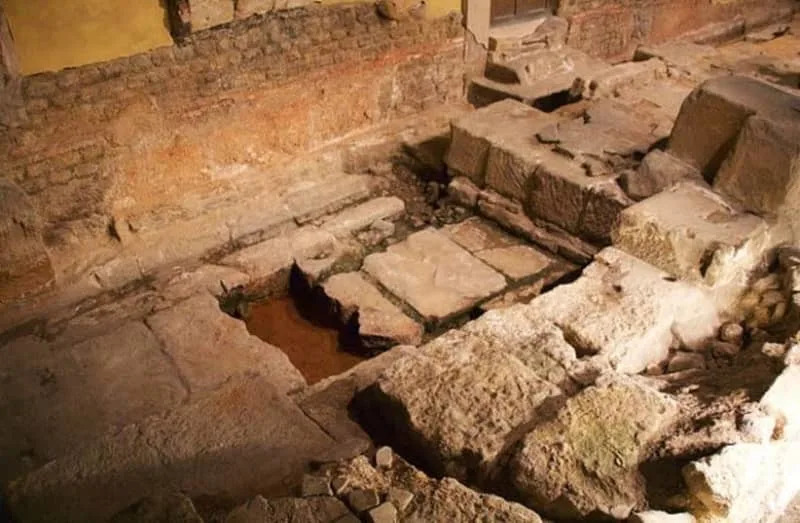
Remains of a roman bath in Bath, Somerset, UK (credit: Wikimedia Commons)
Clandestine Workshop and Smuggling
Investigators uncovered a clandestine lab in the province of Catania where forgers produced imitation coins, pottery and copper objects. Some looted coins linked to the group were recovered after being smuggled to Germany for resale, the Catania prosecutors' office said.
Methods and Organised Crime Links
Prosecutors allege the suspects minimised electronic traces by limiting phone contacts and adopting coded agricultural language to hide illicit deals — using words like "asparagus" and "fennel" — while referring to a "chainsaw" when they meant a metal detector. Officials also said some of the group appeared to operate with the "implicit consent" of a local Ndrangheta cell, suggesting organised-crime ties.
"We are talking about territories as vast as the cultural heritage that lies under their ground," General Antonio Petti, head of the Carabinieri art squad, said at a press briefing in Rome.
Sicily and Calabria are home to numerous important Greek and Roman sites — including the Valley of the Temples in Agrigento — making them especially vulnerable to looting. Authorities said the arrests and recoveries are part of an ongoing effort to protect Italy's archaeological patrimony from illegal excavation, forgery and cross-border trafficking.


