
The GPS-enabled smartwatch of 26-year-old hiker Sota Keisuke provided detailed movement and heart-rate records after a brown bear attacked him on Mount Rausu on Aug. 14. Data show he left the trail at about 11 a.m., exhibited tremors and circling in dense brush, and that his heartbeat stopped roughly 109–142 yards (about 100–130 m) from the path. The device remained stationary overnight and moved the next morning, suggesting the bear returned and dragged the body; rescuers later found the body with a mother bear and two cubs, all of which were killed. Officials closed the trail; authorities say this was the first recorded attack in the Shiretoko range in 63 years, amid a wider surge of bear incidents in Japan.
Smartwatch Reconstructs Fatal Bear Attack on Hokkaido Hiker: GPS and Heartbeat Data Reveal Final Movements

gettyBrown bear in Japan (stock image)
New details have emerged about the Aug. 14 attack on a 26-year-old hiker on Mount Rausu in Hokkaido after authorities recovered data from his GPS-enabled smartwatch. The device provided a detailed record of his movements, heart rate and the likely location and timing of his death.
What Happened
Sota Keisuke — identified by NHK as a 26-year-old hiker — was attacked while hiking in the Shiretoko Mountain Range on Aug. 14. According to reports, the watch’s tracking data shows he left the Mount Rausu trail and descended a forested slope at about 11 a.m. local time.
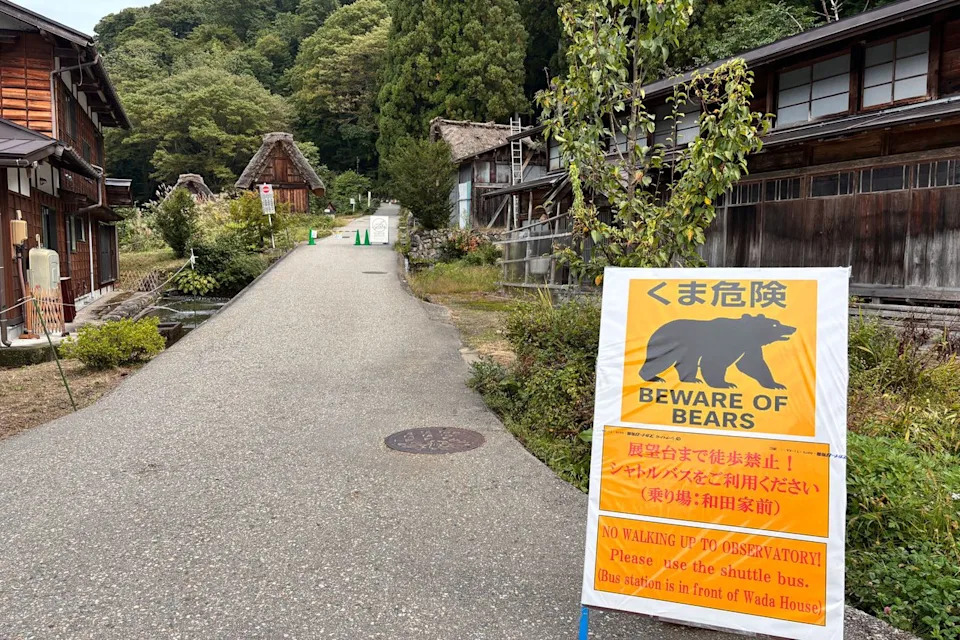
VCG/VCG via GettyBear caution sign in Japan (stock image)
Smartwatch Data Offers a Timeline
Authorities recovered the smartwatch and extracted both movement and biometric data. The device recorded tremors and repeated circling in an area of dense brush, and it registered his heartbeat stopping roughly 109 to 142 yards (about 100–130 meters) from the trail. The watch remained stationary overnight at that location.
At around 9 a.m. the next day the device moved again, traveling several hundred yards through the undergrowth — a pattern consistent with a bear returning and dragging the body, according to Asahi Shimbun.

gettyBrown bear in Japan (stock image)
Search, Recovery and Aftermath
Searchers were dispatched after a friend who had been with Keisuke reported the incident the following day. Teams initially found a piece of shirt and a wallet before locating and transporting Keisuke to a hospital, where he was pronounced dead.
Search and rescue teams later encountered a mother brown bear with two cubs dragging the body; all three bears were shot and killed at the scene. Additional remains were found in an earthen mound approximately 109 yards from where the bears were shot. Keisuke’s body was returned to the Shari Police Station, where his parents identified him; police reportedly advised them to "look only at his face" because of the severity of his injuries.
Context and Response
Officials closed the Mount Rausu trail following the incident. The Hokkaido prefectural government said this was the first recorded bear attack in the Shiretoko Mountain Range in 63 years. More broadly, Japan has seen a surge in bear incidents this year: an October report from the Ministry of the Environment, cited by Al Jazeera, said at least 13 people have been killed and more than 100 injured in bear attacks since April.
Note: The smartwatch data provided rare, precise detail that helped reconstruct the final movements of the victim and informed the search and recovery operation.
Authorities are reviewing the incident as part of broader efforts to respond to rising human-bear conflicts in Hokkaido and elsewhere in Japan.


