
Florida’s CAIR chapter plans to sue after Governor Ron DeSantis issued an executive order labeling CAIR and the Muslim Brotherhood as "foreign terrorist organizations." CAIR leaders called the order baseless and compared it to past discriminatory campaigns against minority communities. DeSantis defended the move and said he expects follow-up legislation when the legislature reconvenes. Legal experts note state-level terrorism labels lack the formal authority of federal Foreign Terrorist Organization designations and raise First Amendment and due-process concerns.
Florida CAIR Chapter Vows Legal Fight After DeSantis Labels Group, Muslim Brotherhood 'Foreign Terrorist Organizations'
06:46 PM, 12/10/2025

Florida Gov. Ron DeSantis said he welcomes CAIR's lawsuit.
The Florida chapter of the Council on American-Islamic Relations (CAIR) announced plans to sue Governor Ron DeSantis after he signed an executive order designating CAIR and the Muslim Brotherhood as "foreign terrorist organizations." The move has prompted sharp criticism from civil liberties advocates and renewed debate over whether states can independently assign terrorism labels that carry heavy reputational and legal consequences.
CAIR Promises Court Challenge
At a Tampa news conference, Hiba Rahim, CAIR-Florida’s deputy executive director, called the governor’s order an unfounded attack rooted in conspiracy theories and compared it to historical campaigns that targeted immigrant and minority communities, including Jewish, Irish and Italian Americans. "We are very proud to defend the founding principles of our Constitution, to defend free speech," Rahim said. "We are proud to defend democracy, and we are proud to be America first." She added that CAIR will not back down and will defend its rights in court.
DeSantis Defends the Designation
Governor Ron DeSantis defended the action, telling reporters his administration has sufficient grounds for the designation and that he welcomed a legal challenge. He described the executive order as "a long time coming" and said he expects state lawmakers to pursue related legislation when the Florida legislature reconvenes in January, calling the order "the beginning."
Scope Of The Executive Order
DeSantis' directive bars Florida state agencies from awarding contracts, hiring employees, or distributing funds to CAIR, the Muslim Brotherhood, or any organization found to have materially supported them. The order therefore has immediate practical effects on state interactions with listed groups, even though it differs from federal terrorism designations.
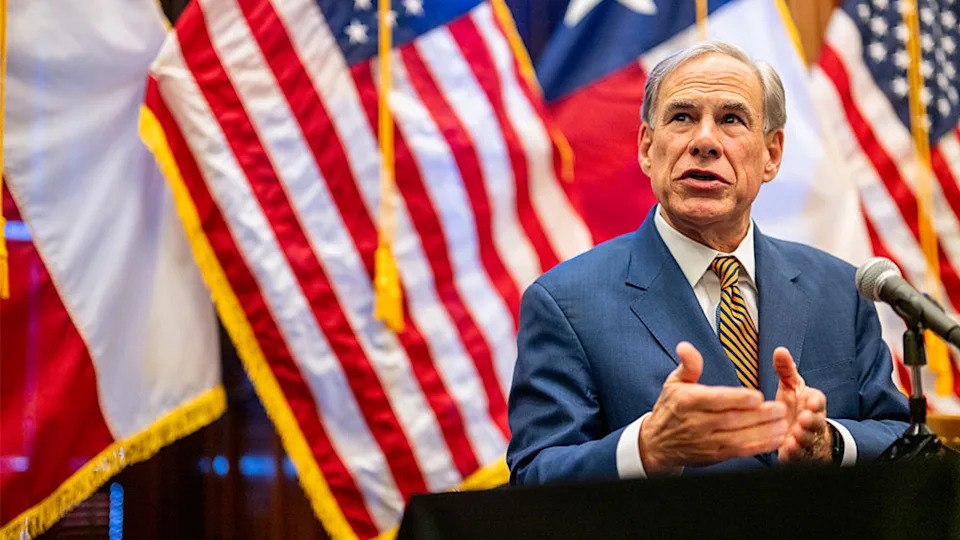
Texas Gov. Greg Abbott issued a proclamation designating CAIR and the Muslim Brotherhood as "foreign terrorist organizations."
Legal And Constitutional Challenges
Attorney Miranda Margolis, speaking at the Tampa event, argued the governor exceeded his legal authority by unilaterally labeling a nonprofit as a terrorist organization. "This designation is without legal or factual basis and constitutes a dangerous escalation of anti-Muslim political rhetoric," she said.
Legal experts note state-level terrorism designations do not carry the same statutory weight as federal Foreign Terrorist Organization (FTO) listings, which are issued only by the U.S. State Department after a formal federal process. CAIR argues the Florida order violates its First Amendment free-speech protections and due-process rights and contends that terrorism designations are a federal responsibility.
Broader Context
The Florida action follows a similar proclamation by Texas Governor Greg Abbott, which CAIR has already challenged in federal court. Last month, President Donald Trump issued an executive order to begin a federal process to consider designating certain chapters of the Muslim Brotherhood as a foreign terrorist organization, underscoring that discussion over such labels is active at multiple government levels.
What’s next: CAIR has signaled it will file suit in federal court challenging the Florida order. The litigation is likely to focus on constitutional claims (First Amendment and due process) and whether a state can lawfully impose what has historically been a federal designation.
The Associated Press contributed to reporting on this story.
Similar Articles

DeSantis Orders State-Level Designation Of Muslim Brotherhood And CAIR As Terrorist Organizations
Florida Gov. Ron DeSantis directed state agencies to treat the Muslim Brotherhood and CAIR as foreign terrorist organizations...

Texas Governor Designates Muslim Brotherhood and CAIR as 'Foreign Terrorist Organizations,' Bars Them From Buying Property
Texas Gov. Greg Abbott has declared the Muslim Brotherhood and the Council on American-Islamic Relations (CAIR) to be "foreig...

Texas Bars CAIR and Muslim Brotherhood From Buying Land — Critics Say Abbott’s Move Violates Due Process
What Happened: On November 18, Texas Governor Greg Abbott designated the Muslim Brotherhood and CAIR as terrorist and transna...

CAIR Sues Texas After Abbott Labels It a "Foreign Terrorist Organization"
CAIR has filed a federal lawsuit asking a judge to overturn Gov. Greg Abbott’s proclamation that labeled the group a “foreign...

CAIR Sues Texas Governor Over Terrorist Designation, Challenging Land Ban and Free Speech Claims
The Council on American-Islamic Relations has filed a federal lawsuit against Texas Gov. Greg Abbott and Attorney General Ken...

CAIR Sues Texas After Abbott Labels It a 'Foreign Terrorist Organization' and Bars Land Purchases
CAIR's Dallas–Fort Worth and Austin chapters filed a federal lawsuit challenging Gov. Greg Abbott's proclamation that labeled...

Texas Governor Declares CAIR a 'Foreign Terrorist Organization,' Prompting Legal and Political Clash
Texas Gov. Greg Abbott declared the Council on American‑Islamic Relations a "foreign terrorist organization" and barred it fr...

Muslim and Interfaith Leaders Urge Gov. Abbott to Withdraw CAIR 'Terrorist' Designation, Cite Legal Challenge
A coalition of Muslim and interfaith leaders has urged Texas Governor Greg Abbott to withdraw a state proclamation labeling C...

Trump Orders Review to Consider Designating Some Muslim Brotherhood Chapters as Terrorist Organizations
President Trump has ordered a review to determine whether certain Muslim Brotherhood affiliates in Egypt, Lebanon and Jordan ...

OIG: FBI Barred Routine Contact with CAIR in 2008 — Enforcement Lapses Resurface After Texas Terror Designation
The DOJ OIG's 2013 report found that the FBI imposed a nationwide restriction in 2008 on routine, non‑investigative contact w...

Minnesota Rallies Behind Somali Community After Presidential Attacks and Federal Raids
The Somali community in Minnesota experienced intense national attention after President Trump’s disparaging remarks and fede...

Florida Could Be Decisive In GOP’s Mid‑Decade Redistricting Push
Florida has launched a formal mid‑decade redistricting process that could deliver several additional U.S. House seats to Repu...

US Plans To Expand Travel Ban To More Than 30 Countries, Administration Says — Legal Challenges Expected
The administration announced plans to expand a U.S. travel ban to "over 30" countries, building on an existing list of 19 nat...

Attorney General Pam Bondi Orders Intensified Probes Into Antifa and Other Groups Over Alleged Domestic Terrorism
U.S. Attorney General Pam Bondi ordered federal law enforcement to intensify investigations of Antifa and other groups labele...

Florida's Full Congressional Delegation Urges Trump To Exclude State From Expanded Offshore Drilling Plan
Florida's entire congressional delegation — including Senators Rick Scott and Ashley Moody and all 28 House members — asked P...