
The Council of Europe summit will feature a 27-country declaration urging the ECHR not to block offshore return deals or deportations of foreign criminals. Draft summit conclusions call for further discussion rather than immediate legal changes, while recommending measures to tackle trafficking and create a migration committee. British ministers favour national reinterpretation of the convention, proposing to recalibrate Article 8 and narrow Article 3 so offence seriousness carries greater weight in removal decisions.
27 Countries Urge ECHR Not To Block 'Rwanda-Style' Deportations — Summit Seeks Reforms
05:20 PM, 12/10/2025

A deportation flight scheduled for Rwanda sits on a runway in Wiltshire after the Court of Appeal stopped it from taking off in June 2022 - Andrew Matthews/PA Wire
Twenty-seven European governments, including the United Kingdom, have backed a joint declaration asking the European Court of Human Rights (ECHR) not to block offshore return arrangements or deportations of foreign criminals. The statement, due to be published this week, urges changes to how the convention is applied so that human-rights rules do not routinely prevent removal or innovative return agreements with third countries.
What The Declaration Proposes
The British-backed declaration calls for an overhaul of how Articles 3 and 8 of the European Convention on Human Rights are interpreted. It suggests reweighting Article 8 (right to family life) to place greater emphasis on the nature and seriousness of offences and limiting Article 3 (prohibition of torture and inhuman or degrading treatment) to its most serious applications so that routine deportations are not blocked by concerns such as prison conditions or healthcare.
Summit Response And Next Steps
Draft conclusions from a summit of justice ministers representing the Council of Europe’s 47 members stop short of immediate legal changes and instead promise further discussion on possible reforms. The summit recommends new steps to tackle migrant trafficking, the creation of a committee on migration challenges, and a political declaration reaffirming members’ commitment to migrants’ rights, including measures that address foreign offenders. The political declaration is expected to be signed in Moldova in May.
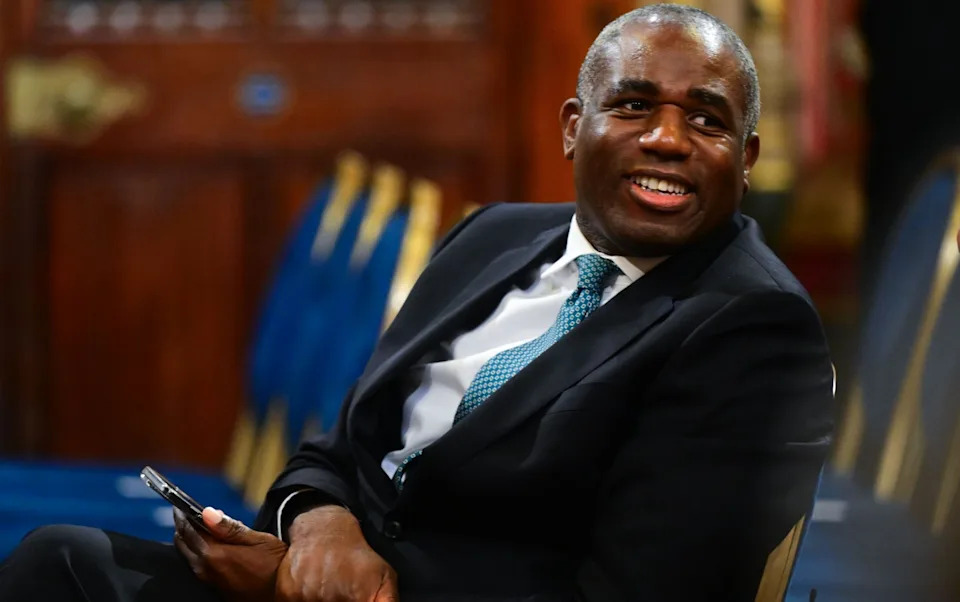
David Lammy says there is ‘a careful balance’ to be struck between individual rights and the public’s interest - Victoria Jones/Shutterstock
Statements From Leaders
Alain Berset, Secretary-General of the Council of Europe, said the convention must "adapt" to modern migration pressures while warning that the court was "under pressure" and should not be "weaponised — neither against governments nor by them." Deputy Prime Minister David Lammy told ministers in Strasbourg that he had discussed domestic interpretations of human-rights law with more than 20 member states and argued that leaving the ECHR would be a "fake solution."
Practical Context
The UK’s first planned flight to Rwanda was halted in 2022 by a late ECHR injunction. Labour says it will not revive that exact scheme but is pursuing new return agreements with other countries, while the government is prioritising changes to national-level interpretation of the convention rather than attempting a formal rewrite, a process that would take years. Examples cited by officials include Italy’s processing agreement with Albania and Denmark’s shelved deal with Rwanda pending legal clearance. EU governments have also agreed legislation to allow offshore centres for some failed asylum seekers.
Legal And Political Stakes
The joint statement says a "clear starting point" for reform should be that member states can expel foreigners convicted of serious crimes even if they have family ties in the host country, and that timely decisions on deportations should not be prevented. The ECHR underpins the UK’s Human Rights Act, and the government is expected to propose legislation to alter how Article 8 is interpreted domestically and to consider whether to revisit the threshold for Article 3 protections.
Prime Minister Sir Keir Starmer, writing with Denmark’s prime minister Mette Frederiksen, has rejected calls to withdraw from the convention and instead argued the ECHR should be modernised as part of a firmer approach to migration. Their joint article was supported by 27 countries, including the UK, Italy, Austria, the Nordic states, much of Eastern Europe and Ukraine.
"Our governments have a duty to guarantee our populations’ human rights and fundamental freedoms," the joint statement says, adding that protecting borders and disrupting smuggling networks is vital to preserving public safety and the values of European societies.
Similar Articles

Europe Ministers Seek Modernised ECHR Interpretation Amid Migration Pressure
The Council of Europe convened ministers in Strasbourg after nine EU states urged a rethink of how the European Convention on...

Starmer’s Push To Reform The ECHR Risks Repeating Cameron’s Brexit Mistakes
Sir Keir Starmer has joined 26 other Council of Europe members seeking updates to the 75‑year‑old ECHR to address people‑smug...

Europe Reconsiders the ECHR as Danish-Style Migration Measures Spread
Summary The article describes how Denmark's stringent 2016 migration measures have influenced other European governments and ...

ECHR Reform Won't Reduce Migration, Council of Europe Commissioner Says
Michael O'Flaherty, the Council of Europe’s Commissioner for Human Rights, warned that reforming the ECHR would have "zero im...

EU Approves Binding Relocation Target and €20,000 Fine for States That Refuse Migrants
The EU has approved a binding plan to relocate about 21,000 migrants from frontline states and will charge €20,000 (£17,500) ...

EU Poised To Approve 'Return Hubs' and Tougher Migrant Rules Amid Political Pressure
EU interior ministers are expected to approve stricter migration proposals , including "return hubs" outside the bloc for rej...

Bardella Says France Will Allow UK 'Pushbacks' and Proposes Major Overhaul of Migration Rules
Jordan Bardella, leader of France's National Rally and a frontrunner for the 2027 presidency, told The Telegraph he would all...

UK to Revise Asylum System, Citing Denmark Model, as Channel Crossings Intensify Political Pressure
Overview: The U.K. will unveil broad asylum reforms modeled on Denmark to curb dangerous Channel crossings and make removals ...

From Kampala to Stockholm: A Growing Shift Toward Stricter Migration Controls
Uganda this week tightened immigration rules, joining a number of African countries that have recently announced migration cu...

UK to Unveil Major Asylum Overhaul — 20-Year Bar for Illegal Arrivals and Temporary Refugee Status
The UK government will publish a major asylum overhaul that imposes a 20-year bar on settlement for people who arrive illegal...

ICC’s Annual Meeting In The Hague Tests Its Future Amid Sanctions, Misconduct Probe And Member Withdrawals
The International Criminal Court’s 24th Assembly of States Parties is meeting in The Hague amid growing strains: U.S. sanctio...

UK Unveils Major Asylum Overhaul — Temporary Refugee Status, 20‑Year Route to Settlement and Threatened Visa Bans
The UK government has unveiled a major asylum reform package that would make refugee status temporary with reviews every 30 m...

UK Announces Major Asylum Overhaul: Refugee Status Cut to 30 Months and Guaranteed Support Ends
The UK government unveiled major asylum reforms that would cut refugee status from five years to 30 months, impose a 20-year ...

UK unveils sweeping asylum reforms — Home Secretary defends cuts to refugee protections
Britain announced major asylum reforms that would cut refugee status to 30 months, impose a 20-year wait for indefinite resid...

Mahmood to announce Danish-style overhaul — asylum to be temporary only
Shabana Mahmood will tell Parliament that successful asylum applicants will receive time-limited residence with routine statu...