Rep. Debbie Wasserman Schultz won the Democratic primary in Florida’s redrawn 20th Congressional District with roughly 48% of the vote. She moved into the district after her previous Broward County seat was reshaped and made more competitive by Republican-led redistricting. The 20th is no longer majority-Black but still has a substantial Black voting-age population (~42%) and over 23% Hispanic. Her decision to run drew criticism from some Black Democratic leaders, which she defended by blaming Governor Ron DeSantis and the state legislature for the gerrymandered map and by citing her record.
Debbie Wasserman Schultz Wins Democratic Primary In Florida’s Redrawn 20th District Amid Gerrymandering Controversy
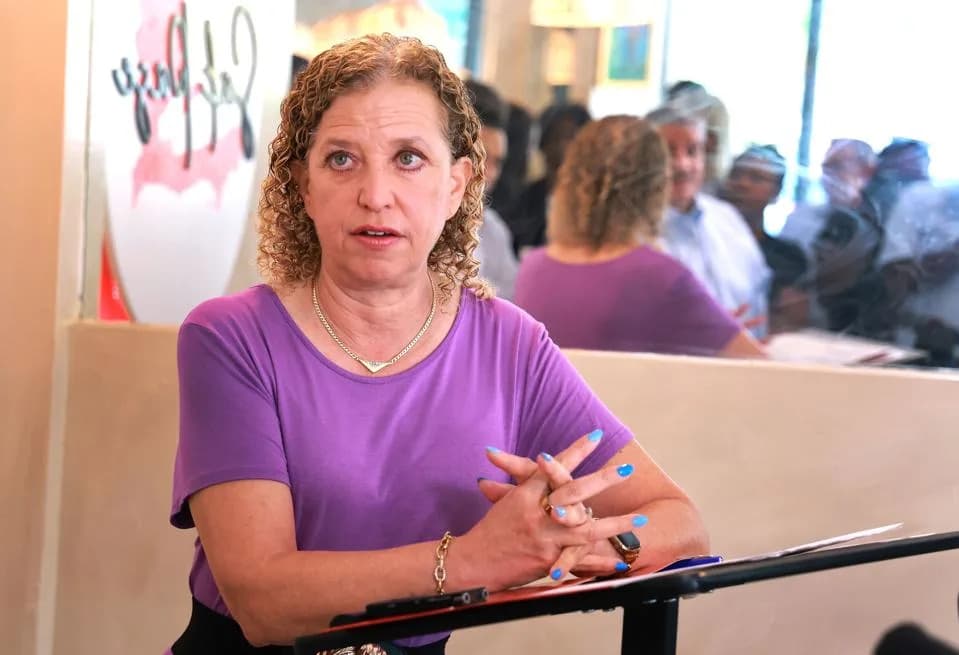
Rep. Debbie Wasserman Schultz, D-Fla., joins advocates to demand the Supreme Court defend Temporary Protected Status, during a news conference at Sak Pase Kitchen in Plantation, Florida, on May 1, 2026. (Carline Jean/South Florida Sun Sentinel/Tribune News Service via Getty Images)
Rep. Debbie Wasserman Schultz, D-Fla., secured victory in the Democratic primary for Florida’s newly redrawn 20th Congressional District, claiming roughly 48% of the vote shortly after the Associated Press called the race.
A Strategic Move Into A Changed District
Wasserman Schultz, Florida’s longest-serving Democrat in federal office and a former chair of the Democratic National Committee, opted to run in the 20th after the state’s maps were redrawn. Her previous Broward County seat was reshaped to include more Republican voters, making it far more competitive. Forecasters now rate her old district as a toss-up.
Demographics And The Race
The 20th District is no longer a majority-Black district, but Black residents still make up about 42% of the voting-age population and more than 23% are Hispanic, according to Florida Politics. The seat had been held by Black Democrats for more than three decades — most recently by Rep. Sheila Cherfilus-McCormick, who resigned in April — and before her by the late Rep. Alcee Hastings.
Contested Primary And Key Opponents
Wasserman Schultz faced four Black challengers in the primary: progressive Elijah Manley; former Broward County Mayor Dale Holness; community activist and rapper Luke Campbell; and former Rep. Sheila Cherfilus-McCormick, who resigned amid criminal charges alleging theft of federal COVID-19 relief funds (charges she has denied). The contest reignited debates over representation and political strategy in the district.
Reaction And Rationale
Some Black Democratic leaders criticized Wasserman Schultz’s decision to run in the district. Armando Grundy-Gomes, president of the Democratic Black Caucus of Florida, endorsed Elijah Manley and said, “Our preferred candidate would be anyone other than Debbie Wasserman Schultz.”
Wasserman Schultz defended her move by blaming Governor Ron DeSantis and the Republican-led state legislature for the redistricting. She also highlighted her congressional record and her prior history representing large parts of Broward County as justification for running in the redrawn 20th.
Related Races And Context
Meanwhile, Rep. Jared Moskowitz ran in the Democratic primary for the 25th Congressional District — the seat Wasserman Schultz previously represented — after his home was drawn out of the 23rd District. That race pitted establishment-backed Moskowitz against progressive Oliver Larkin.
Why It Matters: The outcome underscores how redistricting has reshaped Florida politics, forced incumbent lawmakers to make strategic decisions about where to run, and sparked tensions within the Democratic base over representation and political strategy.
This article was originally published on Forbes.com.
Help us improve.