A Florida International University chemist and collaborators converted rice husks into a sponge-like biochar filter that removes synthetic textile dyes from water. Tests showed it effectively captured brilliant green and malachite green and remained effective for at least five cycles. The approach addresses agricultural waste and industrial pollution and aims to scale up to treat more dyes, heavy metals, and real-world contaminants.
Florida Team Turns Rice Husk Waste Into Reusable Filter That Captures Textile Dyes
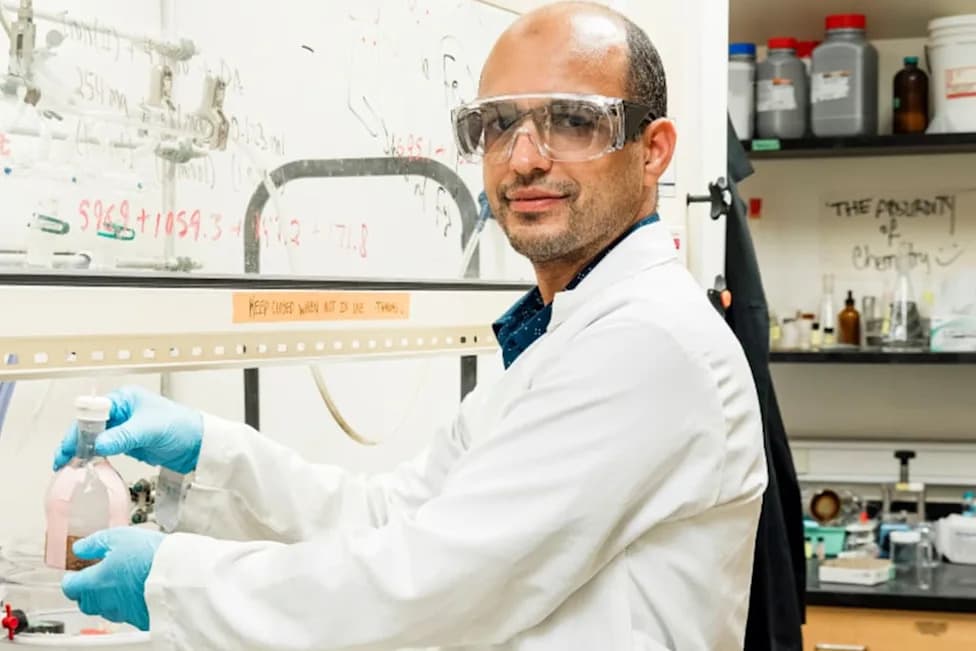
Photo Credit: Florida International University
A Florida International University chemist and an international research team have developed a promising new use for one of the world's largest agricultural waste streams: rice husks. Instead of discarding the inedible outer coverings, the researchers converted them into a sponge-like, reusable filter capable of removing synthetic textile dyes from water.
How the Filter Is Made
The team, led by FIU chemistry researcher Islam Ibrahim Hussein, first transformed rice husks into biochar by heating them in a low-oxygen environment. They then combined that biochar with magnesium and aluminum to create an adsorbent material with a high surface area and porous, sponge-like structure.
Laboratory Results
Laboratory tests published in the journal Sustainable Chemistry and Pharmacy showed the material effectively removed the dyes brilliant green and malachite green from water samples. The biochar-based filter retained its performance through at least five consecutive uses in the experiments, demonstrating initial reusability.
Environmental and Public Health Context
The researchers noted that global rice consumption produces roughly 300 billion pounds of husks each year, much of which is burned or sent to landfills. At the same time, untreated dye discharge from textile operations is a serious problem in many countries, especially in parts of Asia. The textile industry is estimated to account for roughly 17% to 20% of industrial water pollution, and dye-laden effluent can complicate treatment, harm aquatic ecosystems, and pose health risks to downstream communities.
Why This Matters
This work addresses two challenges at once: reducing agricultural waste while providing an affordable, circular approach to water remediation. By repurposing rice husks into a practical cleanup tool, the approach could lower disposal burdens, cut reliance on expensive treatment materials, and support cleaner textile operations.
We need green methods or friendly methods that will not create another problem in the future,
- Islam Ibrahim Hussein, FIU
Next Steps
The team plans to expand testing beyond the lab to evaluate the filter's performance on a wider range of dyes, heavy metals, and complex contaminants in real-world water samples. Their goal is to scale up the technology for practical applications that help communities facing contaminated water.
Bottom line: Transforming an abundant agricultural byproduct into a reusable adsorbent offers a promising, low-cost strategy for tackling industrial dye pollution while advancing circular manufacturing principles.
Help us improve.