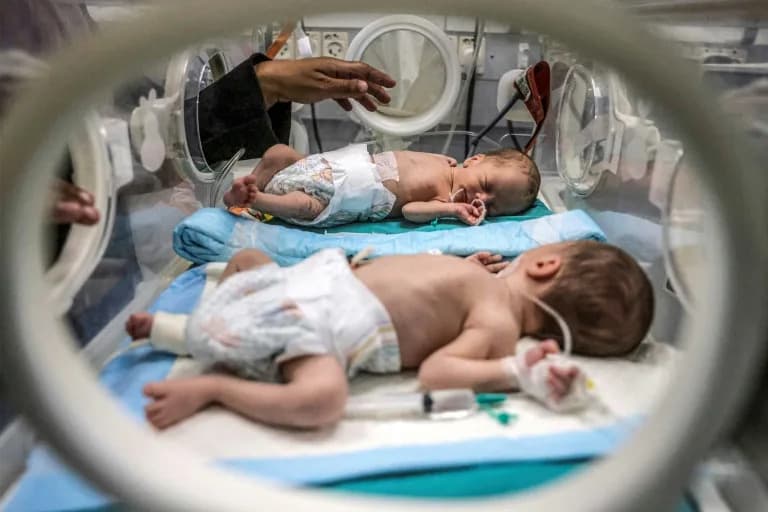
Families in central Gaza are still reeling from last year’s famine: children who were severely malnourished between August and December 2025 have only partially recovered and remain vulnerable. The UN warns that 67% of Gaza’s population is food insecure and more than 200,000 people live in conditions that often precede a famine. Community kitchens supply calories but lack proteins and micronutrients, and experts say full recovery requires sustained, varied diets and medical follow-up.
Gaza's Children Still Struggling With Hunger as Famine Threat Looms
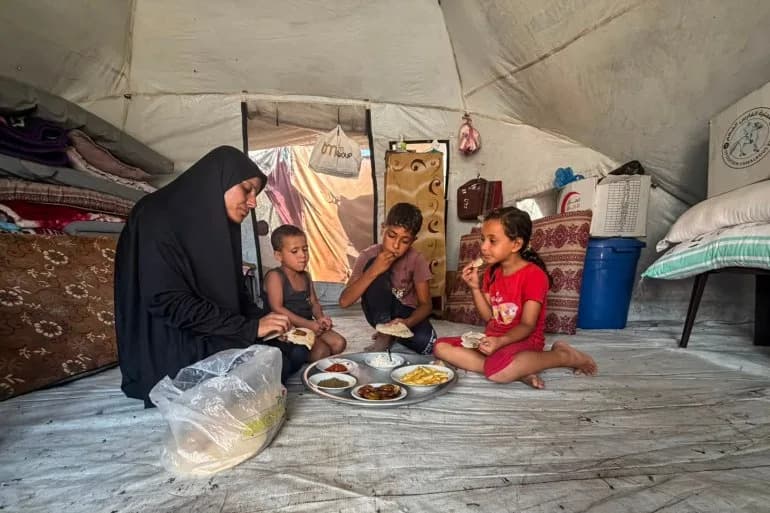
Sahar and her children still struggle to find enough food to eat [Eman Abu Zayed/Al Jazeera]
Sahar al-Bardini prepares breakfast for her three children inside a tent at the al-Zawaida displacement camp in central Gaza, watching them eat while already worrying about their next meal. The 35-year-old has been the sole provider for six-year-old Omar, four-year-old Sama and three-year-old Mahmoud since her husband was killed by shelling in northern Gaza three years ago.
Like many families in Gaza, Sahar is coping with sharply higher food prices driven by the territory's prolonged siege. There are growing fears that Gaza could slide into famine again after a severe food crisis last year.
Lingering Effects of Last Year’s Famine
During last year’s famine, the household — and Omar and Sama in particular — endured extreme shortages of food and essential nutrients. Eggs and fresh vegetables were scarce in markets and, when available, largely unaffordable. Although the family now manages to eat more regularly than during the worst months, they still often have only one meal a day. The brothers are still recovering from the acute hunger they experienced between August and December 2025.
“Omar and Sama became very weak during the famine and lost a lot of weight. Even after food became more available, it took them around six months to gradually regain their health and weight,” Sahar told Al Jazeera. “My biggest fear is that my children will become weak again. I want to see them healthy, but the food they need isn't easy for me to provide every day.”
Humanitarian Warning And Daily Reality
The United Nations Office for the Coordination of Humanitarian Affairs (OCHA) issued a warning that Gaza faces a severe food emergency that could develop into another famine. Justin Brady, head of OCHA in Palestine, said 67 percent of Gaza's population is now food insecure, and more than 200,000 people — about 10 percent of the territory's population — live in conditions that typically precede a formal famine declaration under the Integrated Food Security Phase Classification.
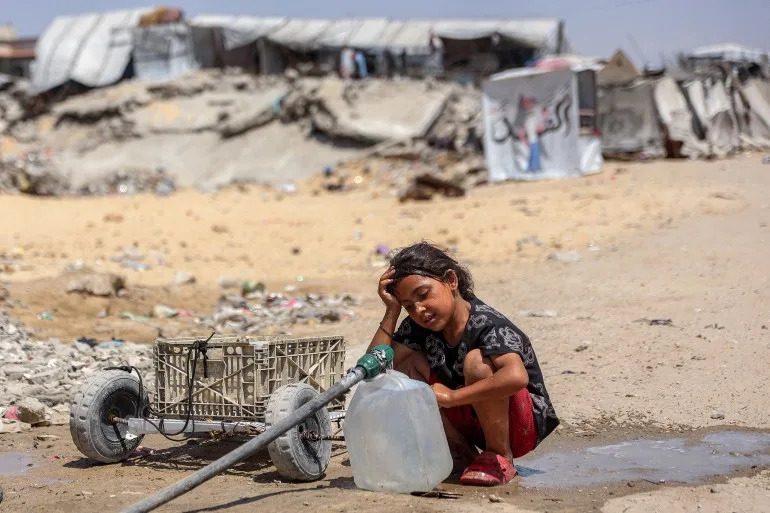
A girl fills containers with water drawn from the leftovers of underground pipes at a camp for people displaced by war in the Sheikh Radwan neighbourhood of Gaza City [Omar AL-Qataa/AFP]
In many parts of central Gaza, community kitchens are the primary source of meals for displaced families. These kitchens typically serve basic staples such as rice and lentils. While such meals help prevent immediate starvation, they rarely include meat, dairy, fresh fruit or vegetables — the proteins and micronutrients children need to grow and recover from prior malnutrition.
“The meal fills their stomachs, but it doesn't contain everything a child's body needs to be properly nourished and regain strength,” Sahar said. “The children need a more varied diet — eggs, vegetables, fruit, meat and other items. I try to provide whatever I can but my means are limited.”
Long-Term Recovery Requires More Than Calories
Nutrition specialist Dr Ghada Jibril explained that caregivers are often forced to feed infants and young children diets based mainly on rice and lentils. While these provide calories, they leave critical gaps in protein, iron, vitamins and other nutrients essential for brain development, immune function and catch-up growth after malnutrition.
“A child who has experienced severe malnutrition needs a period of regular, diverse nutrition and medical follow-up to regain weight and resume healthy growth,” Dr Jibril said. “The end of acute hunger does not make the effects of malnutrition disappear immediately. Recovery takes time, appropriate food and sustained care.”
With little cash, parents like Sahar stretch food vouchers and humanitarian aid as far as possible, but these supports are not enough. Families must prioritise purchases — food first, followed by clothing, medicine and other basic necessities — leaving children vulnerable to lasting health consequences unless aid is expanded and diversified.
What this means: Without increased food access, diversified nutrition programs and medical follow-up for malnourished children, Gaza risks a renewed and deepening child health crisis even if starvation is temporarily averted.
Help us improve.