Astronomers using the Large Binocular Telescope have obtained the clearest images yet of asteroid Nysa, revealing a rare three-lobed shape and a tiny moon. The 75 km-wide E-type body may have formed near the Sun and shows chemical links to materials that helped build Earth, according to an arXiv preprint. A 3D model supports the three-lobe interpretation, and researchers say the object may have formed by low-velocity accumulation or as a hit-and-run remnant. The newly discovered moon, S/2026, is just over 1 km across and orbits at least 170 km away; future observations aim to measure Nysa's mass and density.
Unique Three-Lobed Asteroid Nysa Imaged — It Even Has a Tiny Moon
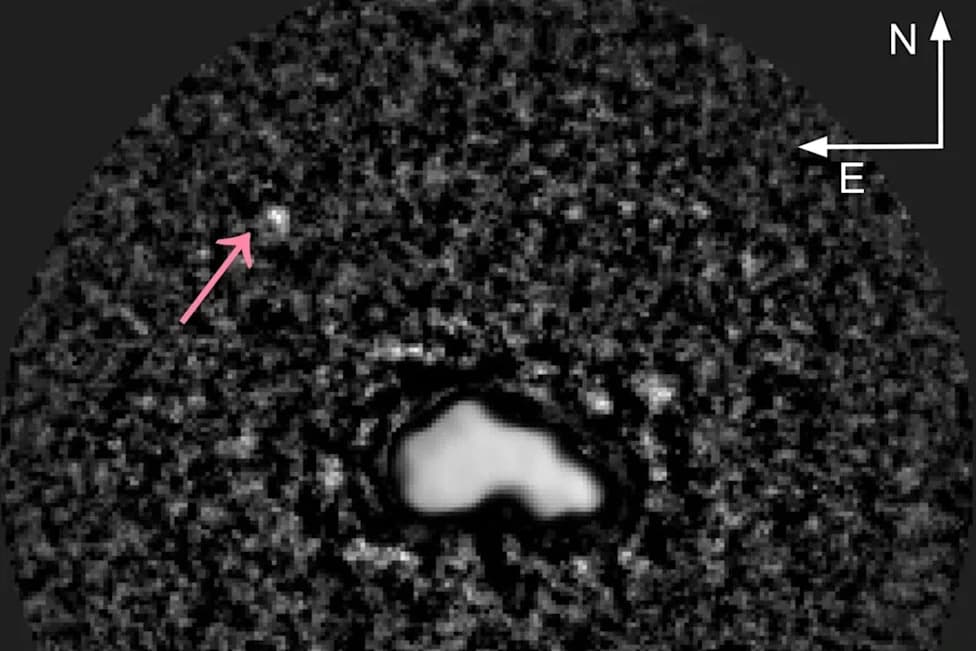
Unique asteroid spotted with its own moon
Astronomers have captured the highest-resolution images yet of asteroid Nysa, revealing a remarkable three-lobed shape and a previously unknown small moon. The observations were made with the Large Binocular Telescope (LBT) on Mount Graham, Arizona, using advanced image-processing techniques that resolved surface details and narrow neck regions connecting distinct lobes.
What Was Found
Nysa is roughly 75 km across and is classified as an E-type asteroid based on its surface composition. A new study posted as a preprint on arXiv reports that Nysa likely formed closer to the Sun and shows chemical similarities to the primitive materials that contributed to Earth’s formation.
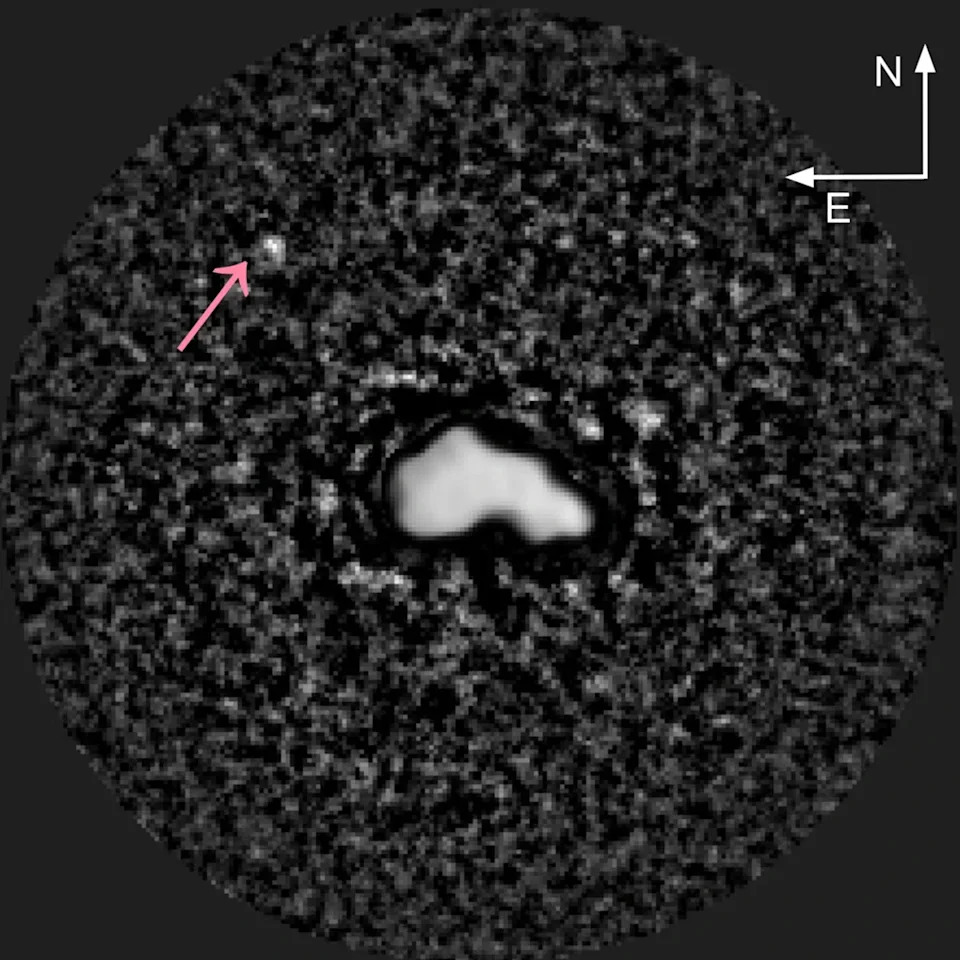
Asteroid Nysa and its tiny moon (University of Arizona)
The LBT images reveal multiple large surface features and two prominent valleys that appear to wrap around the body. Researchers interpret those valleys as narrow, neck-like connections between separate lobes. A detailed three-dimensional model built from the data supports the conclusion that Nysa is composed of three distinct lobes joined by narrow neck regions.
Possible Origins
Scientists propose two main formation scenarios: Nysa may have assembled through low-velocity accumulation of fragments after an ancient collision, or it could be the remnant of a hit-and-run collision with a larger parent body. Either pathway would preserve clues about collisions and mergers from the early Solar System.
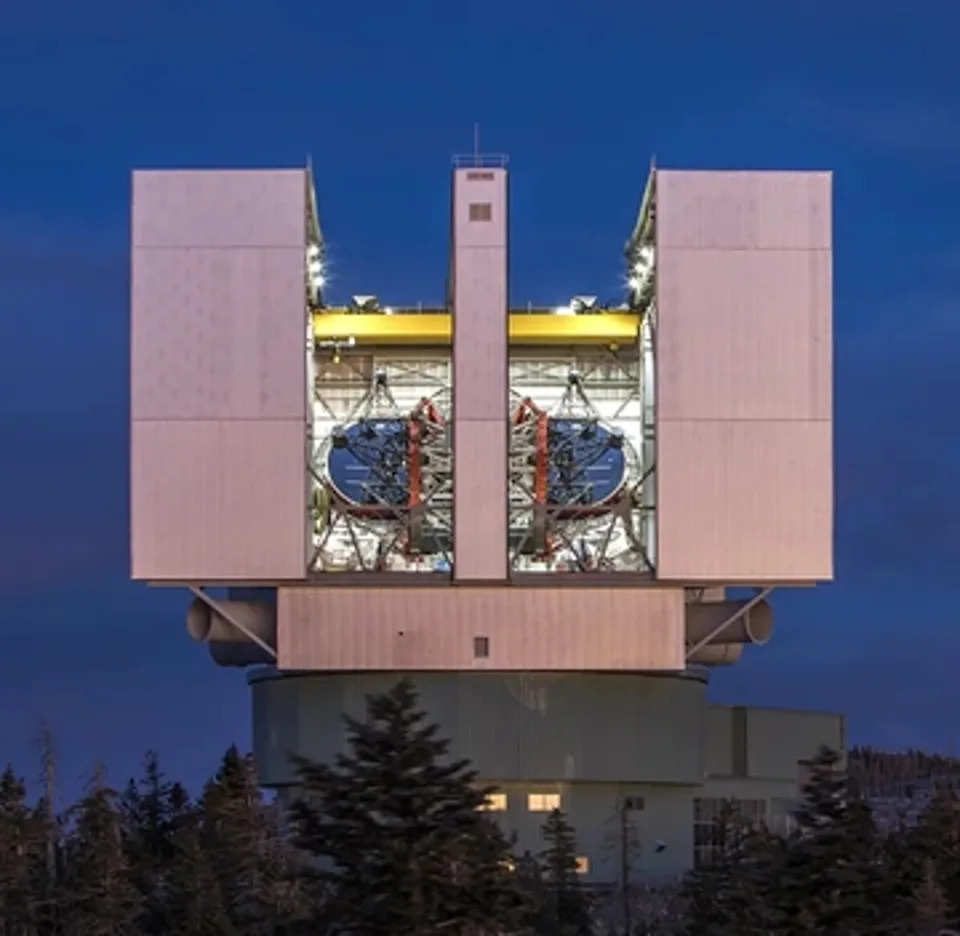
Large Binocular Telescope Observatory, or LBTO, located atop Mount Graham in Southeastern Arizona, (LBTO)
“In this paper, we're finally unmasking the asteroid's true nature, long after it was discovered,” said Al Conrad, a co-author affiliated with the LBT. Lead author Kate Minker adds that Nysa is either a contact trinary—three connected components—or an unusually irregular single body unlike those previously observed.
A Tiny Moon
In addition to Nysa’s unusual shape, researchers detected a new satellite, temporarily designated S/2026. The moon is just over 1 kilometre in diameter and orbits at least 170 kilometres from the main body. Continued monitoring of the moon’s orbit should help determine Nysa’s mass and bulk density more precisely.
Why This Matters
If confirmed, Nysa will join a growing list of solar system objects whose shapes preserve evidence of ancient collisions and accretion events. Studying Nysa could therefore shed light on the processes that shaped the earliest phases of the Solar System and on the distribution of Earth-building materials.
Note: The results described are reported in a study posted to arXiv and have not yet completed peer review.
Help us improve.