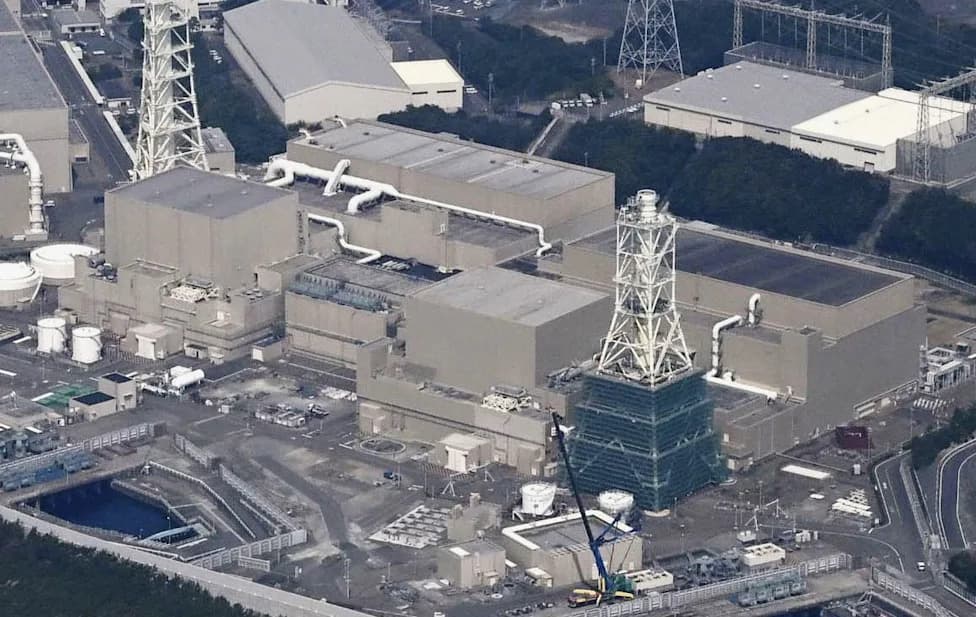
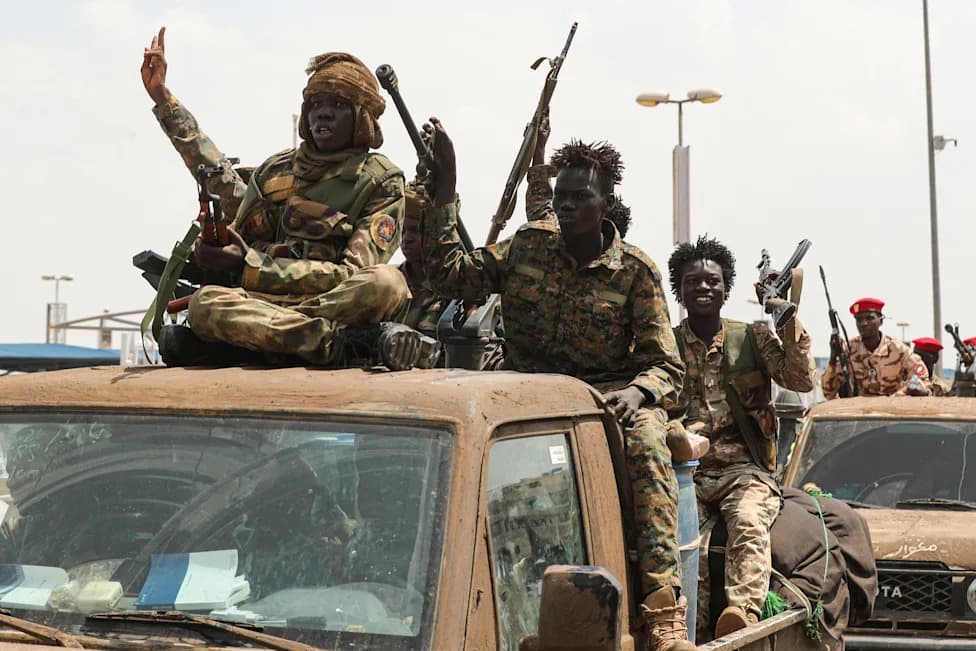
Authorities ended a concentrated rescue operation Saturday at the Aeon Mall in Kashima after a magnitude-7.1 earthquake struck Kumamoto Prefecture on Tuesday, killing 34 people. A post-quake explosion believed to be caused by a gas leak led to the collapse of the mall's second floor; rescuers recovered five survivors and seven bodies at the site. Wider searches continue across the prefecture, where more than 9,000 evacuees remain in shelters and nearly 70,000 homes face water shortages amid extreme heat. The government is delivering supplies while investigations and damage assessments proceed.
Japan Concludes Mall Rescue After Powerful Kumamoto Quake; Wider Search Continues
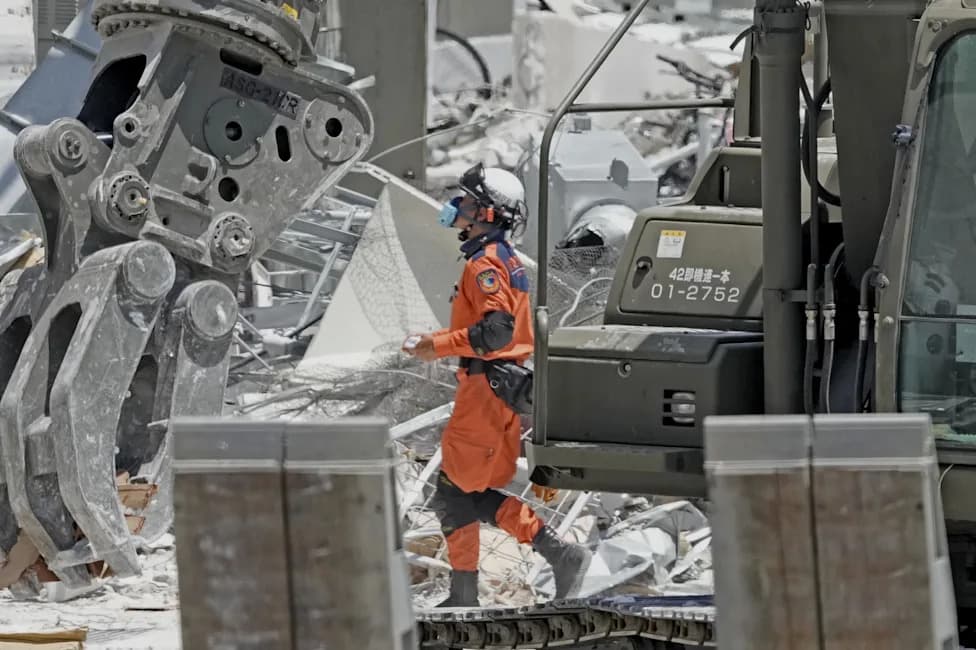
A firefighter searches the damaged AEON Mall following an explosion triggered by an earthquake in Kashima, Kumamoto Prefecture, southern Japan, Friday, July 31, 2026. (Kai Naito/Kyodo News via AP)(Kai Naito/Kyodo News via AP)
Authorities on Saturday ended a multi-day search-and-rescue operation at the Aeon Mall in Kashima after a magnitude 7.1 earthquake struck Kumamoto Prefecture on Kyushu earlier this week, a disaster that has so far claimed 34 lives.
Collapse, Explosion and the Mall Operation
The quake hit on Tuesday. At one of the hardest-hit sites, an explosion believed to have been caused by a gas leak triggered the collapse of walls and the mall's second floor. About 3,000 shoppers had been evacuated to a parking area after the tremor, though several employees remained inside when the blast occurred.
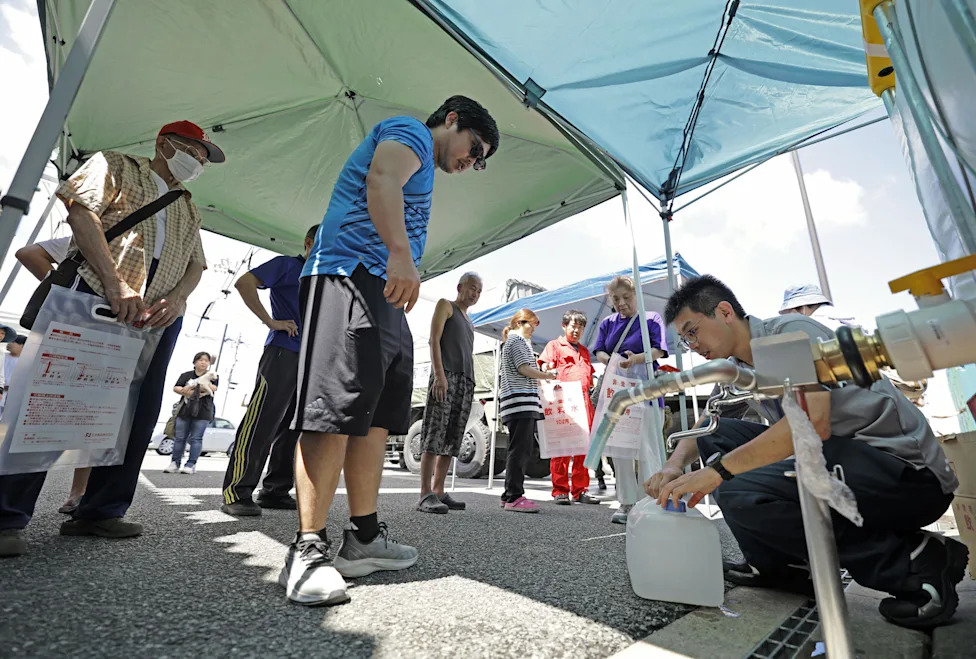
Residents receive water supplies at Hikawa town hall as an earthquake disrupted water service in Hikawa, Kumamoto Prefecture, southern Japan, Friday, July 31, 2026. (Atsuhiro Maeda/Kyodo News via AP)(Atsuhiro Maeda/Kyodo News via AP)
Over the five days following the incident, rescue teams extracted five survivors from beneath the debris and recovered seven bodies. On Saturday officials announced that all those previously reported missing at the Aeon Mall had been accounted for and that the concentrated operation at the site was being concluded.
Ongoing Searches Across the Prefecture
Officials cautioned that the total number of missing people across Kumamoto remains unclear and that search operations are ongoing. Thousands of personnel — including Self-Defense troops, police, rescue workers and scent-trained dogs — continue to comb affected areas.
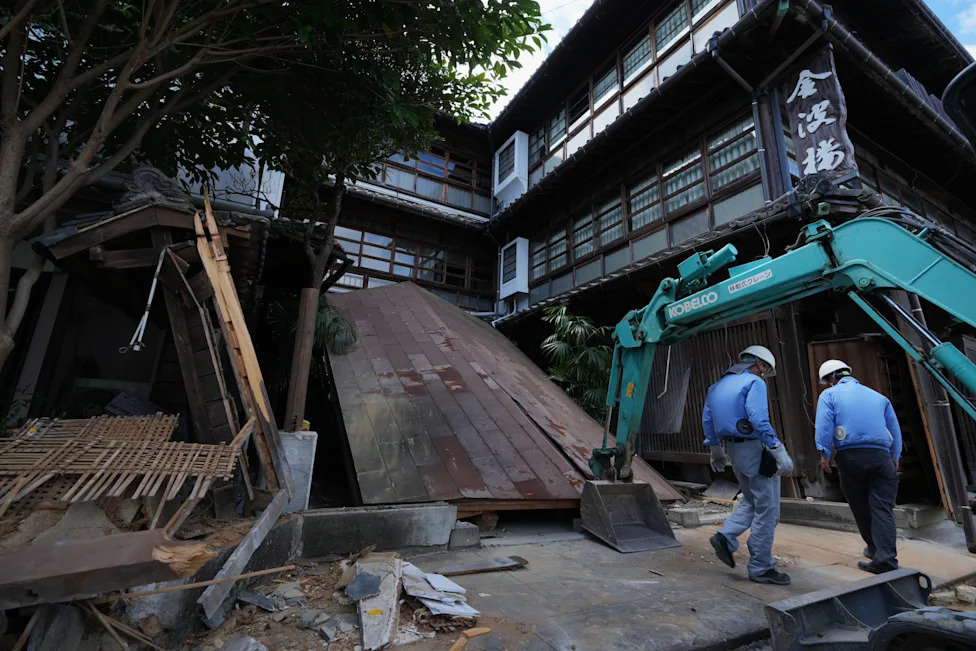
Workers inspect debris of the Kinparo inn, founded in 1910, for conservation of a possible rebuilding in Yatsushiro, southern Japan, Friday, July 31, 2026, three days after an earthquake hit the area. (AP Photo/Hiro Komae)(AP Photo/Hiro Komae)
Prime Minister Sanae Takaichi, speaking at a government task-force meeting, urged teams to "not leave anyone behind" as they press forward with search and recovery efforts.
Other Major Casualties and Damage
At a Nippon Paper Industries factory in Yatsushiro, a chimney collapse trapped 11 employees; nine have been confirmed dead and two were rescued. Authorities also reported 103 injured in Kumamoto, and two additional fatalities are under investigation to determine whether they were quake-related.
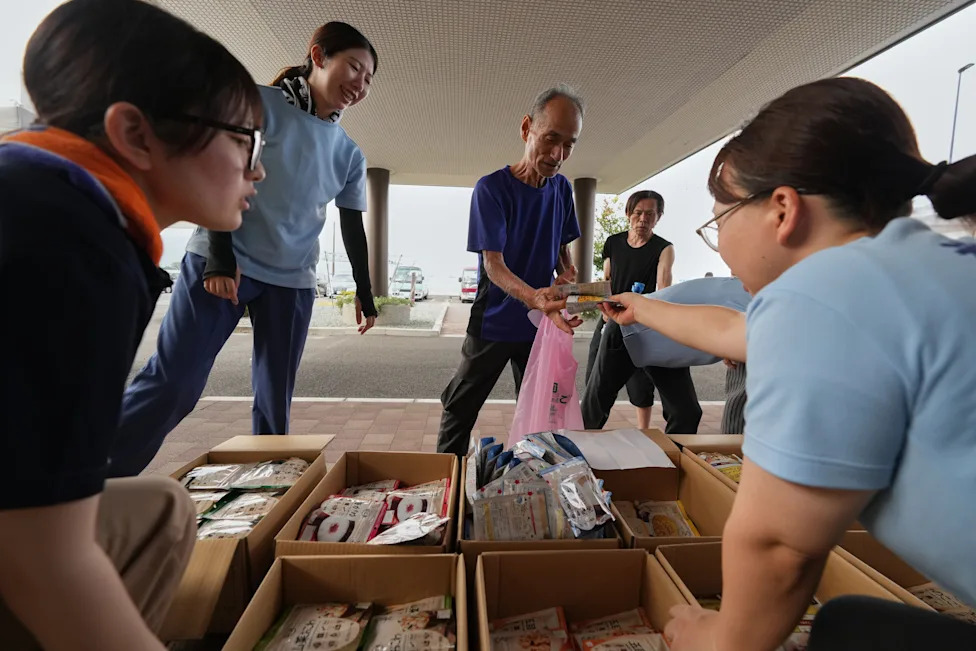
Residents receive food supply following an earthquake in Hikawa, Kumamoto Prefecture, southern Japan, Thursday, July 30, 2026. (AP Photo/Hiro Komae)(AP Photo/Hiro Komae)
Humanitarian Needs and Infrastructure Strain
The prefecture faces critical shortages of fresh water affecting nearly 70,000 homes, along with fuel supply issues. A heat wave added urgency: the Japan Meteorological Agency recorded an "extreme heat" high of 36.6°C (97.8°F) in Kumamoto city on Saturday, heightening fears of heat-related illnesses among displaced residents.
More than 9,000 people remained in evacuation centers — community centers, school gyms and classrooms — while many others sought privacy by sleeping in cars parked at town-hall lots, in parks or near their homes. Experts have long criticized crowded shelter conditions in Japan for compromising sanitation, privacy and health.
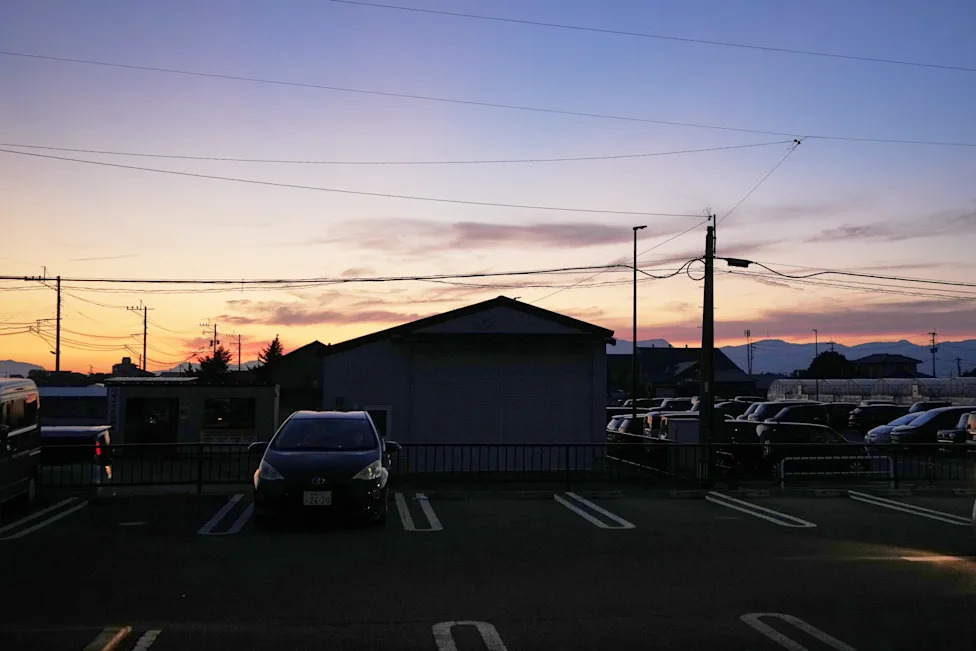
Hirokazu Sato, his wife and their three children live temporarily inside their car, center left, parked at the parking lot of the Hikawa Town Hall in Hikawa, southern Japan, Thursday, July 30, 2026, two days after an earthquake hit the area. (AP Photo/Hiro Komae)(AP Photo/Hiro Komae)
To improve conditions, authorities have been delivering water, food, portable toilets, air conditioners and partitions to evacuation centers. "The government is determined to do everything we can," Takaichi said.
Damage Assessment
Local authorities logged more than 1,500 reports of power loss as of Saturday, though the regional utility serving Kyushu reported no immediate widespread outages. Prefectural assessments indicate that over 180 homes were destroyed and nearly 3,500 buildings were damaged — a figure that nearly doubled from the previous day — with 20 buildings listed as severely affected.
Quote: "The government is determined to do everything we can," Prime Minister Sanae Takaichi said at a task-force meeting.
Search-and-relief operations remain active across Kumamoto as authorities prioritize rescue, medical care and the delivery of basic necessities to thousands of displaced residents.
Help us improve.