The Supreme Court dismissed indirect contempt petitions against three critics but did not halt Vice‑President Sara Duterte's Senate impeachment trial. Social‑media posts misread a July 17, 2026 press release that summarised an unrelated decision. The contempt petitions stemmed from criticism of a July 2025 ruling that struck down a prior impeachment complaint; the Court found those remarks to be protected political speech. Meanwhile, prosecutors continued presenting evidence in the Senate, including allegations of misuse of confidential education funds.
Supreme Court Dismisses Contempt Petitions — VP Sara Duterte's Senate Impeachment Continues
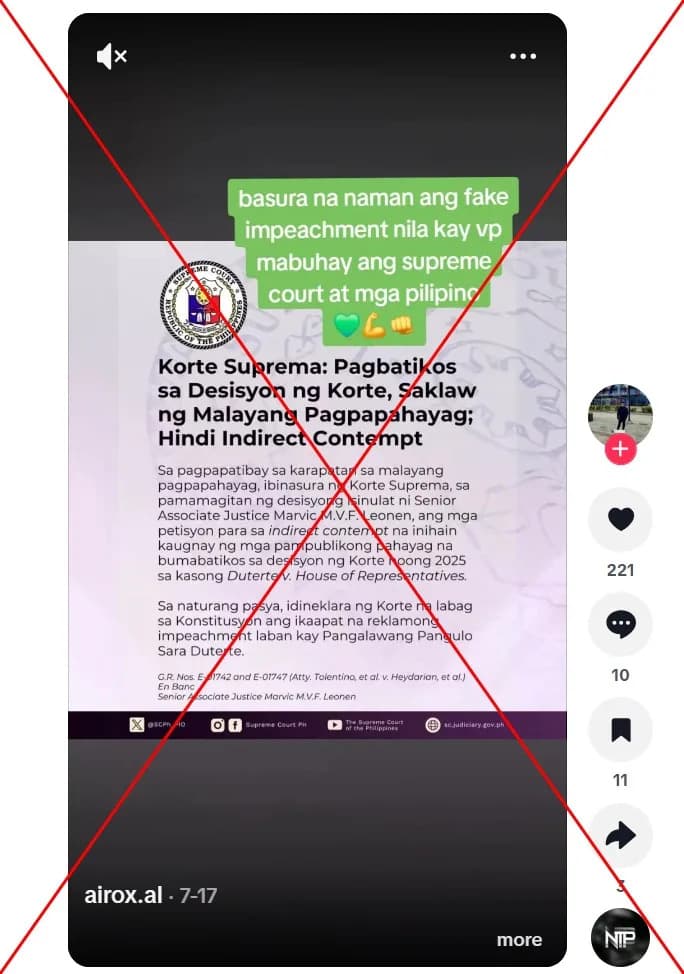
Screenshot of the false post captured on July 27, 2026, with red X added by AFP
The Philippine Supreme Court dismissed indirect contempt petitions against three public figures but did not stop the Senate impeachment trial of Vice‑President Sara Duterte. Social‑media posts misread a July 17, 2026 court press release summarising an unrelated decision and falsely claimed the Court had halted the ongoing Senate proceedings.
Background
The misleading posts circulated while the Senate was conducting an impeachment trial based on charges transmitted earlier in the year by the House of Representatives. The House accused Duterte of graft, corruption, bribery and involvement in an alleged assassination plot against former ally President Ferdinand Marcos. A conviction would require a two‑thirds vote of the 24‑member Senate and could remove her from office and bar her from holding elective office in the future.
What the Court Actually Ruled
On July 17, 2026, the Supreme Court published a press release summarising a ruling by Justice Marvic Leonen that dismissed indirect contempt petitions filed against political analyst Richard Heydarian, House member Percival Cendana and presidential adviser Larry Gadon. The petitions arose from the trio's public criticism of a July 2025 decision in Duterte v. House of Representatives, which struck down an earlier impeachment complaint on procedural grounds.
"Public discussions on matters of paramount public interest should be free," the Court said, adding that people must have "the widest latitude to express their opinions without fear of being subsequently punished."
The Court concluded the critics' remarks constituted protected political speech and therefore did not amount to indirect contempt. The July 2025 ruling referenced by the critics had found that certain impeachment proceedings violated the constitutional prohibition against subjecting an official to multiple impeachment proceedings within a one‑year period.
Senate Proceedings Continue
Contrary to viral claims, the Supreme Court decision did not address or halt the active Senate trial. Prosecutors continued to present evidence in the Senate after the false posts circulated, including allegations that Duterte misused confidential education funds while serving as education secretary. The Court separately authorised subpoenas for the financial records of Duterte and her husband after prosecutors rested part of their case concerning alleged threats made against President Marcos.
Why This Matters
The episode highlights how summaries of court releases can be misinterpreted or intentionally misrepresented online. Accurate reading of legal statements and the difference between separate judicial decisions and active legislative proceedings are essential to informed public debate, especially during high‑profile political trials.
Help us improve.