Boeing reports progress on a propulsion redesign for its Starliner capsule, but NASA and independent reviewers still cite unresolved technical and certification issues following the June 5, 2024 Crew Flight Test. That mission suffered thruster failures and helium leaks, leading to a Type A mishap and about $2 billion in charges to Boeing. An uncrewed, crew-capable cargo test is targeted no earlier than early 2026, while ISS docking-port availability and the need to human-rate ULA's Vulcan rocket add schedule risk. With SpaceX planning Crew Dragon's retirement around 2030, a certified Starliner remains strategically important even if costly per flight.
Boeing’s Starliner Could Return to Flight — But Major Hurdles Remain
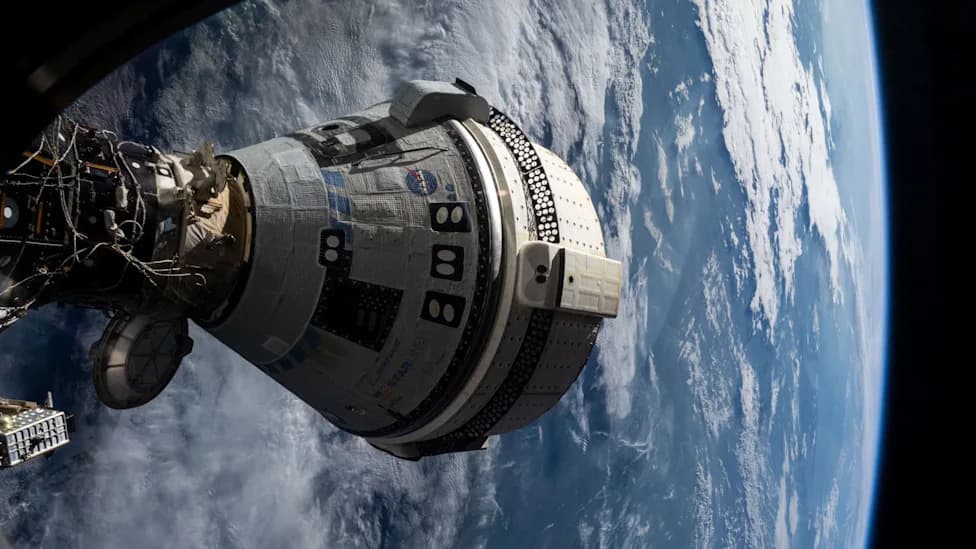
Image: NASA
Boeing says propulsion redesign work on its Starliner capsule is "going quite well," and company leaders are "feeling pretty good about that." Yet NASA and independent reviewers continue to flag unresolved technical and certification issues. The next flight will depend not only on engineering fixes but also on operational realities at the International Space Station (ISS).
What Happened
The Crew Flight Test launched on June 5, 2024, carrying astronauts Butch Wilmore and Suni Williams for an eight-to-fourteen-day shakedown. Multiple reaction-control thruster failures and helium leaks in the service module left NASA unable to certify the vehicle for a safe crew return. Starliner returned empty in September while the two astronauts came home later aboard SpaceX's Crew Dragon.
Severity And Cost
NASA classified the mission as a Type A mishap, its most serious designation, citing propulsion failures that caused a loss of maneuverability and substantial program impact. Boeing has absorbed roughly $2 billion in charges on a fixed-price contract, which has since been reduced from six committed crew flights to four, with two remaining optional.
Next Steps
NASA and Boeing plan an uncrewed but crew-capable cargo test (often described as Starliner-1) to validate propulsion fixes. NASA's public target is no earlier than early 2026. The agency and the Office of Inspector General continue active reviews of outstanding technical, software, and certification questions.
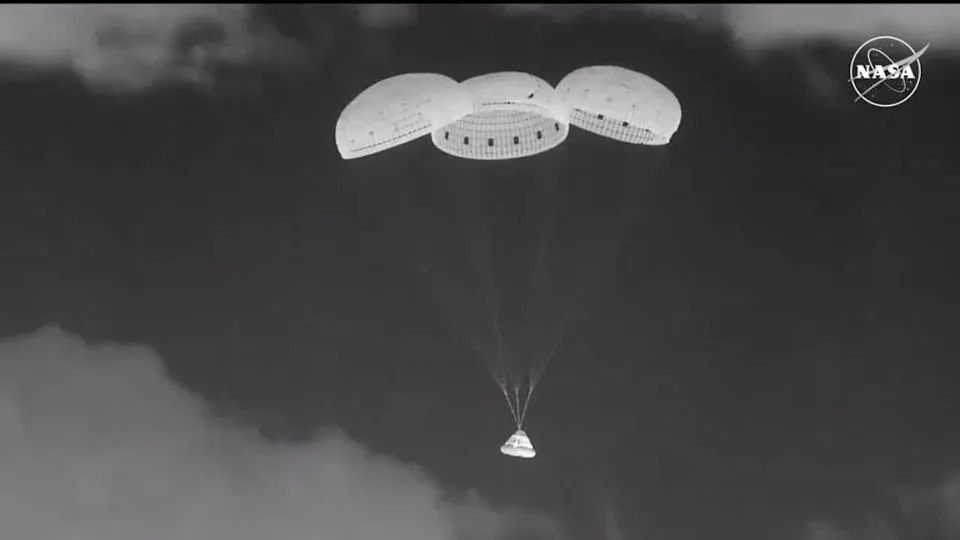
Image: NASA
Operational Bottlenecks
Officials now say one of the near-term constraints is scheduling an available docking port at the ISS, not just fixing hardware. That nuance matters: it suggests engineering progress may be further along than public perception, but it does not negate remaining certification work or oversight requirements.
Program Risks And Market Pressure
Starliner’s service module is expendable, so significant hardware is lost on each reentry, keeping per-flight costs higher than reusable competitors. The program must also transition from United Launch Alliance’s Atlas V to ULA’s Vulcan rocket — a change that requires additional human-rating work and introduces cost and schedule risk.
Market timing increases pressure: SpaceX reportedly plans to retire Crew Dragon around 2030 as Falcon 9 phases toward Starship. With Starship not yet widely accepted for routine human missions, NASA and station operators need dependable crew-transport alternatives into the early 2030s.
Context And Outlook
Starliner’s development record is mixed: a 2019 software error kept the first uncrewed test from reaching the ISS, a successful redo occurred in 2022, and the 2024 crewed mishap followed. That history has earned the program close scrutiny from NASA’s Inspector General. Still, a successful uncrewed cargo test would not prove every issue is solved — but it would demonstrate the vehicle is fixable and that Boeing can move toward re-certification.
Bottom line: Starliner doesn’t need to be elegant — it needs to be certified and operational before Crew Dragon is retired. Engineering progress appears tangible, but oversight, certification, and station scheduling must all line up before crews can fly again.
Image: NASA
Help us improve.