Investigators recovered a video pledging allegiance to Islamic State from the phone of the deceased suspect in the Berlin Pride attack. The 21-year-old, identified as Abdul B, is believed to have driven into a crowd in Tiergarten and then attacked people with a machete; one Polish woman was killed and 31 others were injured. Abdul B had been classified as a "potential threat" and was under surveillance, prompting renewed debate over measures such as electronic ankle tags.
Islamic State Pledge Found On Berlin Pride Attacker’s Phone — Deadly Tiergarten Assault Spurs Calls For Tighter Monitoring
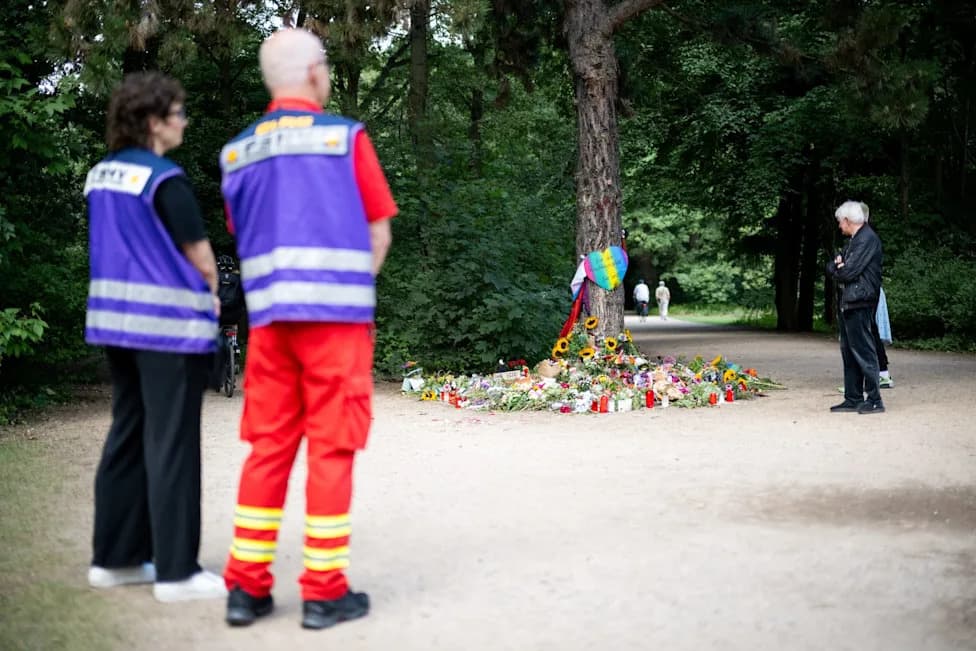
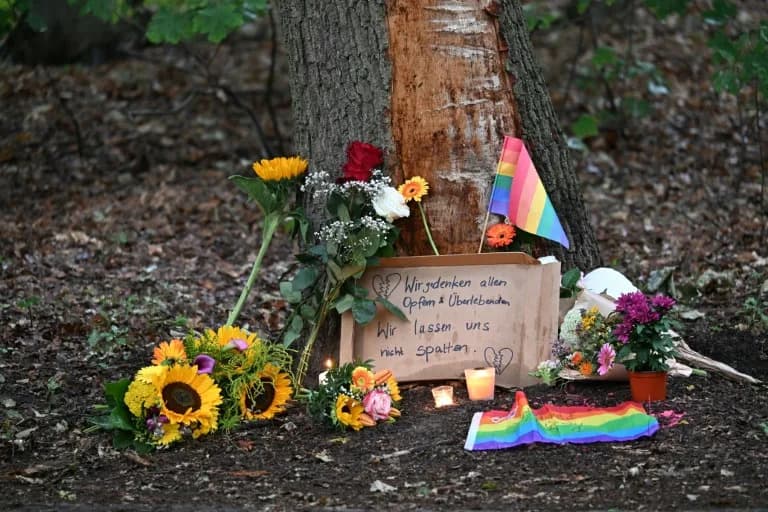
Members of a crisis intervention team and mourners gather next to a memorial site in the Tiergarten park in Berlin. A man drove a vehicle into a crowd of people on the sidelines of the Christopher Street Day (CSD) parade, leaving several injured. (is associated with: «Islamic State loyalty oath found on Berlin Pride attacker's phone») Sebastian Gollnow/dpa
Authorities said investigators recovered a video in which the speaker pledges allegiance to the Islamic State from the phone of the deceased suspect in the Berlin Pride attack.
A spokeswoman for Germany's Federal Public Prosecutor's Office confirmed a report in the Bild tabloid that a recording claiming responsibility for Saturday evening's assault was found during the probe. Der Spiegel reported that the person in the footage is believed to be the 21-year-old suspect, identified as Abdul B.
According to prosecutors and regional outlets, Abdul B first drove into a crowd in Tiergarten park and then attacked passers-by with a bladed weapon described by investigators as a machete. Berlin officials updated casualty figures on Tuesday: one Polish woman was killed and 31 people were injured, Mayor Kai Wegner said.
The video shows a masked man speaking Arabic; Der Spiegel and other outlets say they believe the person in the footage to be the attacker. The suspect was located and shot dead by police on Sunday at an allotment in Spandau after a day-long manhunt.
Background: Surveillance and Legal Status
Before the attack, German authorities had classified Abdul B as a "potential threat"—a designation applied to individuals considered capable of committing serious offences, including terrorism. Berlin's state criminal investigation office (LKA) had been monitoring him, reportedly tracking his phone and installing a surveillance camera. Regional outlets also reported that the Joint Counter-Terrorism Centre (GTAZ), where police and intelligence services coordinate, examined his file and judged him a serious risk.
Officials said Abdul B had been convicted in May for attempting to join Islamic State, though that conviction was not yet final. In early July a surveillance camera captured him leaving his home carrying an object that looked like a firearm; police searched his flat and found the item to be a toy, after which he received a formal warning.
Responses And Debate Over Monitoring
The attack has reignited debate in Germany over how to monitor individuals considered dangerous. Berlin Mayor Kai Wegner — who described Islamist extremism as a major threat to the LGBT+ community — and Interior Minister Alexander Dobrindt have both advocated expanding technical monitoring tools, including electronic ankle tags. Wegner said such options and legal changes should be considered to prevent similar attacks.
Stefan Evers, the CDU candidate to replace Wegner as mayor, called for bans on certain mosque associations. Polish prosecutors in Warsaw have opened an inquiry into the death of the Polish victim; Poland's Foreign Ministry said the victim's adult daughter was hospitalised and is being treated, but her life is not in danger.
Prevention Efforts And Radicalization
Prevention advisers from the Violence Prevention Network (VPN), who engaged with Abdul B, said his radicalization unfolded over several years rather than rapidly. Thomas Mücke of the VPN told the Berliner Morgenpost that Abdul B had attended two meetings with the organisation and a third had been scheduled; staff reported no acute indicators—such as clear threats, intense agitation or explicit calls to violence—during those sessions.
Authorities emphasise the investigation and evidence review are ongoing. Prosecutors and security services are continuing to examine the footage, the suspect's contacts and the timeline of events as they consider changes to monitoring powers and prevention strategies.
Help us improve.