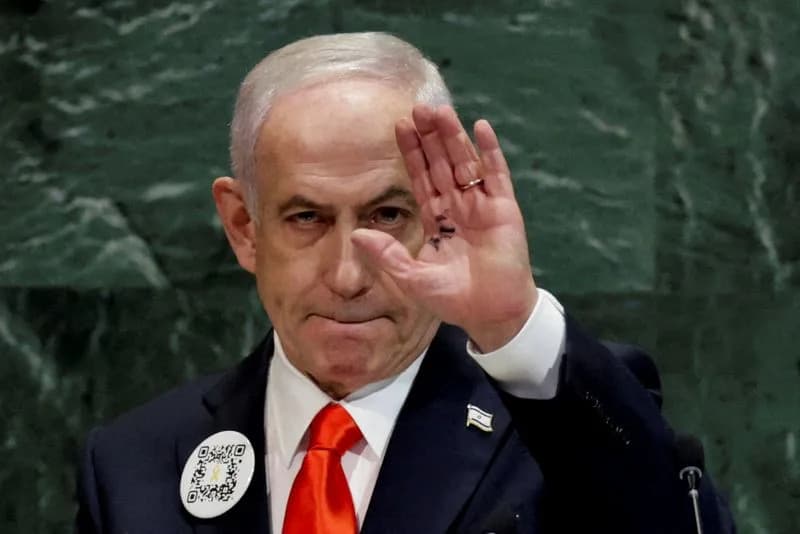
Israeli Prime Minister Benjamin Netanyahu is meeting U.S. President Donald Trump at the White House for their first in-person talks since the conflict with Iran began. The leaders are expected to focus on the Iran confrontation, implementation of a U.S.-brokered Israel-Lebanon framework, and stalled reconstruction efforts in Gaza. The visit also aims to reassure allies and rivals that U.S.-Israel ties remain strong ahead of Israel's national elections.
Netanyahu Meets Trump in Washington — First In-Person Talks Since Iran Conflict Began
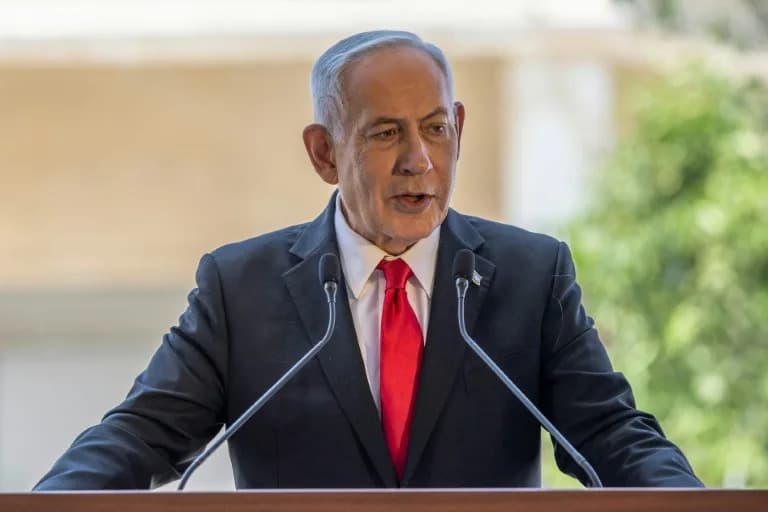
Israeli Prime Minister Benjamin Netanyahu will meet US President Donald Trump for the first time since the Iran war began (ilia YEFIMOVICH)
Israeli Prime Minister Benjamin Netanyahu is visiting Washington to hold face-to-face talks with U.S. President Donald Trump — their first in-person meeting since the outbreak of the conflict with Iran. The visit comes amid public tensions between the two leaders, but both sides have signalled a desire to steady relations ahead of sensitive regional and domestic developments.
Agenda And Expectations
The discussion is expected to be dominated by the Iran conflict, which escalated after coordinated U.S.-Israeli strikes on Iranian targets in late February. Washington has said it wants to give negotiations a chance, and both leaders are likely to explore how to manage hostilities while pursuing diplomatic channels.
Officials also say the leaders will discuss the implementation of a recent U.S.-brokered framework agreement between Israel and Lebanon — a complex deal whose deployment on the ground has faced logistical and political hurdles. Talks are expected to cover Gaza as well, where reconstruction efforts remain stalled and humanitarian conditions are dire after nearly three years of conflict with Hamas.
Public Friction, Private Alignment
Relations between Netanyahu and Trump have at times appeared strained, most notably during ceasefire negotiations in April, when public exchanges grew heated. Speaking before his departure, Netanyahu sought to downplay the row, framing disagreements as tactical rather than strategic.
"This is a great privilege, but it is also a great responsibility," Netanyahu said. "We will discuss all the issues on the agenda, first and foremost Iran. Naturally, our goal is to safeguard our security and also to expand the circle of peace around us."
Analysts say the meeting aims in part to demonstrate that U.S.-Israeli ties remain intact despite public spats. Differences noted by observers tend to concern the timing, intensity and immediate objectives of operations rather than long-term goals.
Political Context
The visit arrives months ahead of Israel's national elections, where Netanyahu is seeking another term amid polling that shows him trailing. Domestic criticism over the government's perceived security failures, including its ability to prevent Hamas's October 7, 2023 attack, continues to shape the political landscape at home.
Regional Implications
Beyond Iran and Lebanon, the talks could touch on the broader regional footprint of Israeli forces — including questions about deployments in Syria, Lebanon and Gaza — and on efforts to revive and expand the Abraham Accords, Washington's normalization initiative for Israel with several Arab states.
The meeting will be the leaders' eighth since President Trump's return to office last year and their first face-to-face discussion since hostilities began. Observers will be watching for concrete agreements on de-escalation, reconstruction, and steps to solidify the U.S.-Israel relationship ahead of potential wider regional negotiations.
Help us improve.