Researchers have developed a living textile made from mycelium that remains viable after production and can regrow its surface when provided nutrients. The team softened dense mycelium sheets with glycerol to create a flexible fabric that can host engineered microbes for color or melanin-based UV protection. While the integration of these components is novel and technically impressive, the material biodegrades in about six weeks and requires controlled storage, limiting near-term use to short-lived or functional applications rather than conventional clothing.
Living Textiles: Researchers Turn Fungi Into Self‑Regenerating Fabrics
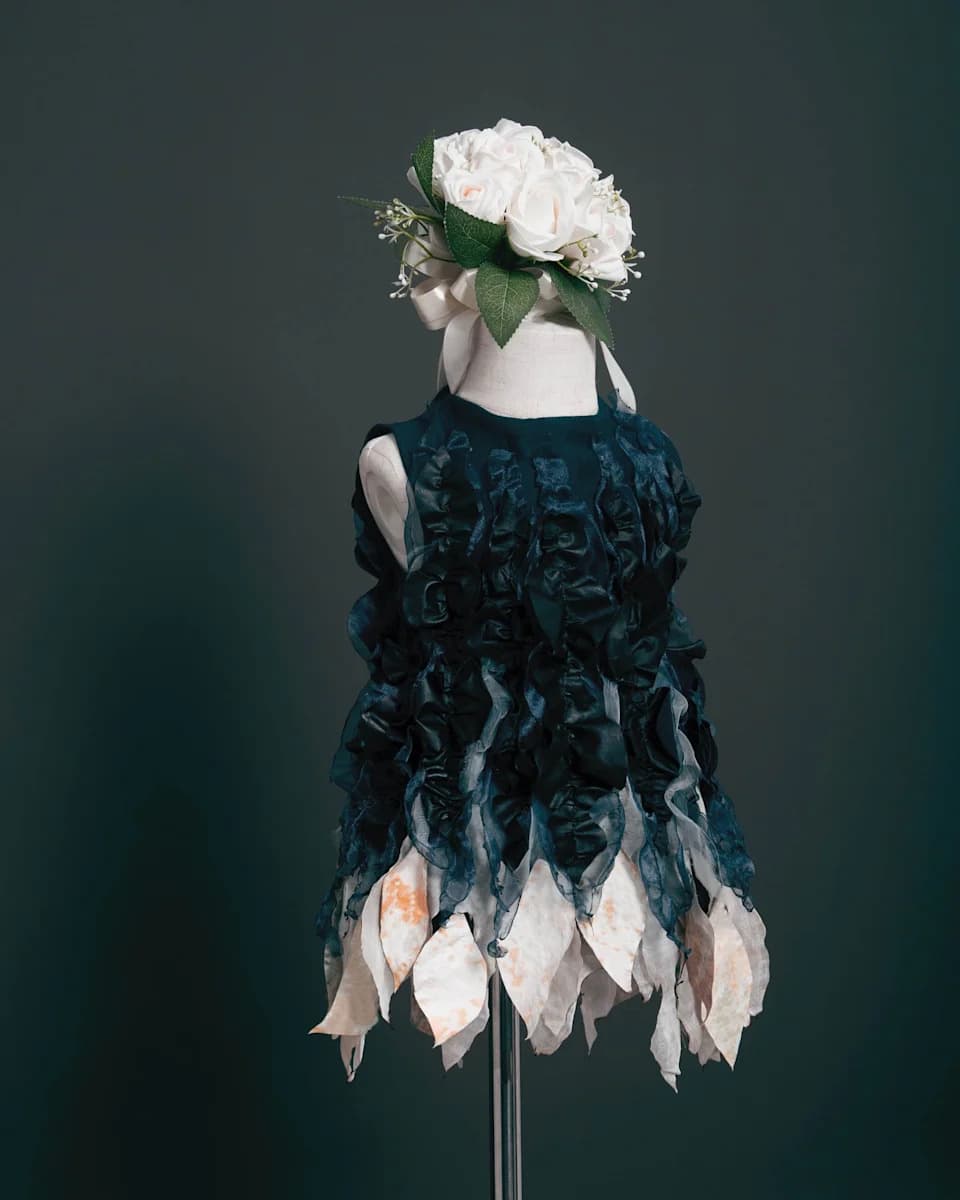
A full-length garment incorporating fungal textile components produced using the programmable fungal platform described in a new study.Courtesy of Ke Li et al.
What if your clothing could heal itself? Scientists report a new fungal-derived textile that remains alive after manufacture and can regrow its surface when fed, opening possibilities for short-lived or functional materials that actively change or repair themselves.
How It Works
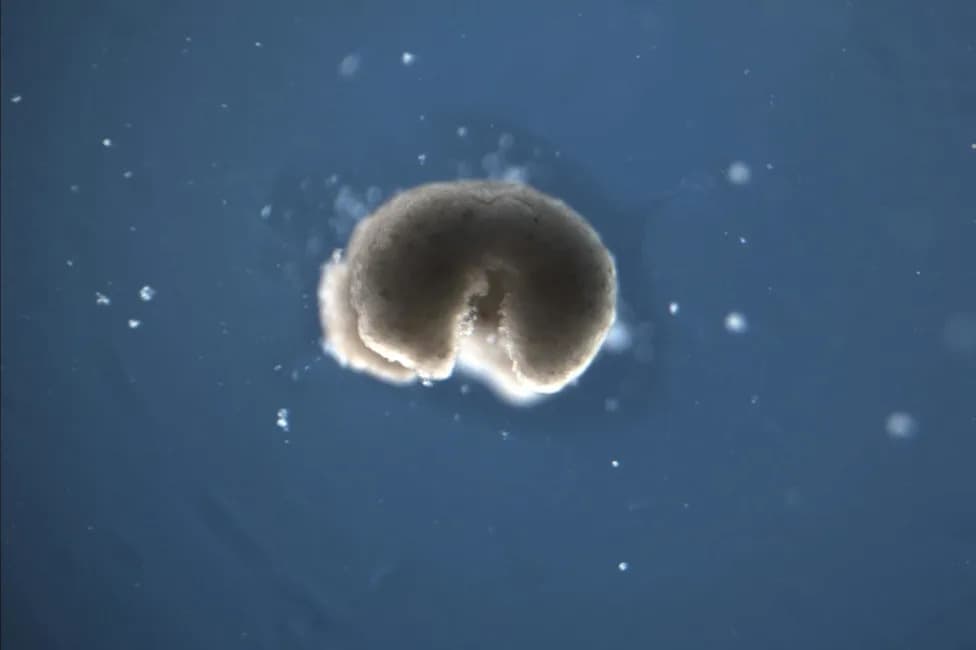
The team grew dense mats of mycelium, the threadlike network of microscopic fungal filaments, which naturally interlock into cohesive sheets. Instead of killing and processing the biomass into inert materials, researchers preserved the living tissue and softened it with glycerol, a syrupy plasticizer that increases flexibility without killing the fungus. The result is a supple, freestanding fabric that remains viable.
Regeneration and Programmability
When supplied with nutrients, the living textile sprouts a fuzzy layer of filaments across its surface, effectively renewing and repairing itself. The material can also host engineered microbes: the team embedded a pigment-producing yeast to create colored patterns, and introduced a melanin-producing fungus to provide ultraviolet protection. These demonstrations show the textile can acquire new functions after fabrication.
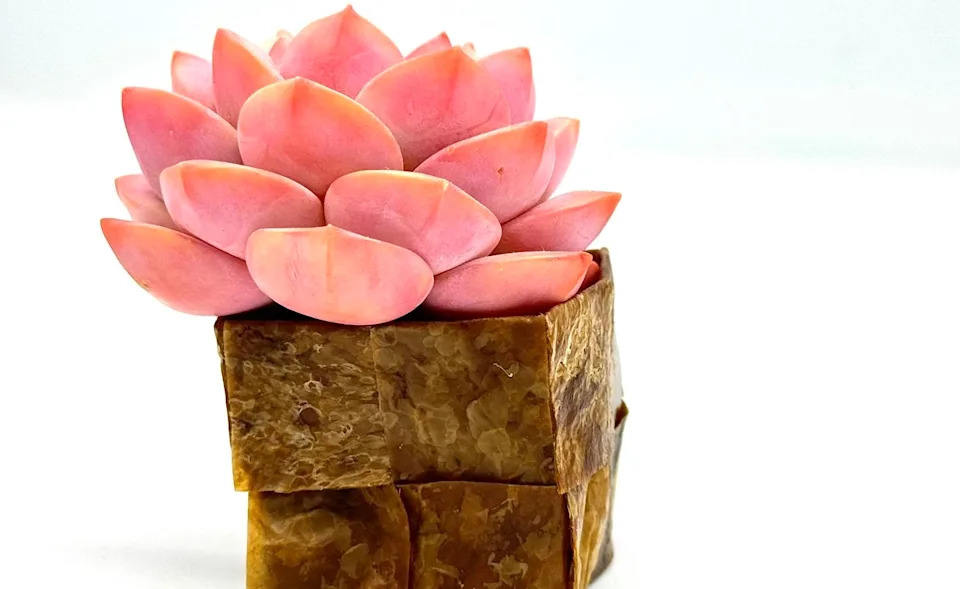
A small three-dimensional container formed by folding and assembling fungal textile material, shown here holding a succulent plant.Courtesy of Ke Li et al.
"We wanted to ask whether a mycelium material could remain alive and programmable while still behaving as a freestanding, flexible textile," says Bolin An, a research professor at the Chinese Academy of Sciences and a co-author of the study.
Potential Uses and Limitations
Experts note that while the component techniques are largely established, the novelty lies in integrating them into a single living-material platform. The material is not yet ready for conventional clothing: it requires controlled storage to avoid contamination and, in the authors' tests, the fabric largely biodegraded within about six weeks. Such rapid breakdown makes it unsuitable for durable garments but potentially valuable for disposable packaging, temporary installations, or functional objects like curtains that provide passive UV shielding.
Beyond appearance and repair, researchers envision living surfaces that perform added roles such as self-cleaning, environmental sensing, or air purification. At the same time, commentators caution that technical feasibility does not automatically imply greater safety, durability, or broader sustainability advantages compared with existing textiles, especially given that much of the fashion industry's waste stems from business models and consumer habits.
Outlook
The work is visually striking and technically impressive, demonstrating a new direction in biofabrication. Further research will need to address longevity, contamination control, regulatory and safety assessment, and life-cycle impacts before commercial or consumer applications become viable.
Help us improve.