Lead Stories found a viral 10-second clip claiming to show a Komodo dragon attack was almost certainly produced with generative AI. Three independent detectors flagged the footage as 99–99.9% likely synthetic, and the video shows visual glitches such as a disappearing earring and missing hand. The clip appears to have originated on Instagram (posted July 4, 2026), was reposted to TikTok with an AI label, and later circulated on X.
Fact Check: Viral 'Komodo Dragon Attack' Clip Is AI-Generated — Not Real

Lead Stories says: AI Generated
A widely shared 10-second video purporting to show a Komodo dragon attacking a woman is not authentic. Multiple automated detectors and visible rendering errors indicate the clip was almost certainly produced with generative AI.
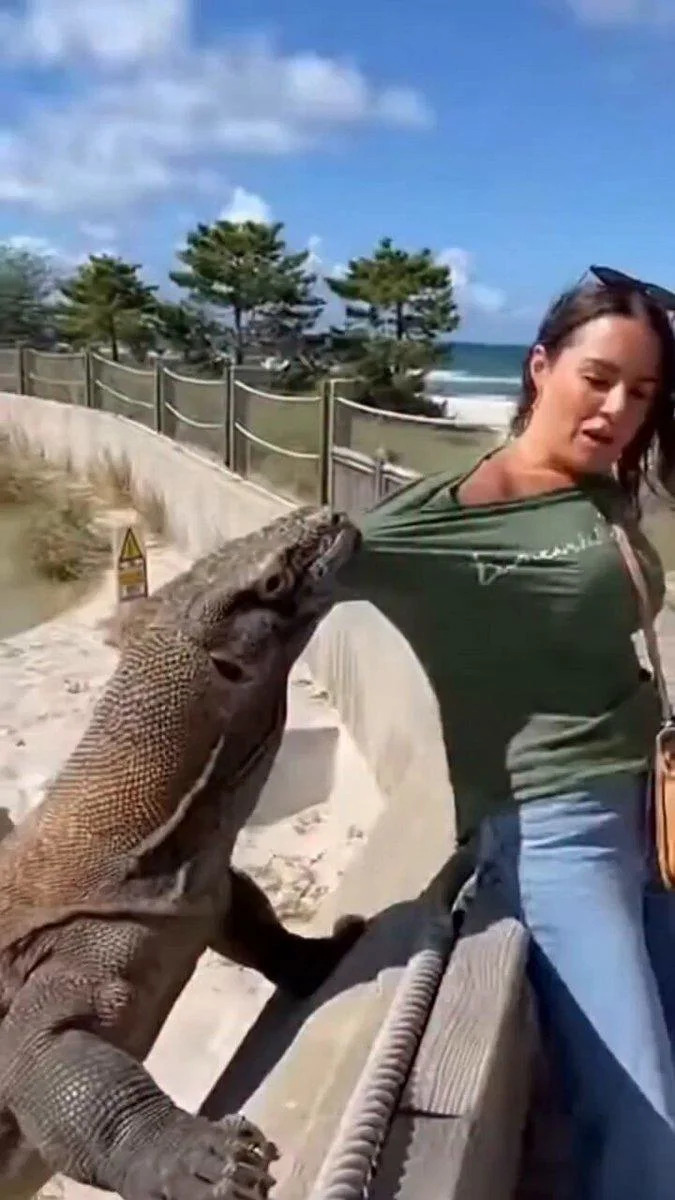
Image source: post by @FUn_zone89 on X.
Automated Detection
Lead Stories ran the footage through three independent tools, all of which flagged the clip as synthetic:
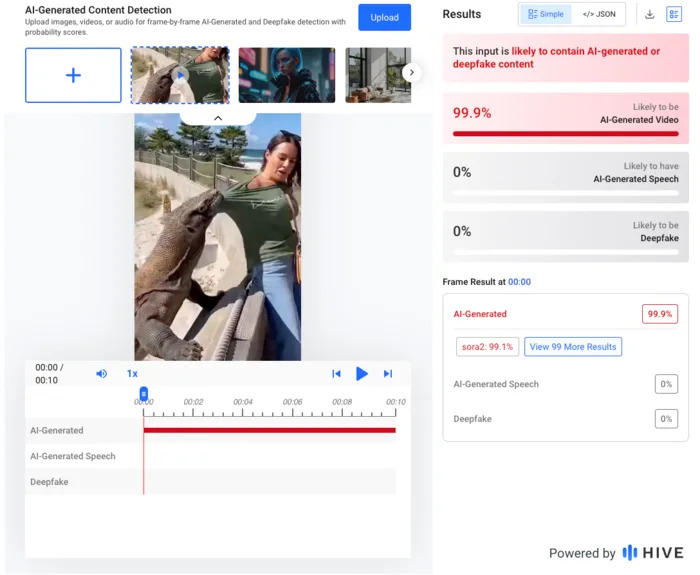
Image source: Hive Moderation.
- Hive Moderation: 99.9% likely AI-generated
- Sightengine: 99% likelihood of generative AI
- InVID (thumbnail analysis): 99% likely created by AI
Visible Visual Glitches
Beyond automated results, the clip displays obvious inconsistencies that are characteristic of AI-generated video rather than real footage. Notable issues include:
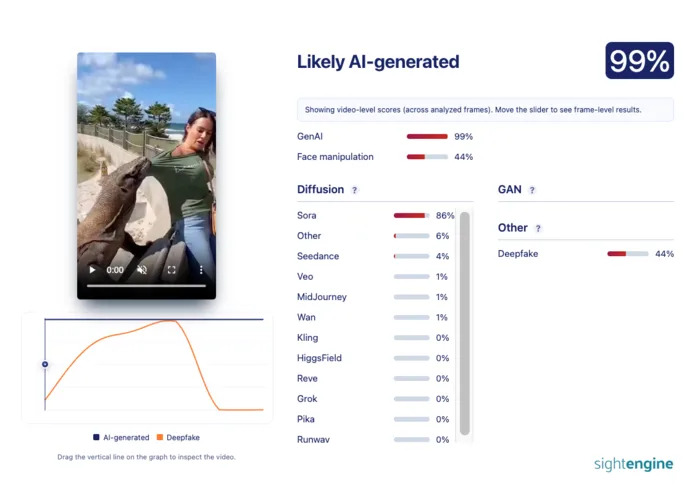
Image source: Sightengine.
- An earring that appears in one frame and disappears in the next.
- Incorrect anatomy: one of the woman's hands seems absent, and her shoulder is unnaturally close to her neck, suggesting rendering errors.
- General motion and object blending that lack the nuanced continuity of real-world video capture.
Tracing the Clip's Origin and Redistribution
Lead Stories traced an early appearance of the footage to an Instagram account, @luontotales, where the same clip was posted on July 4, 2026. That Instagram post included a caption (translated from Japanese) mentioning AI and used a #parody hashtag, implying the publisher treated the clip as fabricated or humorous. The account has shared several other videos that appear synthetic.
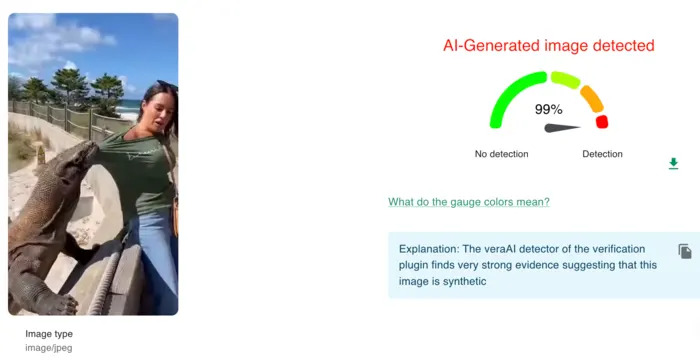
Image source: InVID.
The clip was later reposted to TikTok on July 6, 2026, displaying a watermark pointing to the Instagram source and an AI label. A separate X post by @FUn_zone89 on July 21, 2026, helped the clip spread further; that post included a Hindi caption that automated translations rendered differently across platforms.
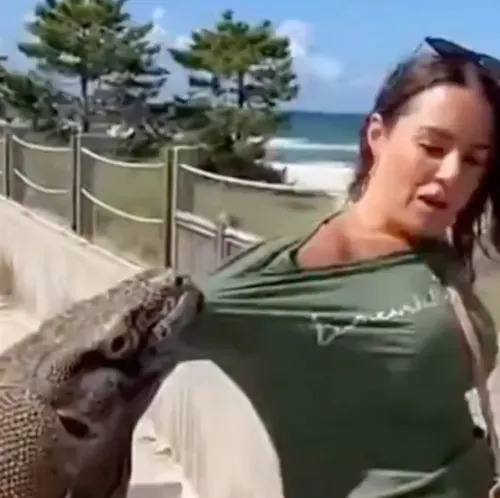
Image source: post by @FUn_zone89 on X.
Why This Matters
Deepfake and AI-generated videos can spread quickly and be mistaken for real events. In this case, both strong automated signals and clear visual errors provide converging evidence that the clip does not document an actual Komodo dragon attack.
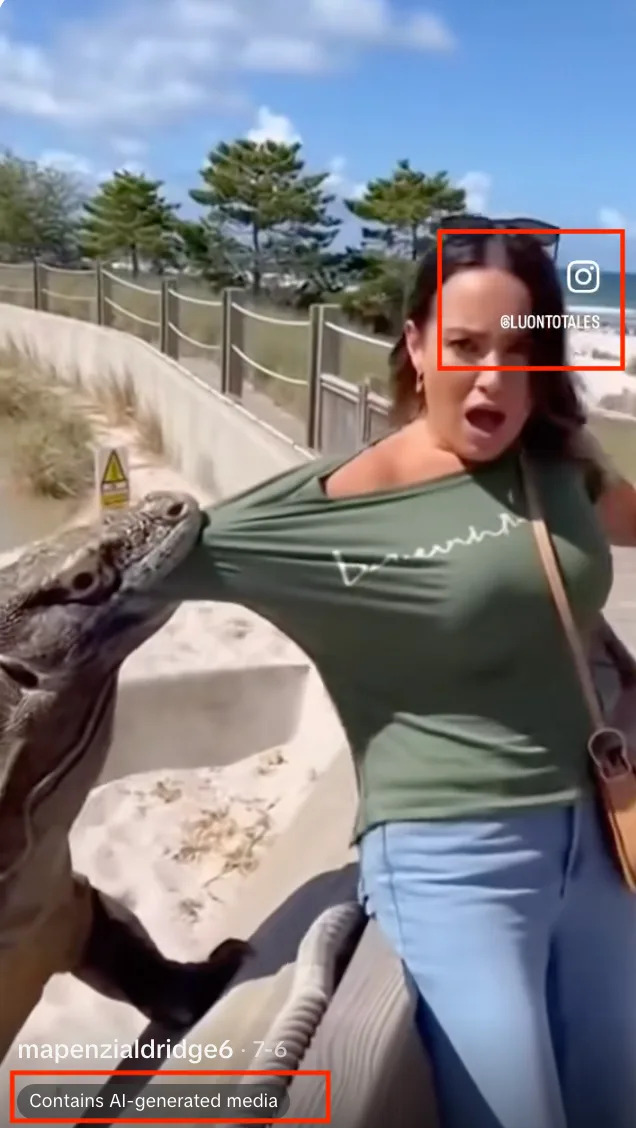
Image source: post by @mapenzialdridge6 on TikTok.
What You Should Do
- Do not treat or share the clip as proof of a real event.
- Look for source watermarks and AI labels; check whether the original poster acknowledged AI or parody.
- When in doubt, consult reputable fact-checking outlets and verification tools before believing or resharing dramatic footage.
Conclusion: Automated detectors and observable rendering flaws make it clear the viral Komodo dragon attack clip is AI-generated and not genuine documentary evidence of a real incident.
Help us improve.