Ukraine plans a phased demobilization that could allow some soldiers who have served continuously since early 2022 to return to civilian life by late autumn 2026. Defence Minister Mykhailo Fedorov said priority will go to longest‑serving troops, with eligibility based on total service days and combat days (service since 2014 will count). Monthly waves of discharges are possible but will depend on battlefield conditions and any new Russian mobilization. Kyiv has also introduced new contracts with higher pay and clearer discharge windows.
End of Extended Frontline Service May Be Near: Ukraine Plans Phased Demobilization for Longest‑Serving Troops
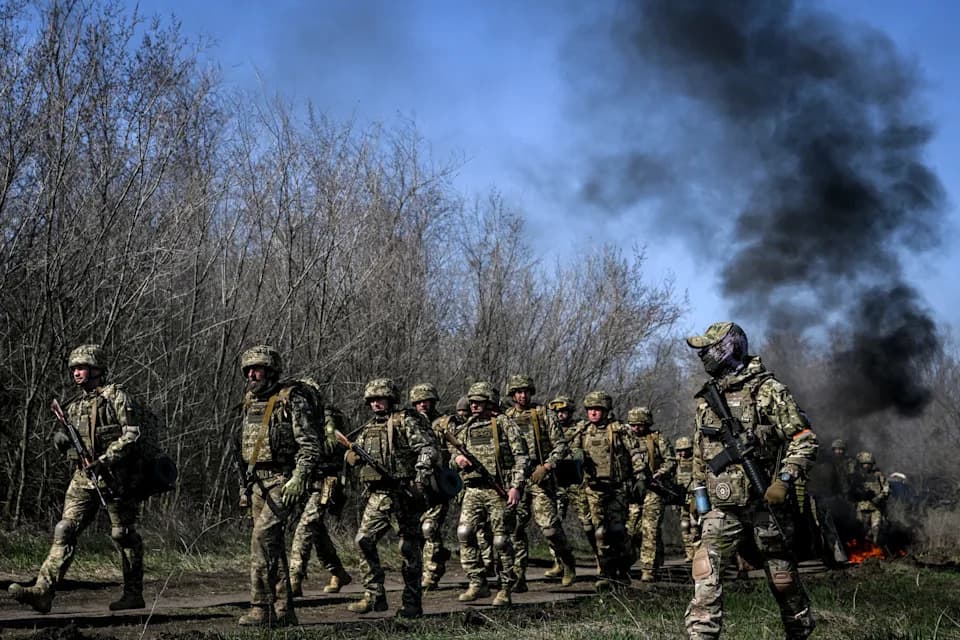
Ukrainian recruits march with their instructors on their first day of training.Dmytro Smolienko/Ukrinform/NurPhoto via Getty Images
Ukraine has announced plans for a phased demobilization that could allow some of its longest-serving soldiers to return to civilian life later this year, even as the conflict continues.
Who Will Be Eligible
Defence Minister Mykhailo Fedorov said Kyiv intends to prioritise the troops who have served the longest, with releases based on two clear criteria: total days in military service and the number of combat days. Service dating back to 2014 will be counted toward eligibility.
Timing And Conditions
Fedorov told local TV outlet TSN that the phased process is expected to begin by late autumn 2026 and could see groups of soldiers discharged each month. He stressed that the exact number released in any wave will depend on battlefield conditions and whether Russia announces a new mobilization.
"There will be two criteria: how many days you've been in military service, and how many combat days you've had. If you've served since 2014, this will count," said Fedorov.
Context And Implications
After Russia launched its full-scale invasion in February 2022, Ukraine mobilized hundreds of thousands of men. Many who volunteered or were called up in early 2022 have now served continuously for more than four years, with limited opportunities to return home. Under martial law, normal discharge rules were suspended, leaving some troops effectively on indefinite service.
The absence of a clear discharge timetable has been a major grievance among exhausted service members and a contentious political issue. Kyiv has struggled to balance the need to keep front-line strength with the political and social pressure to allow long-serving soldiers a return to civilian life.
Reforms And Assurances
The defence minister, appointed in January, has been pushing administrative and structural reforms within the armed forces. Last week the military unveiled new service contracts offering higher pay, clearer role definitions, and defined discharge windows.
Fedorov also reassured troops that anyone who signs a new contract but later meets demobilization criteria will be released under the discharge rules: the discharge will take precedence if they qualify.
It has now been more than 1,500 days since Russia launched its full-scale invasion of Ukraine.
Help us improve.