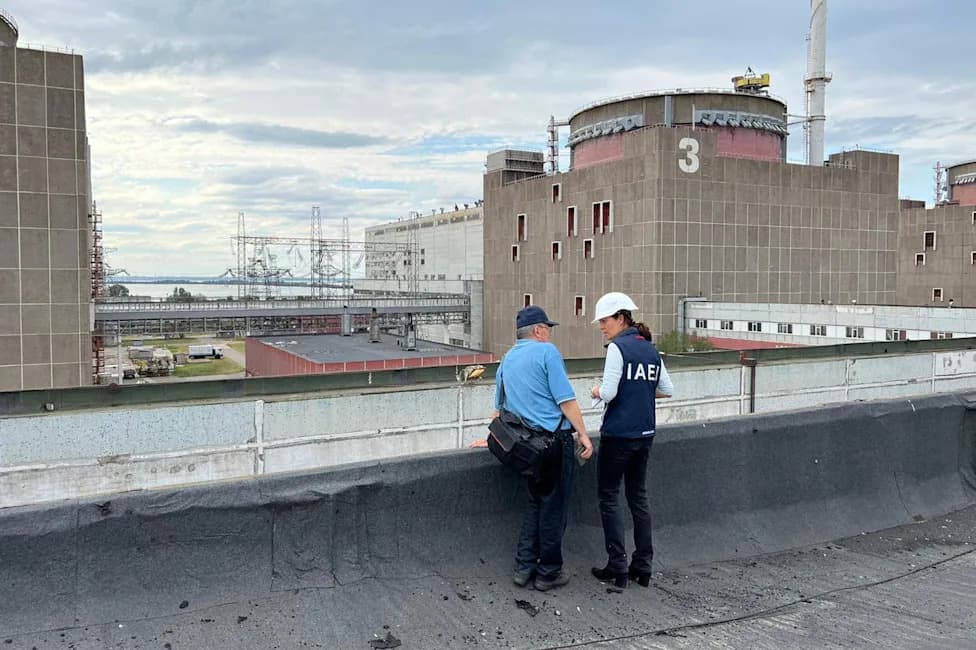
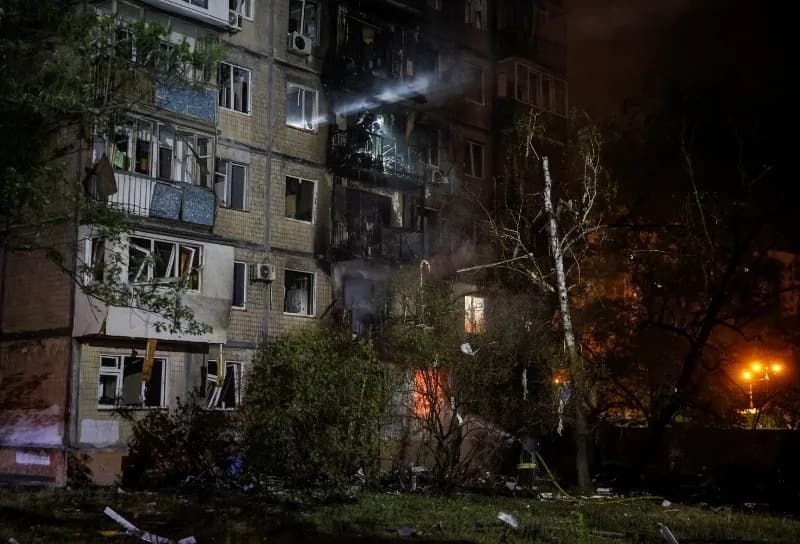
The IAEA warned that strikes on nuclear facilities are "like playing with fire" after reports of a drone strike at the Russian-held Zaporizhzhia plant. Director General Rafael Grossi expressed "serious concern," and if confirmed this would be the first drone strike inside the plant's perimeter since April 2024. Russia accused Ukraine of the attack, which Kyiv denied, while Ukrainian staff continue to operate the site near the front line. The IAEA has requested access amid repeated losses of off-site power and longstanding safety principles established in 2022–2023.
UN: Drone Strike Reported At Zaporizhzhia Nuclear Plant Is ‘Playing With Fire’
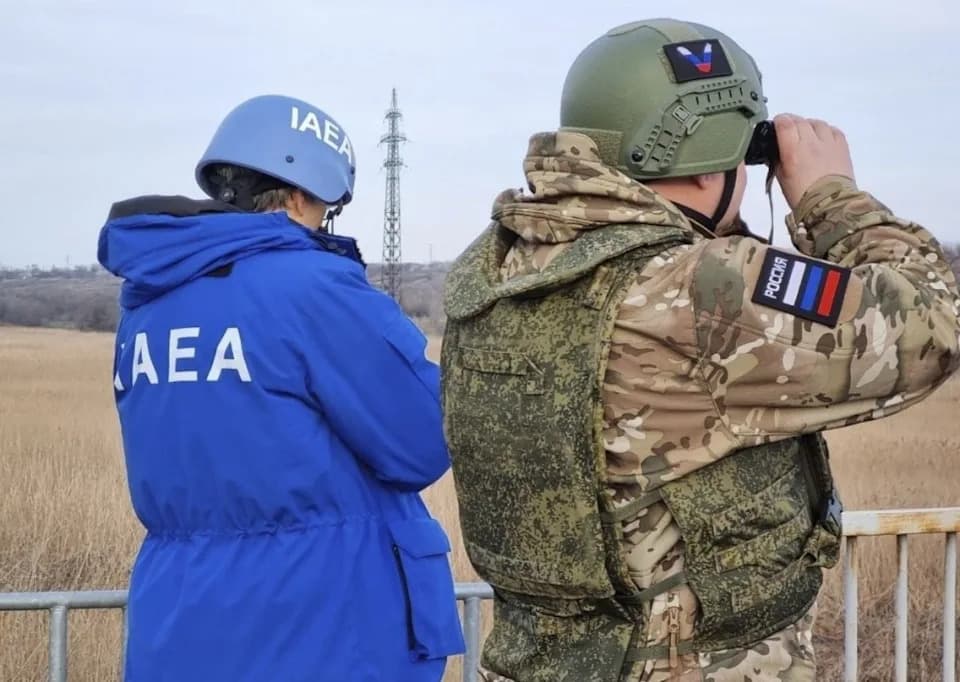
A Russian serviceman and a delegation members of the International Atomic Energy Agency (IAEA) cross the line of contact near the Karachekrak River on the territory of Zaporizhzhia region of Ukraine on February 7, 2024. This image was provided to AP by a third party and could not be independently verified.
The United Nations' nuclear watchdog has warned that strikes on nuclear facilities are "like playing with fire" after reports of a drone strike at the Russian-controlled Zaporizhzhia nuclear power plant in southern Ukraine.
The International Atomic Energy Agency (IAEA) said Director General Rafael Grossi has expressed "serious concern" about the reported incident, which occurred on Saturday. If confirmed, the agency noted, it would be the first drone strike inside the perimeter of Europe’s largest nuclear power plant since April 2024.
Moscow accused Kyiv of deliberately targeting the plant, an allegation Kyiv dismissed as a "propaganda ploy." Newsweek has contacted Ukraine’s Foreign Ministry for comment. Ukrainian personnel continue to staff the site despite its proximity to active front-line positions in the country’s south.
Operational and safety context
Russian forces seized control of the Zaporizhzhia complex after capturing the nearby town of Enerhodar in March 2022, soon after Moscow launched its full-scale invasion. The plant itself is not currently producing power, but it still depends on reliable off-site electricity to run essential safety systems. Experts say the site has lost access to off-site power more than a dozen times since February 2022, including outages as recently as mid-December.
The IAEA has repeatedly warned that exchanges of fire around the plant carry a significant risk of triggering a nuclear accident. In March 2022 the agency set out "seven indispensable pillars" to maintain nuclear safety in Ukraine during the conflict, including the continuous availability of off-site power. In May 2023 the IAEA urged both sides to observe "five concrete principles," the first of which forbids any attack from or against the Zaporizhzhia plant, especially near its reactors.
IAEA access and inspections
Mikhail Ulyanov, a senior Russian official based in Vienna, told Russia's Tass news agency that U.N. experts were inspecting the site. The IAEA separately confirmed it has requested access to the plant to carry out assessments and inspections. International monitoring and transparent inspections remain central to assessing damage, ensuring safety and reducing the risk of further escalation around nuclear infrastructure.
"Attacks or military operations involving nuclear sites are like playing with fire," the IAEA warned, underscoring the acute dangers when armed conflict overlaps with nuclear infrastructure.
The reported strike has renewed international concern about the safety of nuclear facilities in conflict zones and revived comparisons to past catastrophes: Ukraine last month marked the 40th anniversary of the Chernobyl disaster, which killed dozens in its immediate aftermath and exposed millions to radiation.
Help us improve.