
Migrant workers and grassroots groups in Beirut have mobilised to provide food, blankets and basic supplies after the outbreak of fighting on March 2. Organisations such as REMAN and Tres Marias are supporting nearly 1,500 volunteers and are preparing roughly 150 hot meals a day for displaced people and families in need. With about 164,000 migrants in Lebanon from over 80 nationalities, these community-led efforts are filling urgent gaps in aid and support.
Migrant Volunteers Keep Aid Flowing in War-Hit Beirut
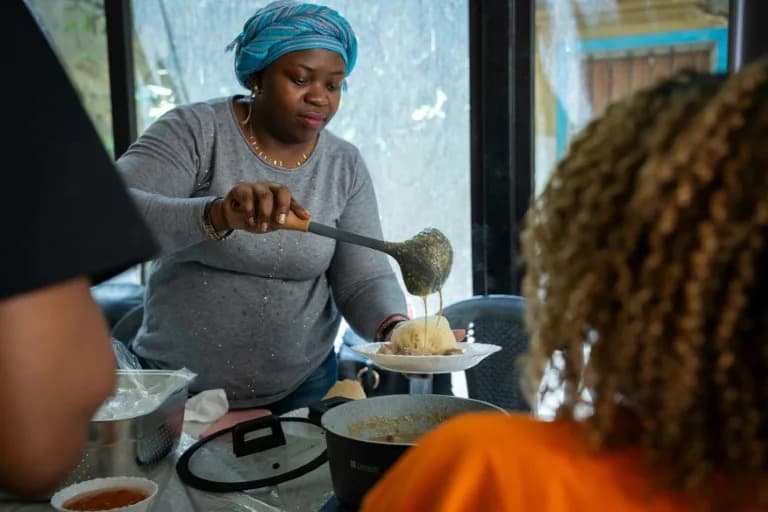
A volunteer serves food at REMAN, an organisation supporting migrant workers (Chantale SALAMEH)(Chantale SALAMEH/AFP/AFP)
At a busy relief centre in Beirut, migrant volunteers ladle steaming pots of okra soup and roll balls of the West African staple fufu, working through long hours to keep food and essentials reaching people caught up in the Israel–Hezbollah fighting.
Among those hardest hit by the conflict, Lebanon's migrant workers have mobilised to help others in their communities who are struggling to get by. The kitchens are busy, sewing machines hum as women stitch blankets, and volunteers stack thin mattresses and bags of basic supplies for distribution.
Local Groups Step Up
Viany De Marceau, 33, from Cameroon, who runs REMAN—an NGO that supports African migrant workers—summed up the urgency:
"If we don't do it, no one will do it for us."In recent weeks De Marceau and her team have redirected their efforts to assist nearly 1,500 volunteers, mostly migrants from countries such as Ethiopia, Benin and Kenya, along with some Lebanese families displaced or struggling to get by.
Elsewhere in a Beirut suburb, cupboards lined with sauces and tins frame volunteer-run kitchens preparing dishes such as green beans and fried rice balls. Myra Aragon, 52, from the Philippines, coordinates operations for Tres Marias, another organisation supporting migrant workers. She says the first calls for help came "as early as 3:00 am" when the conflict erupted on March 2.
Aragon and her volunteers now prepare roughly 150 hot meals a day for displaced people and others in need, delivering food and basic supplies despite limited resources. Outside the distribution centres, migrant women — some with children — leave carrying plastic bags filled with essentials like bread and toothpaste.
"We cannot just tell them, 'sorry, we cannot give you food today because we have nothing to cook.' We have to make it happen," Aragon said.
Scale and Context
Lebanon hosts about 164,000 migrants from more than 80 nationalities, most of them women, according to the International Organization for Migration. In the face of mounting needs and limited formal support, grassroots efforts by groups such as REMAN and Tres Marias are filling critical gaps, providing both sustenance and solidarity to vulnerable communities.
The volunteers' work is continuous: organising, cooking, sewing and distributing — often by phone and word of mouth — to reach those most in need amid the city's disruptions.
Help us improve.





















