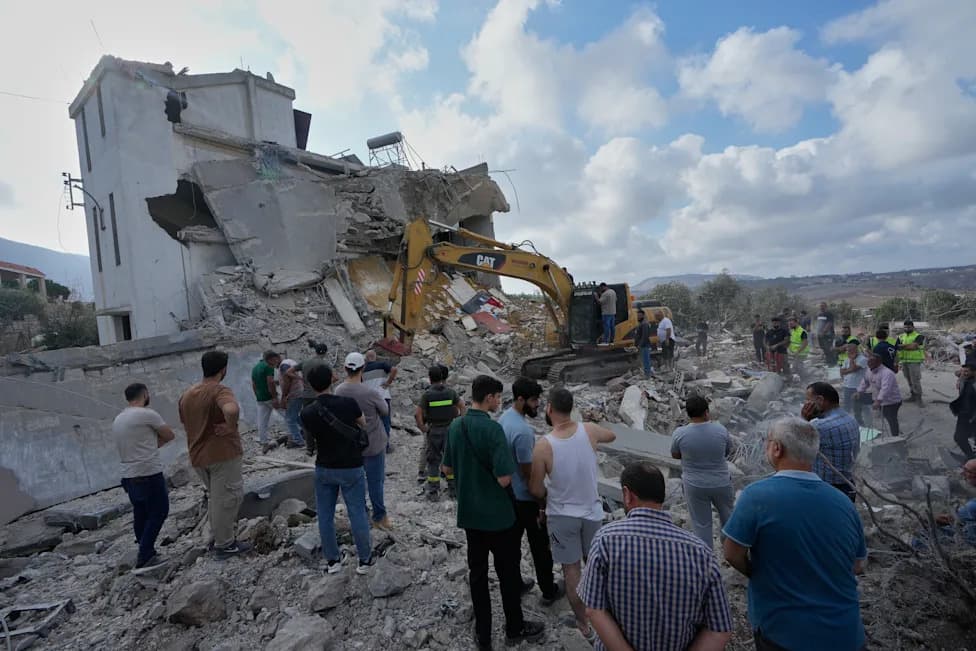
Israeli airstrikes on Kfar Dounin killed six people and wounded seven, in the latest violations of an April 16 U.S.-brokered ceasefire. Lebanon reports at least 380 deaths during the truce and more than 2,800 since March 2. Israel has issued new forced-displacement orders for multiple towns and destroyed infrastructure, while Lebanese leaders urge U.S. pressure ahead of talks in Washington. Hezbollah says its weapons are not negotiable and vows to remain on the battlefield.
Deadly Israeli Airstrike Hits Kfar Dounin; New Evacuation Orders Issued as Ceasefire Wavers
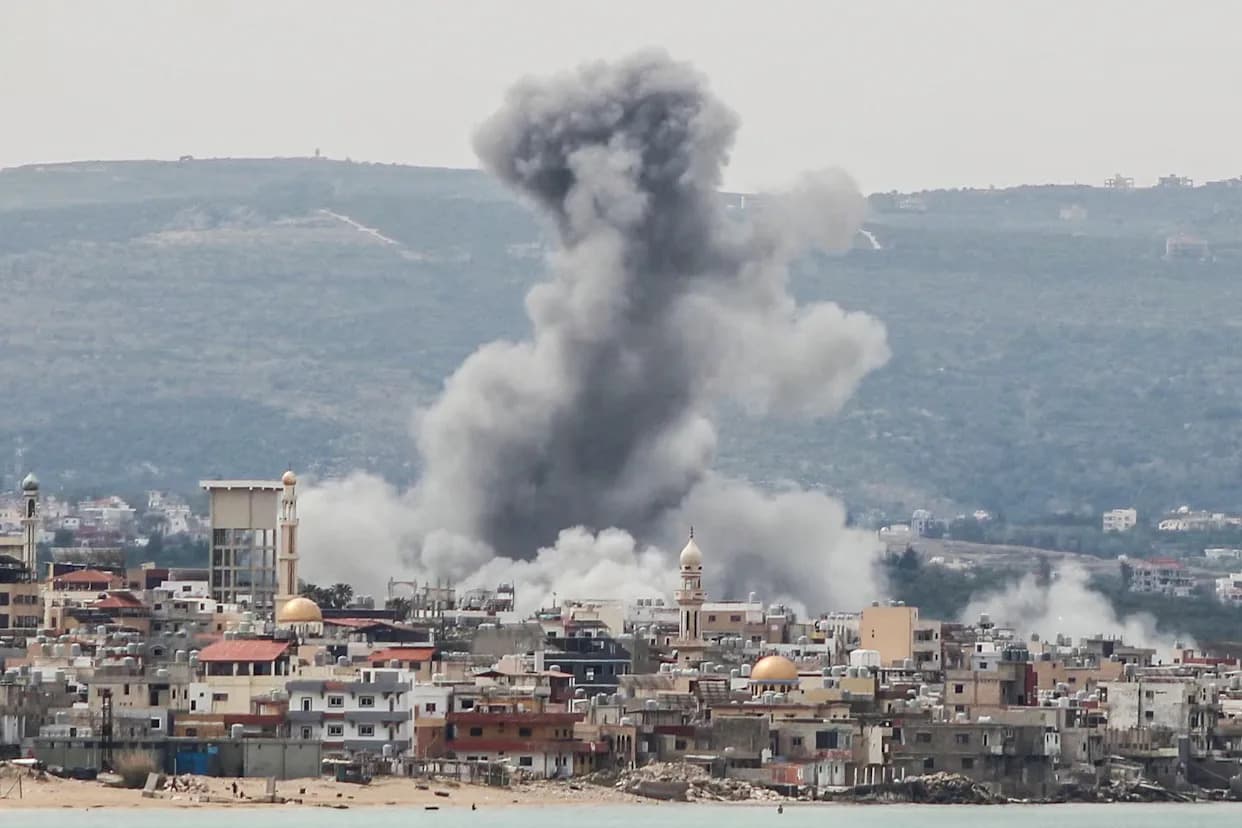
Smoke rises from the site of an Israeli air attack on the area of Ras al-Ain, southern Lebanon, on May 12 [AFP]
Israeli forces struck a house in the Kfar Dounin area of southern Lebanon on Monday night, killing six people and wounding seven, Lebanon’s National News Agency (NNA) reported. The strike is the latest in a near-daily series of attacks despite a U.S.-brokered ceasefire announced on April 16.
The residence hit lies in the Kfar Dounin municipality, roughly 100 km (about 60 miles) south of Beirut. Seven wounded victims were taken to hospitals in the coastal city of Tyre, according to NNA.
Israel’s air force says it has struck more than 1,100 sites in Lebanon since the truce began. Lebanon’s Ministry of Public Health reports at least 380 deaths during the ceasefire period and more than 2,800 fatalities overall since Israel’s military campaign began on March 2.
On Tuesday the Israeli military issued new forced-displacement warnings for several towns and threatened further strikes. In posts on X, the military’s Arabic-language spokesman Avichay Adraee told residents to evacuate Sohmor in the Bekaa Valley and several southern towns including Arzoun, Tayr Debba, Bazouriyeh and al-Haush.
State reporting also said the Israeli military blew up a water-pumping station in Deir Mimas, which overlooks the Litani River, and demolished homes in Bint Jbeil, NNA reported.
Al Jazeera correspondent Obaida Hitto, reporting from Tyre, described a “significant escalation” in strikes over the past week. Many residents who had returned home after earlier displacement said they were unwilling to leave again, fearing repeated uprooting.
“The people are concerned that this is going to continue. But they are not going to be leaving the south,” Hitto said.
Lebanese officials have appealed to the U.S. to press Israel to halt attacks ahead of a third round of talks between Lebanese and Israeli representatives scheduled in Washington, D.C., later this week. Lebanese Prime Minister Nawaf Salam said he asked U.S. Ambassador to Lebanon Michel Issa to “exert pressure on Israel to stop the ongoing attacks and violations, in order to consolidate the ceasefire.”
Al Jazeera’s Rory Challands, reporting from Beirut, said the Washington meeting will largely shape the next phase of a fragile ceasefire. He added that a direct face-to-face meeting between Lebanese President Michel Aoun and Israeli Prime Minister Benjamin Netanyahu — an option discussed by the U.S. and Israel — is not expected imminently, with Lebanese officials insisting on an Israeli withdrawal from southern Lebanon first.
Hezbollah deputy leader Naim Qassem said on Tuesday that the group’s weapons would not be part of the negotiations and vowed fighters would not abandon the battlefield even as the Lebanese government pushes for disarmament.
“Nobody outside Lebanon has anything to do with the weapons, the resistance… this is an internal Lebanese matter and not part of negotiations with the enemy,” Qassem said in a written statement broadcast on the group’s Al-Manar channel. “We will not surrender and we will continue to defend Lebanon and its people, however long it takes and however great the sacrifices.”
Help us improve.