The blue-ringed octopus (Hapalochlaena) is a golf-ball–sized Indo-Pacific cephalopod whose potent tetrodotoxin (TTX) is produced by symbiotic bacteria rather than the animal itself. TTX blocks voltage-gated sodium channels, causing paralysis and potentially respiratory failure, and is distributed through the arms and mantle. Toxicological tallies suggest a single animal could theoretically contain enough TTX to kill multiple people, though such figures are extrapolations that assume full transfer and no medical care. Evolutionarily, bacterially produced TTX offers a low-cost, highly effective defense, and recent work suggests it may even play a role in mating behavior.
Golf-Ball–Sized but Lethal: The Blue-Ringed Octopus and Its Deadly Bacterial Toxin
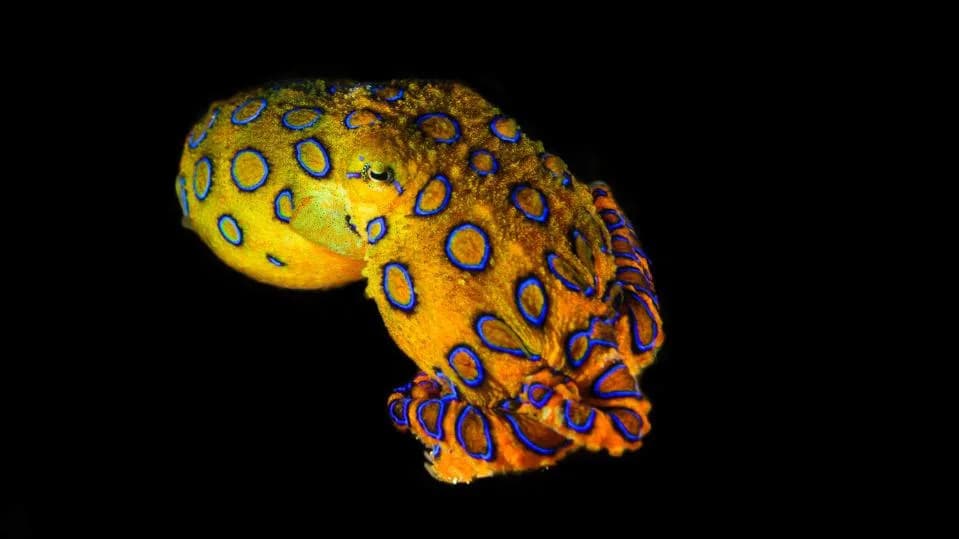
This unassuming octopus pairs bacterial chemistry with evolutionary efficiency to deliver one of the most powerful defenses in all of the ocean.getty
The blue-ringed octopus (genus Hapalochlaena) is a tiny Indo-Pacific cephalopod — often small enough to sit in the palm of a hand — that hides an unusually powerful biochemical defense. Although its calm, beige or yellow body and reclusive habits make it easy to overlook, when threatened it flashes vivid iridescent blue rings as a warning. Beneath that warning lies a potent neurotoxin: tetrodotoxin (TTX).
Where the Venom Comes From
Landmark research has shown that blue-ringed octopuses do not synthesize TTX themselves. Instead, the toxin is produced by symbiotic bacteria living in specialized tissues of the animal. Bacterial genera such as Vibrio and Pseudomonas have been implicated in producing TTX, effectively outsourcing complex chemistry to resident microbes. This partnership gives the octopus an efficient chemical defense while providing the bacteria with a stable habitat and dispersal.
How TTX Works
Tetrodotoxin (TTX) blocks voltage-gated sodium channels in nerve cells, preventing the electrical signals that cause muscles to contract. The result can be rapid muscle weakness, paralysis and, in severe cases, respiratory failure if the diaphragm is affected. Even micrograms matter: toxicological estimates place lethal doses for humans in fractions of a milligram.
Why The ‘26 Humans’ Claim Exists
TTX in blue-ringed octopuses is not confined to a single delivery gland. Studies have found the toxin distributed throughout the arms and mantle tissue, which means the total toxin load of a single animal can be substantial. When researchers tally that cumulative amount and compare it with estimated human lethal doses, they can produce theoretical figures such as “enough to kill 26 people.” These are extrapolations that assume complete transfer of toxin, consistent human susceptibility and no medical intervention — idealized conditions that rarely match real-world encounters.
Evolutionary Benefits
From an evolutionary perspective, TTX represents an energy-efficient solution for a small, soft-bodied animal. Producing physical defenses or growing larger would demand far more resources and could reduce mobility or increase predation risk. Using bacterially produced toxin lets the octopus gain a powerful deterrent at low metabolic cost, and its bright blue warning rings help predators quickly learn and avoid it.
Other Notable Findings
Recent research (2025, Current Biology) suggests an additional role for TTX in reproduction: males have been observed using small amounts of toxin during mating, possibly to reduce the risk of cannibalism by larger females. While intriguing, this behavior is still being studied and should be interpreted cautiously until more data are available.
Safety Note: Blue-ringed octopuses are not aggressive toward humans, but their bite can be dangerous. Any suspected exposure to TTX requires immediate medical attention and respiratory support if symptoms develop.
In short, the blue-ringed octopus is a striking example of how microbial partnerships and evolutionary economy can create outsized effects in a very small package. The “enough to kill 26 people” headline is a dramatic shorthand rooted in measurable biology — a reminder that in nature, scale and danger aren’t always proportional.
Originally published on Forbes.com; research cited includes studies from 1989 (Marine Biology), 2007 (Toxicon), 2019 (Aquatic Toxicology) and 2025 (Current Biology).
Help us improve.