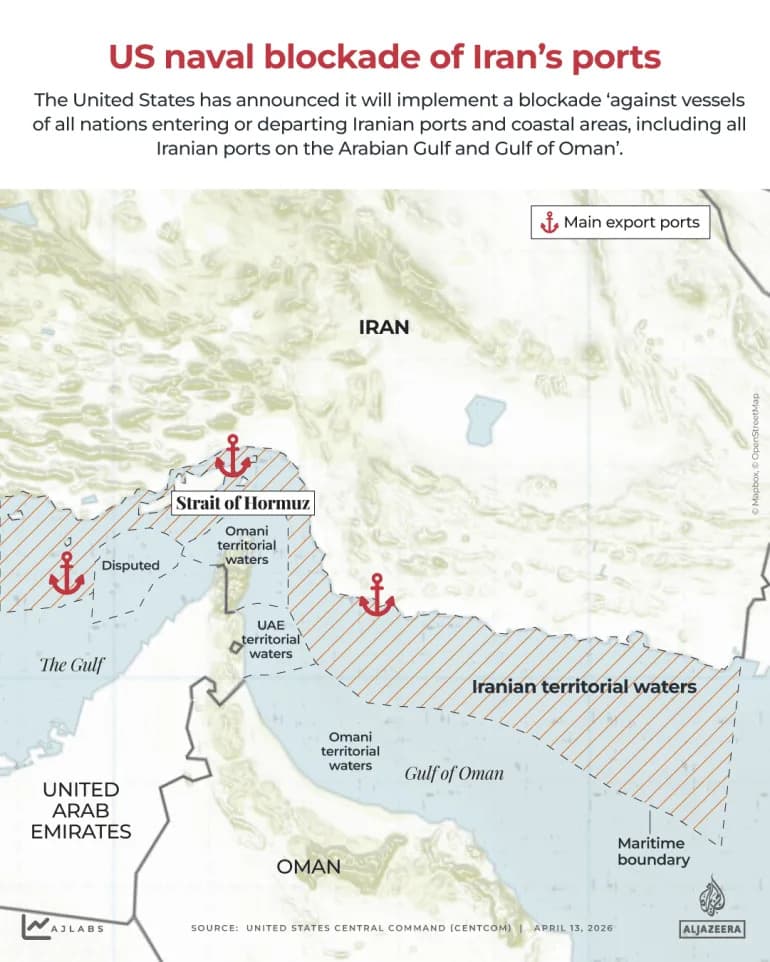
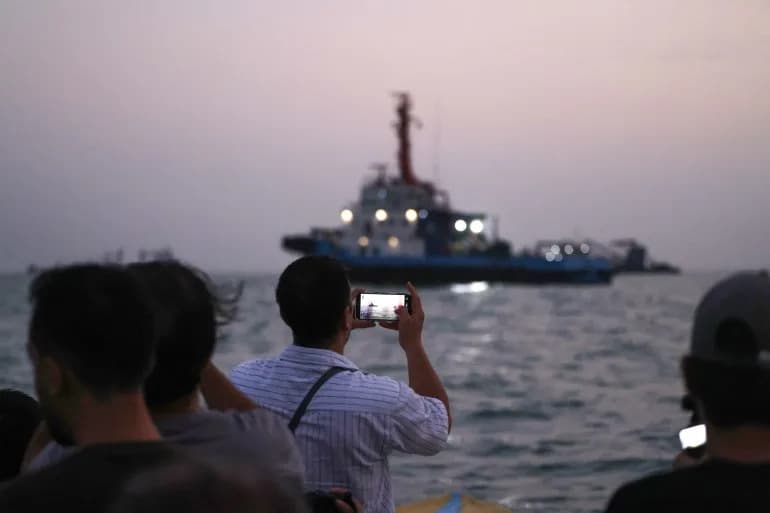
The United States says its forces seized the Iranian-flagged container ship Touska near the Strait of Hormuz after the vessel failed to comply with repeated warnings during an asserted naval blockade. Iran retaliated by detaining two foreign commercial tankers and denounced Washington's action as "piracy." The episode has sharpened debate over navigation rights, sanctions enforcement and the interpretation of international maritime law.
What Happened
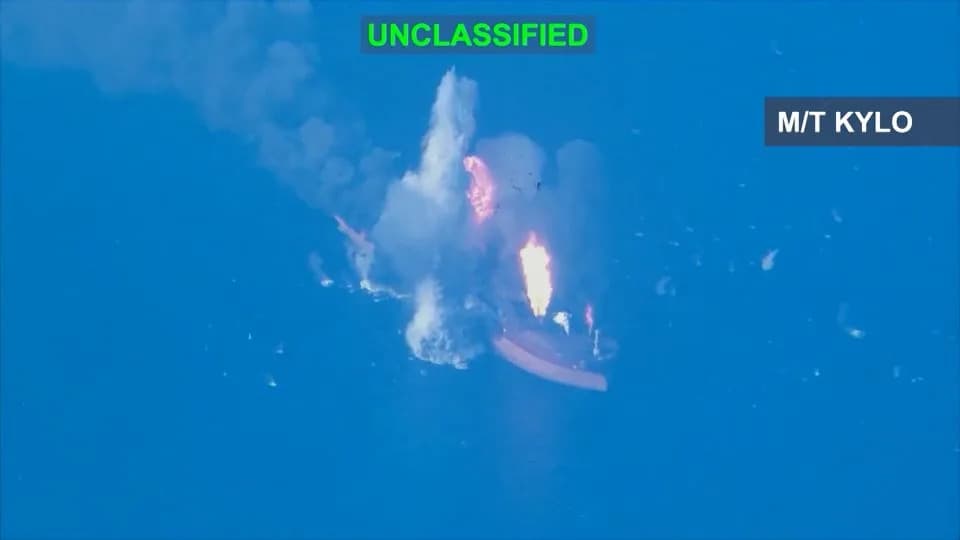
According to US Central Command (CENTCOM), American forces issued multiple warnings to the Iranian-flagged Touska as it approached the Strait of Hormuz and ordered the crew to stand down. CENTCOM says the vessel ignored warnings over several hours, was fired upon, and was subsequently boarded by Marines from the 31st Marine Expeditionary Unit, which took control of the ship.
The Pentagon also announced a separate interdiction of a vessel identified as the M/T Tifani in the Bay of Bengal. US officials described that operation as a "right-of-visit maritime interdiction" of a tanker they say was sanctioned for transporting Iranian crude.
Iran's Response
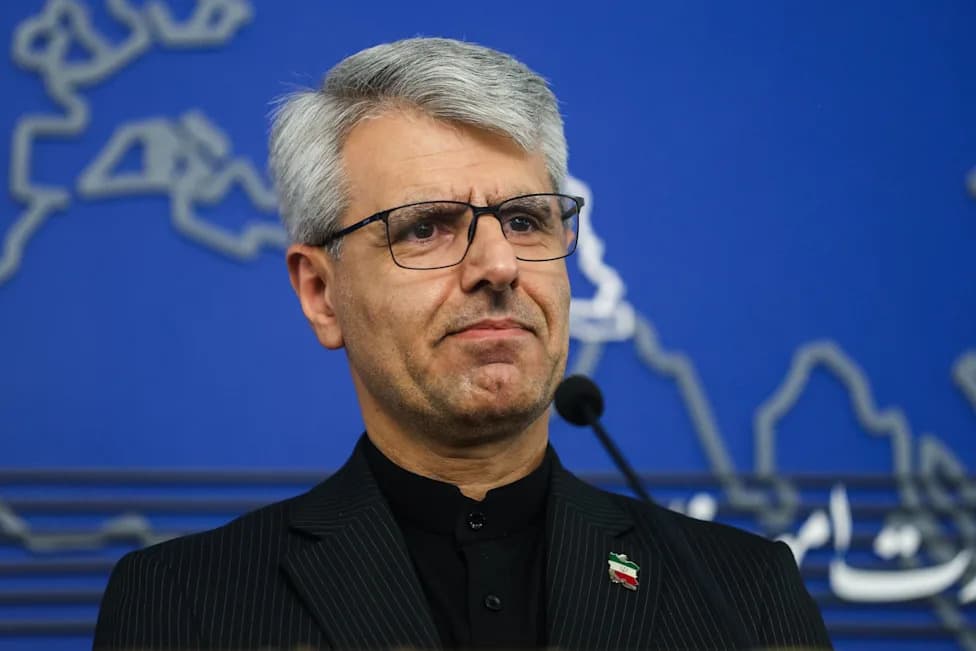
Iranian state media reported that Tehran detained two commercial tankers in response and moved them to Iranian waters. Iranian officials called the US seizure an act of "piracy" and several spokespeople used strong language — including warnings of retaliation and denunciations of "state terrorism." Iranian commentators and the Islamic Revolutionary Guard Corps (IRGC) emphasized that passage through the Strait of Hormuz, a strategic chokepoint, should be coordinated with Iranian authorities.
Legal Framework And Expert Views
International legal scholars point to the United Nations Convention on the Law of the Sea (UNCLOS) to explain the term "piracy." UNCLOS defines piracy as certain violent or depredatory acts committed for private ends by the crew or passengers of a private ship on the high seas or outside any state's jurisdiction. Under that definition, many legal experts say state actions — including seizures carried out by warships or coast guards enforcing sanctions or blockades — do not fit the classical definition of piracy because they are not committed "for private ends."
"Piracy requires private gain, not government vessels enforcing sanctions or a blockade in times of armed conflict," said Jason Chuah, professor of maritime law at City University of London.
Experts also note that UNCLOS and customary international law provide limited circumstances for boarding and seizure by warships, such as suspicions of statelessness, slave trade, piracy itself, or unauthorized broadcasting. Some states cite domestic law or UN measures (including sanctions) to justify interdictions, while opponents argue such actions must respect freedom of navigation and the territorial integrity of other states.
Claims, Context And Verification
Several dramatic claims have circulated alongside these events — including accounts of earlier naval engagements, sinking of warships and deadly exchanges. Where such claims involve the use of force or casualties, they should be treated cautiously unless corroborated by multiple independent sources. This article attributes claims to the parties that made them (for example, CENTCOM, the Pentagon or Iranian state media) and notes where independent verification is lacking.
Why It Matters
The Strait of Hormuz is a vital international waterway: a large share of global oil exports transit the channel. Any escalation involving seizures, blockades or military engagements risks disrupting global shipping and raising the prospect of wider confrontation. The incidents also highlight legal ambiguities about how sanctions enforcement and wartime interdiction intersect with established rules on navigation and the definition of piracy.
What Remains Unclear
- Exact cargo and ownership details of the Touska at the time of boarding have not been fully disclosed by independent authorities.
- The legal basis invoked by US forces for the interdictions has been described in public statements, but broader international acceptance of those justifications is disputed.
- Independent, third-party verification of some reported incidents cited in regional commentary remains incomplete.
As tensions grow, diplomats and maritime authorities will likely push for clearer documentation, transparency and third-party verification to reduce the risk of miscalculation in one of the world's busiest maritime corridors.