Summary: Senior Trump administration officials have increasingly used religious language and imagery to describe the U.S. role in the Iran conflict, raising concerns that the government is edging toward a sectarian framing of war. Critics warn this rhetoric can complicate diplomacy, fuel extremist recruitment, marginalize religious minorities and non-believers, and weaken democratic norms such as a free press. While there are historical precedents for prayerful wartime rhetoric, today’s religious diversity and geopolitical stakes make explicit divine justifications particularly risky.
Faith and Fire: How the Trump Administration Risks Framing the Iran War as a Holy War
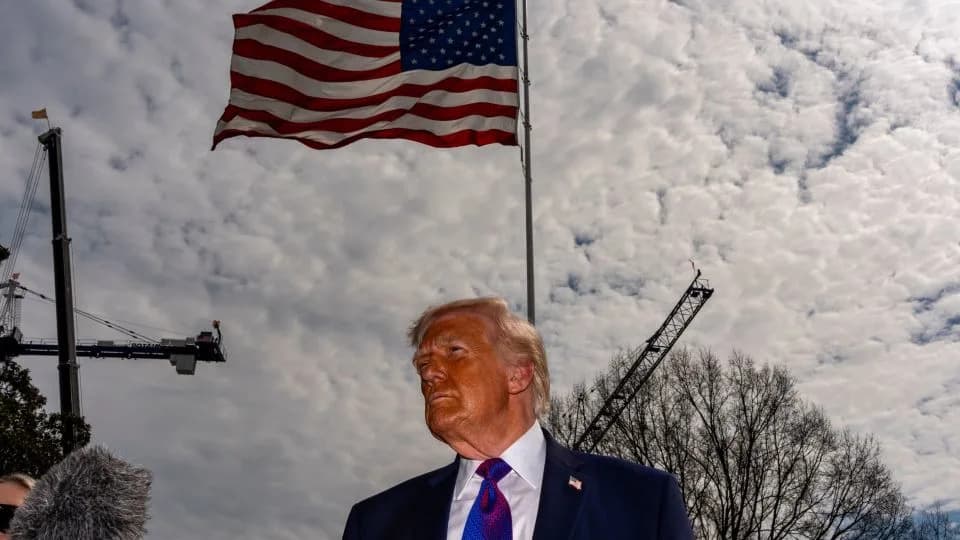
President Donald Trump speaks with reporters before departing on Marine One from the South Lawn of the White House on March 11, 2026. - Alex Brandon/AP
American presidents have long invoked God’s blessing when sending troops into harm’s way, yet most have avoided suggesting that a particular military campaign enjoys divine approval. Recent actions by senior Trump administration officials — from scripture-led briefings to religious imagery and public clashes with the pope — risk eroding that restraint and edging U.S. rhetoric toward a sectarian tone that can complicate diplomacy and inflame conflicts abroad.
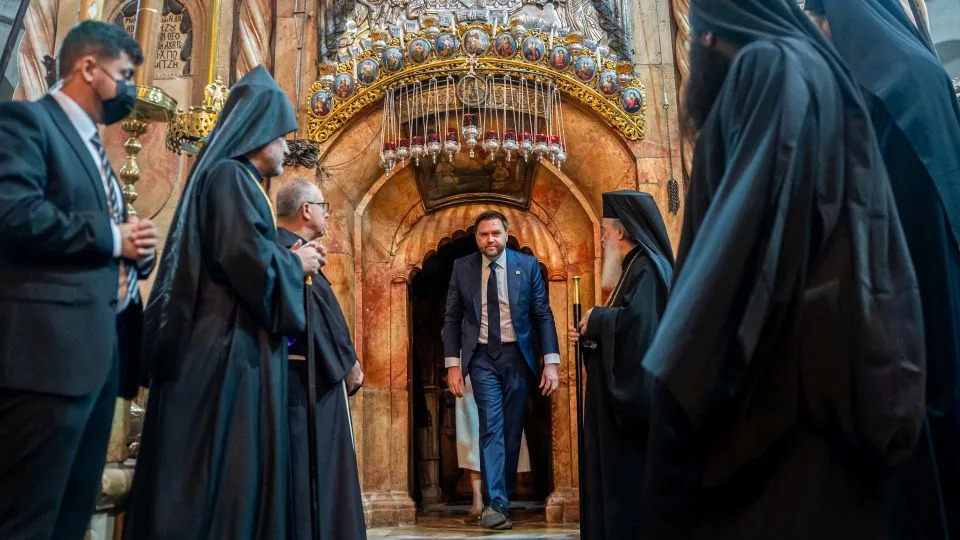
Vice President JD Vance tours the Church of the Holy Sepulchre in the Old City of Jerusalem on October 23, 2025. - Nathan Howard/Pool/Reuters
Religious Rhetoric From the Top
Defense Secretary Pete Hegseth has opened public briefings with Bible passages and cast American service members in near-spiritual terms. He has gone so far as to liken the rescue of a U.S. pilot in Iran over Easter to the resurrection, and he reportedly bears a Jerusalem Cross tattoo — a symbol historically associated with the Crusades.
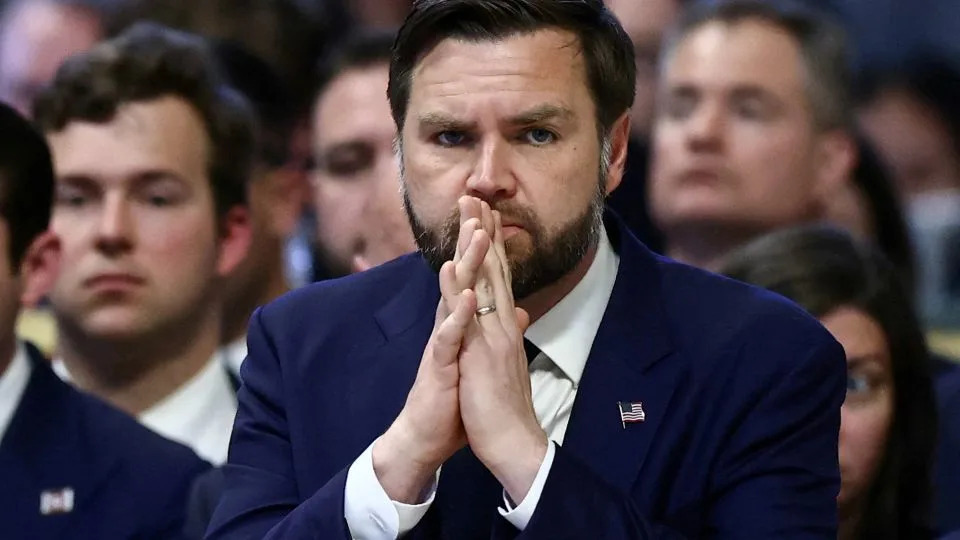
Vance prays during the Good Friday Passion of the Lord service in Saint Peter's Basilica at the Vatican on April 18, 2025. - Yara Nardi/Reuters
President Donald Trump shared an AI-generated image portraying himself in Christ-like pose on social media, and he has publicly disputed the pope’s remarks about the morality of bombing campaigns. Vice President J.D. Vance publicly rebuked Pope Leo XIV after the pontiff warned that God does not bless those who use religion to justify war.
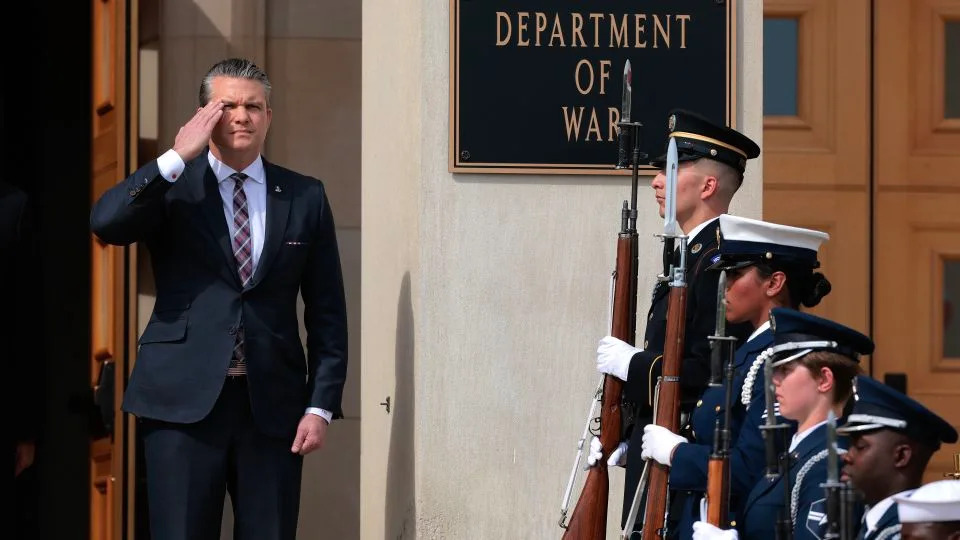
Defense Secretary Pete Hegseth salutes during the performing of the national anthem at the Pentagon on April 13. - Chip Somodevilla/Getty Images
Why This Matters
Framing a conflict as divinely sanctioned carries several real-world risks:
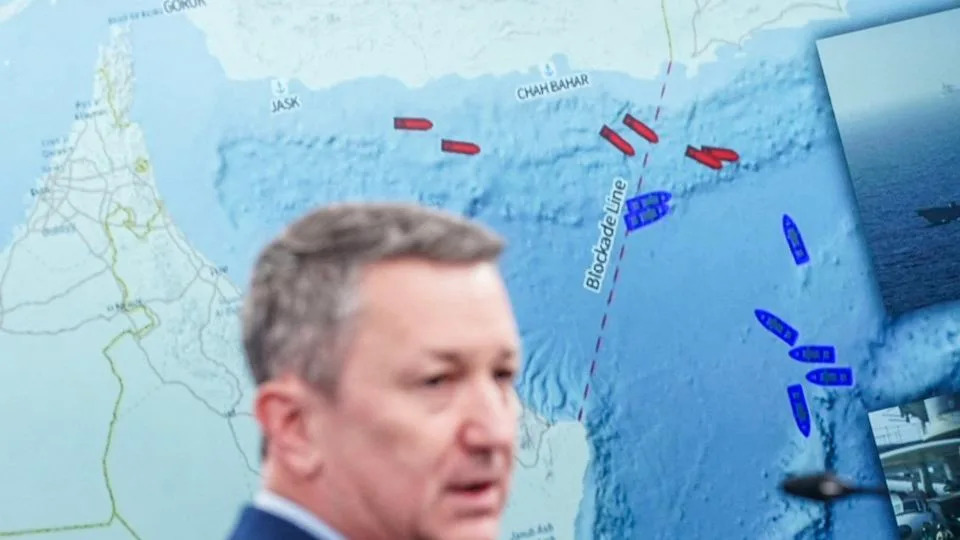
Chairman of the Joint Chiefs of Staff General Dan Caine speaks during a briefing on the Iran war at the Pentagon on Thursday. - Nathan Howard/Reuters
- It can make diplomacy harder by removing flexibility and by making face-saving outcomes less acceptable to opponents.
- It can fuel recruitment for extremist groups that already cast their fights in religious terms and portray the U.S. as a religious adversary.
- It can marginalize religious minorities and non-believers at home and abroad, and it can strain constitutional norms separating church and state.
- It risks eroding democratic norms such as a free press when officials frame journalists who criticize policy as moral or spiritual enemies.
Historical Context and New Risks
There are historical precedents for religious language in wartime — General Dwight D. Eisenhower called the D-Day invasion a "Great Crusade" and asked for God’s blessing, and presidents from George Washington to Franklin D. Roosevelt used prayerful language or distributed religious materials to troops. But critics argue that the U.S. is now far more religiously diverse and secular in many regions, so explicitly sectarian language can feel anachronistic and politically risky.
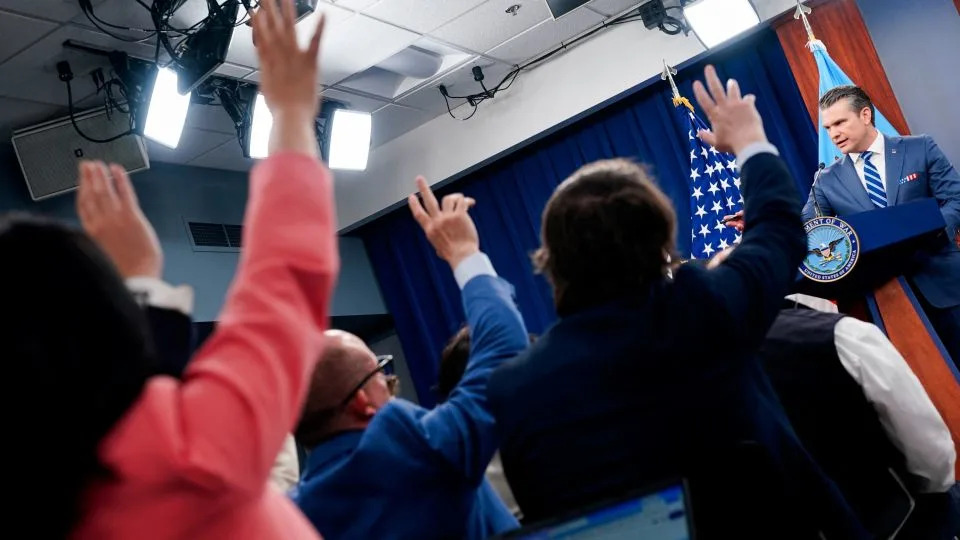
Reporters raise their hands during a briefing with US Secretary of Defense Pete Hegseth and Caine (not pictured) at the Pentagon on Thursday. - Nathan Howard/Reuters
"Both read the same Bible and pray to the same God, and each invokes His aid against the other." — Abraham Lincoln, Second Inaugural Address
Voices of Concern
Religious leaders and analysts have voiced alarm that partisan officials are assuming divine motives. Bishop Mariann Budde of the Episcopal Diocese of Washington described the administration’s association of itself with the presumed will of God as especially troubling. James Massa of the U.S. Conference of Catholic Bishops emphasized that papal statements carry pastoral weight and should not be treated as mere political opinions.
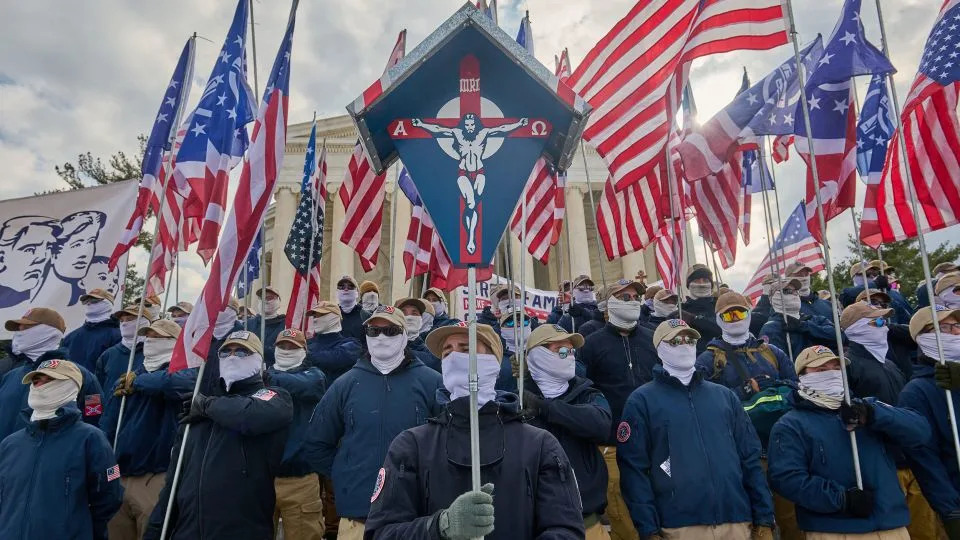
Members of the far-right militia group Patriot Front participate in the 2025 March for Life in Washington, DC, on January 24, 2025. - Dominic Gwinn/Middle East Images/AFP/Getty Images
Some defenders of the administration insist that devotional language is no different from past presidential practices. But opponents say the highly explicit, sectarian tone now evident in briefings and public messaging is unprecedented in its intensity and potential consequences.
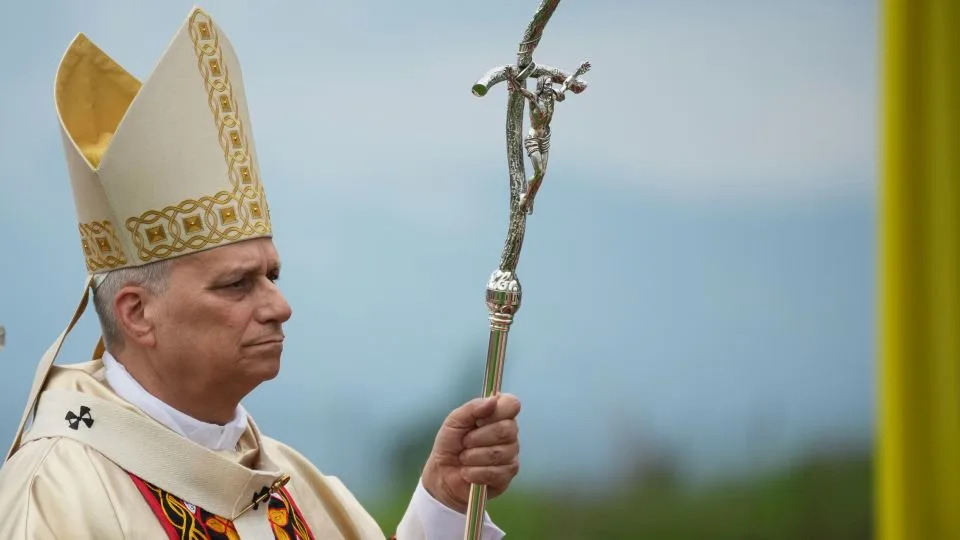
Pope Leo XIV arrives in procession to celebrate a Mass at Bamenda Airport, Cameroon, on Thursday. - Andrew Medichini/AP
Strategic and Ethical Consequences
Wars conducted under a mantle of moral certainty can lose strategic flexibility. When leaders treat outcomes as divinely sanctioned, decision-making can become less provisional and more punitive, increasing the risk of escalation and reducing incentives for negotiated settlements. At the same time, overt religiosity by state officials can alienate allies and the domestic constituencies whose support is vital for sustained policy.
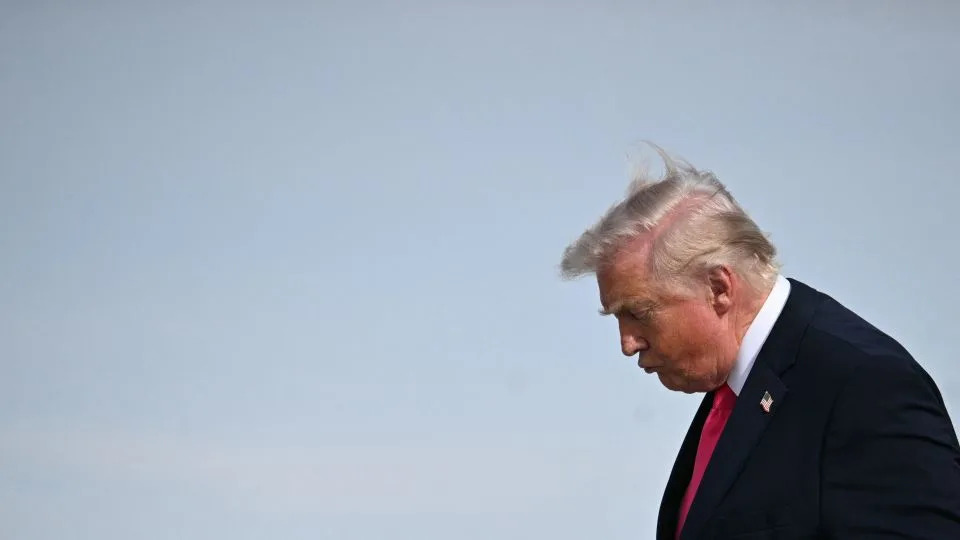
Trump arrives at Harry Reid International Airport in Las Vegas, Nevada, on Thursday. - Jim Watson/AFP/Getty Images
Conclusion
The growing use of faith-infused rhetoric by top U.S. officials during the conflict with Iran raises questions about the separation of religious belief and public policy, the durability of democratic safeguards, and the practical effects on diplomacy and security. Whether motivated by personal conviction, political calculation, or both, mixing explicit sectarian language with state power carries strategic and moral hazards that many past leaders sought to avoid.
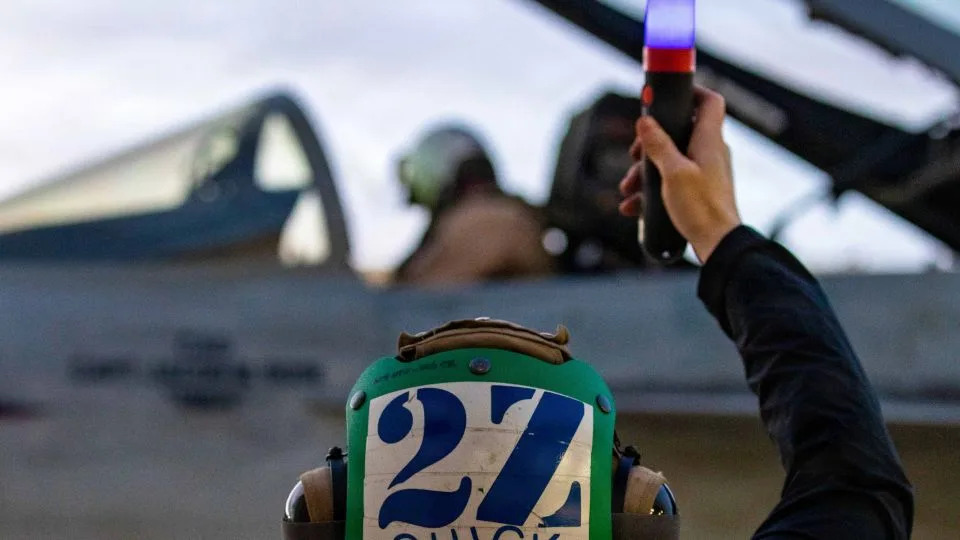
A US sailor assigned to Strike Fighter Squadron 213 signals to an F/A-18E Super Hornet aircraft, attached to Strike Fighter Squadron 31 during flight operations, on March 23. - US Central Command Public Affairs
Note: The original reporting referenced Pope Leo XIV and a figure described as Robert Prevost; some names and references in early coverage appear inconsistent and should be confirmed against primary sources for full accuracy.
Help us improve.