Less than two days after President Trump announced a temporary pause in hostilities with Iran, the ceasefire looks fragile as Israel continued strikes in Lebanon and Iran stepped up regional pressure. The U.S. is pressing for talks: the State Department will host ceasefire discussions next week and a U.S. delegation is slated to pursue mediated talks. Tensions with allies and calls for congressional oversight complicate the diplomatic picture.
Ceasefire With Iran Falters As Israeli Strikes And Regional Tensions Threaten Renewed War
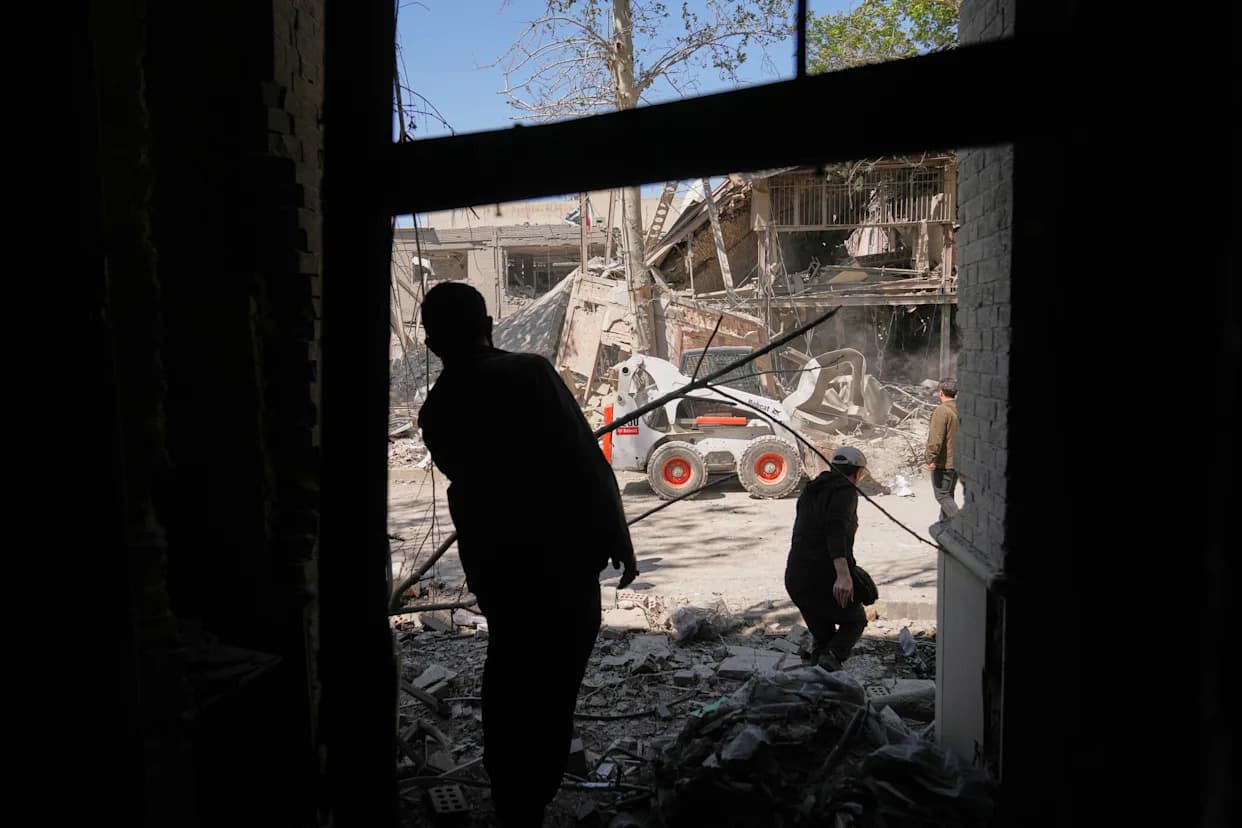
Workers remove debris at Tehran's Sharif University of Technology complex that Iranian authorities say was hit early Monday by a U.S.-Israeli strike, in Tehran, Iran, Monday, April 6, 2026. (AP Photo/Francisco Seco)(ASSOCIATED PRESS)
Less than 48 hours after President Donald Trump announced a temporary halt in hostilities with Iran, the fragile truce is under strain as continued Israeli strikes in Lebanon and escalating rhetoric across the region risk dragging the Middle East back toward open conflict.
Violence and Diplomatic Pressure
Following Trump’s Tuesday-night announcement, international tensions intensified. Israel continued strikes against Hezbollah targets in Lebanon on Thursday. Israeli Prime Minister Benjamin Netanyahu said the military was acting “with force, precision and determination,” a campaign that drew sharp condemnation from Iran and concern from several European and regional governments.
Egypt and France urged immediate de-escalation. According to an Egyptian readout, the foreign ministers of Egypt and France emphasized “the utmost priority of halting Israeli attacks on Lebanon and achieving de-escalation at this critical juncture in the Middle East.” Egypt’s foreign minister also spoke with U.S. special envoy Steve Witkoff, warning that the strikes “undermine all regional and international efforts aimed at achieving the intended de-escalation.”
U.S.-Led Talks And Diplomatic Moves
At Washington’s urging, there were signs of movement by Thursday afternoon. Netanyahu issued a statement saying he had instructed his government to open negotiations with Lebanon “as soon as possible,” while later clarifying that “there is no ceasefire in Lebanon” and that strikes against Hezbollah would continue until Israeli security objectives were met.
An anonymous source familiar with the discussions said the Israeli and Lebanese ambassadors to the United States are expected to meet next week with U.S. Ambassador to Lebanon Michel Issa at the State Department. The State Department confirmed it will host a meeting next week to pursue ceasefire negotiations between Israel and Lebanon.
Rhetoric, Regional Escalation And Envoys
“If they don’t make a deal, it’s going to be very painful,” President Trump told NBC News, while expressing optimism that a diplomatic accord could be reached.
Iran continued to escalate pressure. Iranian Foreign Minister Seyed Abbas Araghchi referenced Netanyahu’s ongoing corruption trial in a social media post, suggesting a region-wide ceasefire could affect domestic political outcomes in Israel. Iran also broadened its activities across the region, with reported incidents affecting countries including Kuwait, Bahrain and the United Arab Emirates.
The White House announced that a delegation—reported to include Vice President JD Vance, special envoy Steve Witkoff and Jared Kushner—would travel for mediated talks aimed at engaging Iran. The reported delegation and planned trips underscore Washington’s push for diplomacy even as on-the-ground strikes continue.
Allies, NATO Friction And U.S. Politics
The episode has strained relations with U.S. allies. President Trump publicly criticized NATO and warned that U.S. forces would remain in the region “until such time as the REAL AGREEMENT reached is fully complied.”
Trump’s Wednesday meeting with Dutch Prime Minister Mark Rutte was described by one European official as tense; Rutte later defended NATO and said allies had to “scramble” to respond in the wake of the invasion. In Washington, Democrats stepped up calls for congressional oversight. A Democratic effort to force a war-powers vote in the House failed during a pro forma session on Thursday, but both parties signaled they would continue to press for votes and oversight as the situation evolves.
What To Watch
- State Department-facilitated talks between Israel and Lebanon next week.
- Planned diplomatic missions to engage Iran and whether Tehran opens the Strait of Hormuz as discussed.
- Congressional moves to assert war-powers oversight and any shifts in allied support.
Help us improve.