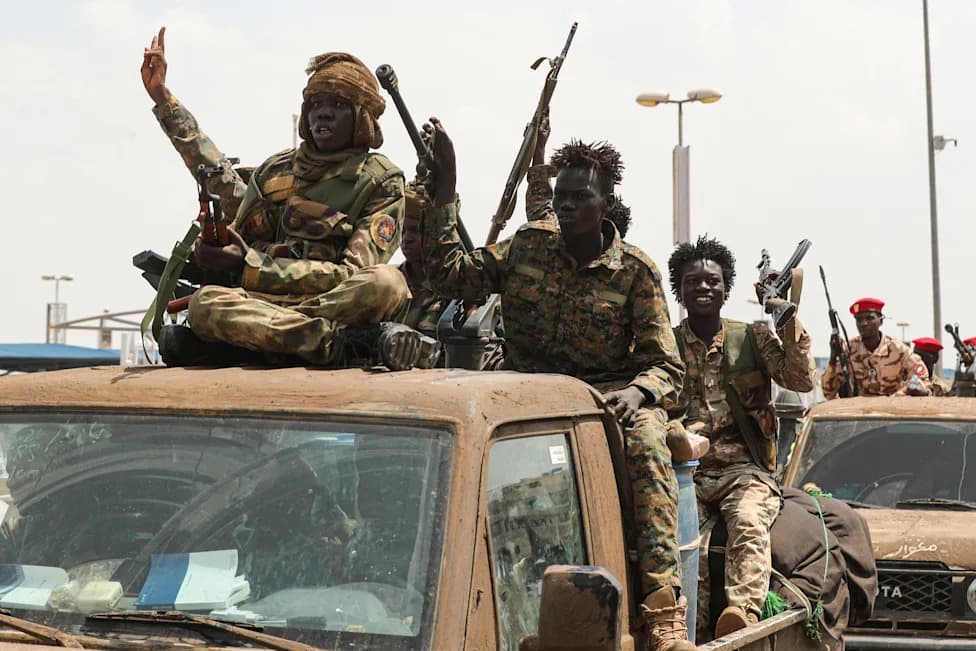
The downing of two U.S. combat aircraft over Iran has undercut the administration’s claims of uncontested air superiority. One crew member has been reported rescued and treated; the other’s status is unclear. While these losses do not equal military parity, they highlight the limits of dominance, the risks of asymmetric warfare, and public skepticism fueled by shifting objectives and economic fallout from disruptions like the closure of the Strait of Hormuz.
Two Downed U.S. Jets Expose Flaws in Trump and Hegseth’s Claims of Air Supremacy Over Iran
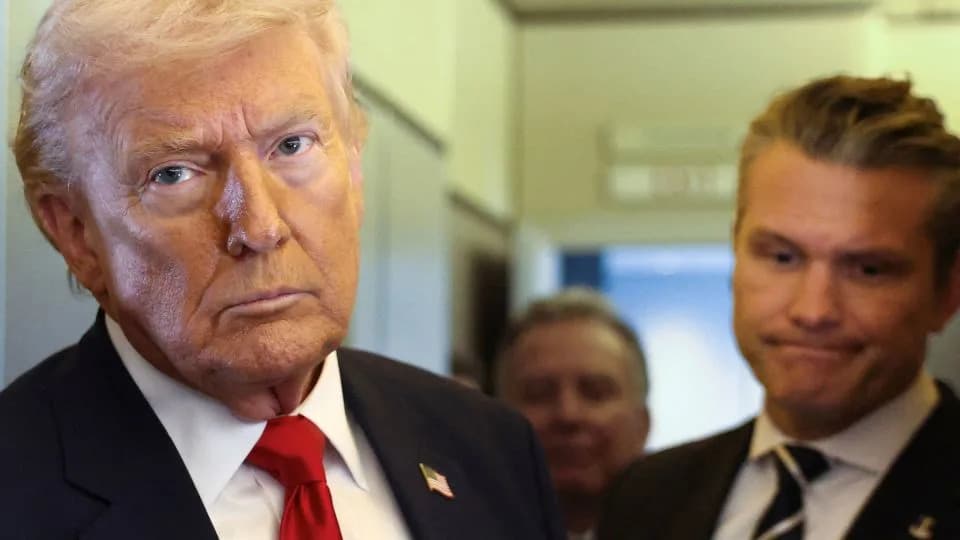
President Donald Trump, with Secretary of Defense Pete Hegseth at his side, looks on as he speaks to reporters aboard Air Force One on a flight from Dover, Delaware, to Miami, Florida, on March 7, 2026. - Kevin Lamarque/Reuters
An already unpopular war with Iran entered a more troubling phase this week after U.S. officials reported that two American combat aircraft were struck over Iranian territory. The incidents have raised fresh questions about repeated administration claims that U.S. forces enjoy near-total control of Iranian airspace.
Many details remain uncertain, including the status of one crew member. CNN has reported that one airman has been rescued and is receiving medical care; the fate of the other crew member has not been confirmed. In the second incident, a pilot reportedly navigated his aircraft out of Iranian airspace before ejecting and was later rescued, a U.S. official told CNN.
These shootdowns do not mean Iran now equals the United States militarily. American casualties so far remain limited, and officials say there have been no confirmed U.S. deaths in the past three weeks. Still, the losses underscore the risks of asymmetric warfare and highlight that even a dominant military can suffer setbacks.
Political and Strategic Implications
The incidents also puncture the administration’s more absolutist rhetoric about air dominance. Over the past month, President Donald Trump and Pete Hegseth—identified publicly as a Trump ally and media figure—repeatedly described U.S. operations over Iran as nearly uncontested.
At a March 4 briefing, Hegseth proclaimed, “In under a week, the two most powerful air forces in the world will have complete control of Iranian skies,” calling it “uncontested airspace.”
On March 24, President Trump said, “We literally have planes flying over Tehran and other parts of their country; they can’t do a thing about it,” and suggested U.S. forces could strike Iranian infrastructure with impunity.
Such statements overstated capabilities that recent events and subsequent reporting have called into question. The administration has at times acknowledged potential setbacks—Hegseth even allowed that “a few drones get through or tragic things happen”—but overall messaging presented overwhelming dominance that these shootdowns contradict.
History of Overstated Claims
This pattern of exaggerated claims is not new. After strikes last June on Iranian nuclear sites, the administration characterized Iran’s nuclear program as thoroughly destroyed—assertions that early U.S. intelligence assessments did not fully support. More recently, reporting has suggested the destruction of Iran’s missile launchers was overstated and that the Islamic Revolutionary Guard Corps retains a significant portion of its capabilities.
Domestic Fallout
The political cost is important: the administration has heavily relied on military success to justify the campaign, but public support is fragile. Many Americans question the mission’s purpose and goals, which have shifted over time. Economic concerns—particularly the effective closure of the strategic Strait of Hormuz and rising fuel prices—have compounded skepticism about whether the war is worth its costs.
Hegseth has accused the media of underreporting U.S. successes, saying “This is what the fake news misses.” A month on, however, control of key sea lanes and the completeness of airspace dominance look less certain in light of these downings and continued reporting about remaining Iranian capabilities.
This story has been updated with additional developments.
Sources: Reporting from CNN and public statements by administration officials.
Help us improve.