NASA says Artemis 2 remains set for an April 1 launch: a 10-day crewed flyby that will collect human observations of previously unseen lunar terrain. The agency is shifting the first crewed landing from Artemis 3 to Artemis 4 and loosening early-lander requirements to allow faster, more flexible mission designs. Emphasis is increasing on robotic precursor landings near the lunar south pole—potentially monthly from 2027—to reduce risk and identify sites for a sustainable base while industry partners resolve technical hurdles like Starship’s in-orbit fuel transfers.
Beyond Artemis 2: NASA Rethinks a More Achievable Path Back to the Moon
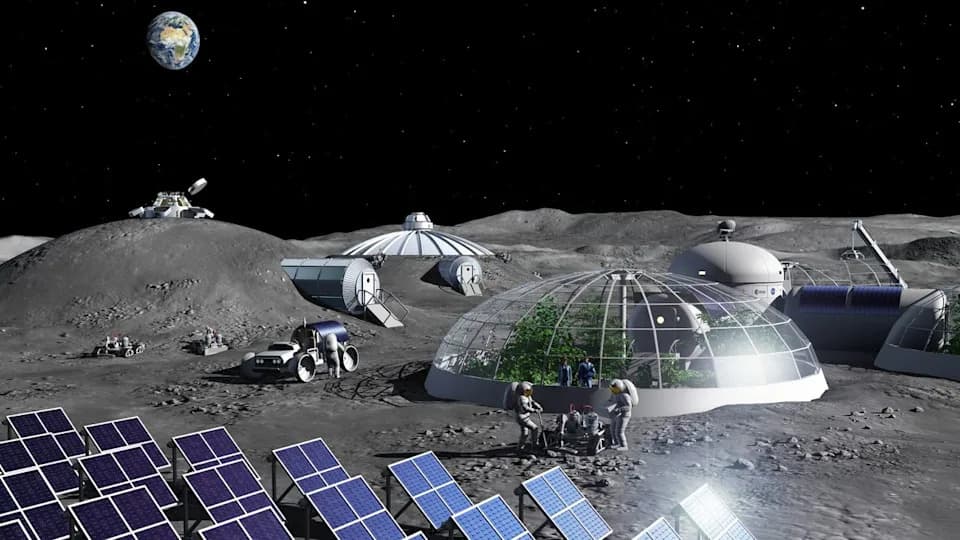
Artist's illustration of a moon base. | Credit: NASA
As NASA prepares to send astronauts back to the Moon for the first time in more than half a century, the agency is refining its long-term approach to establish a sustained human presence there.
Artemis 2 Stays On Track
At the Lunar and Planetary Science Conference on March 16, NASA Associate Administrator Amit Kshatriya confirmed that Artemis 2 remains scheduled for an April 1 launch. The roughly 10-day crewed flyby will carry commander Reid Wiseman, pilot Victor Glover and mission specialists Christina Koch and Jeremy Hansen on a trajectory around the Moon’s far side. If successful, the mission will send humans farther from Earth than they have traveled since the Apollo era, surpassing the Apollo 13 distance record.
Human Observations As Science
The crew will spend as many as six hours making targeted observations using handheld Nikon cameras, verbal descriptions, sketches and tablet annotations. Ariel Deutsch, a planetary scientist at NASA’s Ames Research Center, says those human observations will provide “critical perceptual context” that robotic sensors cannot fully replicate. To support the work, NASA has developed an interactive lunar atlas to track priority targets based on lighting and viewing conditions, and the final observation plan will be uploaded after launch once the spacecraft’s exact trajectory is known.
Training and Preparation
Preparation for Artemis 2 included three years of training rooted in Apollo-era field geology techniques and an intensive “lunar fundamentals” course to develop the vocabulary and observational skills needed to describe lunar features from orbit. Cindy Evans of NASA’s Johnson Space Center led the geology training program and emphasized practice in verbal descriptions so scientists on Earth receive consistent, useful reports.
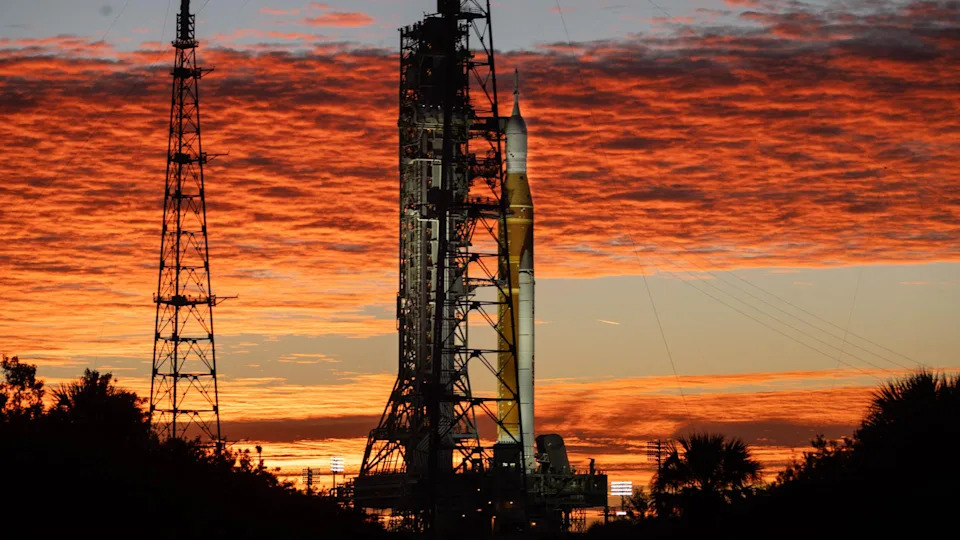
NASA's Artemis 2 moon rocket on the pad. | Credit: NASA/Cory S Huston
Changing The Timeline For A Crew Landing
Until recently, Artemis 3 was expected to be the first crewed landing, with a 2028 target. In late February, NASA Administrator Jared Isaacman indicated that the first crewed landing will now be pushed to Artemis 4. The agency still intends the lunar south pole to be the ultimate destination because permanently shadowed craters there may harbor water ice—an essential resource for sustained human exploration—but the terrain is more challenging than Apollo-era equatorial sites.
Making The South Pole More Achievable
To improve the odds of a successful early landing, NASA is loosening some performance specifications for initial Artemis landers to allow greater flexibility in orbit selection and mission design. The agency is also emphasizing a steady cadence of robotic precursor missions—potentially as often as monthly starting in 2027—to collect temperature, soil and communications data that reduce risk for future crews and help identify the best sites for a lunar base.
Commercial Partners And Technical Hurdles
The strategy update responds in part to delays and technical uncertainties with SpaceX’s Starship, which NASA selected as one potential crewed lunar lander. Artemis 3’s original architecture depended on complex Starship capabilities that remain unproven, including large-scale cryogenic propellant transfer and numerous refueling flights in Earth orbit. NASA has also selected Blue Origin’s Blue Moon lander, which has paused suborbital tourism to focus on lunar development. Artemis 3 is now targeted for launch in 2027 and is expected to test Orion’s rendezvous and docking operations with Starship and/or Blue Moon in Earth orbit.
Ambition, Partnerships And Timing
NASA hopes these adjustments keep a crewed landing feasible in 2028 and position the United States to return astronauts to the Moon before China and before the end of the current U.S. presidential term in January 2029. Kshatriya said meeting that timeline will require a “sea change” in how NASA collaborates with industry—more hands-on, side-by-side work to complete critical technical milestones.
“It’s ambitious, but I think we can do it,” Kshatriya said, emphasizing both the challenge and the agency’s commitment to reaching the lunar south pole.
Help us improve.