Israeli air strikes intensified on Beirut's southern suburbs while ground forces pushed deeper into southern Lebanon. Nearly 570 people have been reported killed and more than 759,000 displaced, with officials warning displacement may surpass 2024 levels. The EU delivered 45 tons of emergency aid as Lebanon called for international support. Israel says the conflict can end only if Hezbollah is disarmed, but Lebanese leaders warn forced disarmament could trigger internal unrest.
Israeli Strikes Rock Beirut Suburbs As Envoy Says Disarming Hezbollah Could End War
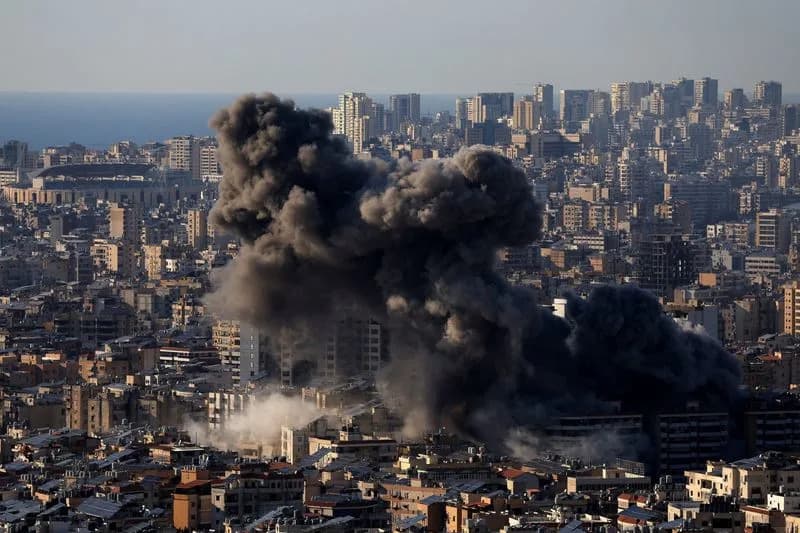
Smoke rises after an Israeli strike on Beirut's southern suburbs, following an escalation between Hezbollah and Israel amid the U.S.-Israeli conflict with Iran, Lebanon, March 10, 2026. REUTERS/Mohamed Azakir
BEIRUT, March 10 (Reuters) - Israeli forces stepped up air strikes on the southern suburbs of Beirut and expanded ground operations in southern Lebanon on Tuesday, as an Israeli envoy said that disarming Hezbollah would be the decisive step to ending the conflict.
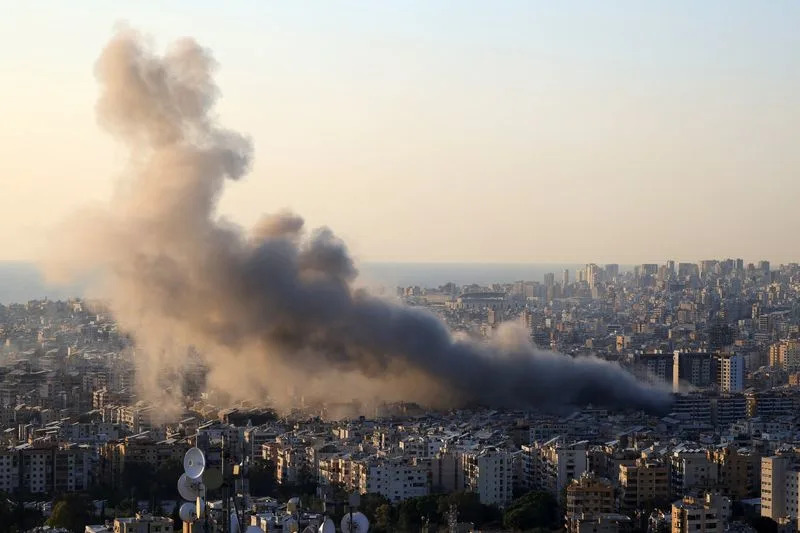
Smoke rises after an Israeli strike on Beirut's southern suburbs, following an escalation between Hezbollah and Israel amid the U.S.-Israeli conflict with Iran, Lebanon, March 10, 2026. REUTERS/Mohamed Azakir
Strikes across southern and eastern Lebanon, including neighborhoods around Beirut, have killed nearly 570 people, the Lebanese government's disaster risk management unit said on Tuesday. Bombardments of Beirut's southern suburbs in the afternoon sent thick plumes of smoke over the city. Authorities issued evacuation warnings for newly affected districts hours before some strikes began.
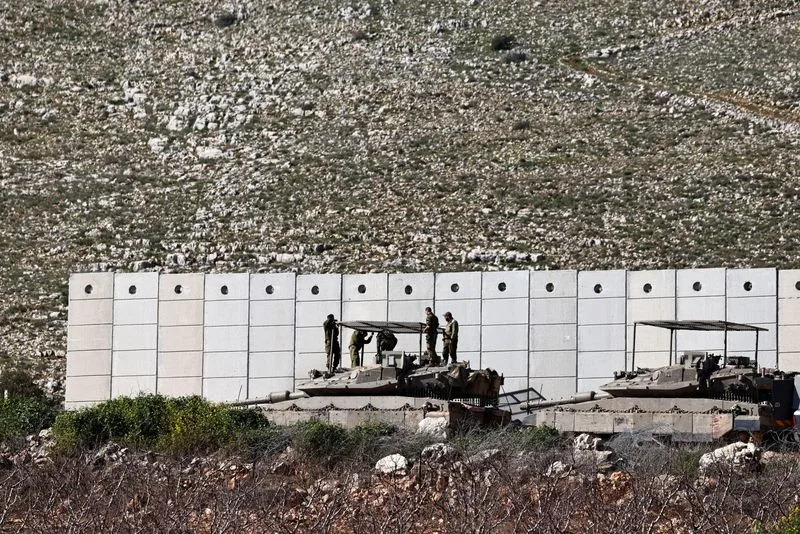
Israeli soldiers work on their tank on the Israeli side of the Israel-Lebanon border, amid escalation between Hezbollah and Israel, and amid the U.S.-Israeli conflict with Iran, in northern Israel, March 10, 2026. REUTERS/Amir Cohen
A municipal council member said families were fleeing the targeted areas, adding to the more than 759,000 people Lebanese authorities say have been displaced by the fighting. Lebanon's Minister of Social Affairs, Haneen Sayed, told Reuters at Beirut airport that officials expect displacement to exceed levels seen in 2024, when the last major Israel–Hezbollah confrontation forced more than a million people from their homes.
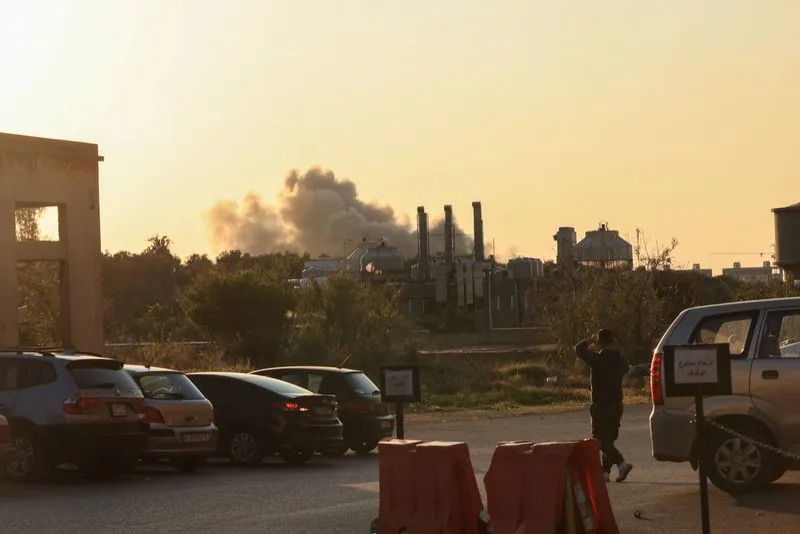
Smoke rises after an Israeli strike on Beirut's southern suburbs, following an escalation between Hezbollah and Israel amid the U.S.-Israeli conflict with Iran, Lebanon, March 10, 2026. REUTERS/ Raghed Waked
"So we expect that the needs, the numbers of displacement, will be higher than in 2024. Now on the other side in terms of resources, there's far less resources this year given the global situation, the regional war that's happening," Sayed said. She spoke as the European Union delivered 45 tons of emergency supplies, including medical kits and blankets, to Beirut airport.
Lebanese security sources reported that Israeli armoured columns advanced into additional towns in southeastern Lebanon on Tuesday. At the same time, Lebanon's presidency signalled a willingness to explore direct negotiations with Israel to try to halt the violence.
But Israel's ambassador to France, Joshua Zarka, told Reuters that statements were not enough. "At this stage, I'm not aware of any decision to enter negotiations to end this war," he said. "What would end it is the disarmament of Hezbollah — and that is a choice for the Lebanese government." Zarka urged that public statements be backed by concrete actions.
Beirut's government last year pledged to reassert a state monopoly on weapons and seized part of Hezbollah's arsenal in southern Lebanon without immediate pushback from the group. Hezbollah has refused full disarmament, and Lebanese authorities warn that forcibly removing the group's weapons could risk igniting internal strife.
(Reporting by Emilie Madi and Laila Bassam in Beirut, John Irish in Paris; Menna Alaa El-Din in Cairo; Writing by Maya Gebeily; Editing by Sharon Singleton)
Help us improve.