Tehran residents say daily life continues despite repeated strikes and an expanding economic squeeze. Markets and online orders remain partly functional even as US and Israeli attacks and retaliatory strikes have shaken the capital. The Statistical Centre and Central Bank reported runaway inflation before the conflict, with food prices rising sharply. Authorities have cut access to the global internet for a sixth day, forcing users onto a domestic intranet and driving a costly black market for VPNs and proxies.
Tehran Under Fire: Residents Cope With US and Israeli Strikes as Nationwide Internet Is Cut
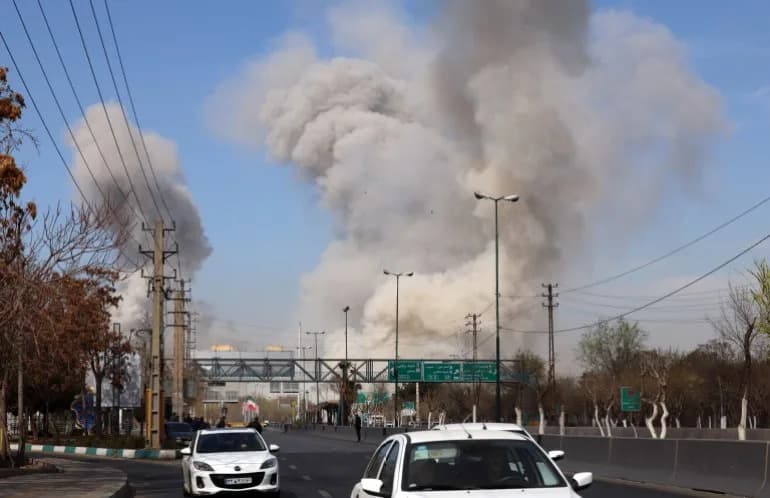
People run for safety as smoke rises after an air raid in central Tehran, March 5, 2026 [Abedin Taherkenareh/EPA]
“The war might last weeks, so my family and I will only leave if it gets too bad. For now, life goes on,” said Sepehr, a resident of eastern Tehran who asked to remain anonymous for safety reasons.
The booming of explosions has been an everyday reality in parts of the city this week, sometimes sending thick plumes of smoke across the horizon and rattling windows, residents told Al Jazeera. Similar scenes have played out across Tehran, a sprawling metropolis of nearly 10 million people, as strikes by US and Israeli forces hit the region in waves since the conflict began on Saturday.
Life Under the Strikes
The capital’s streets are noticeably quieter and traffic lighter than normal, with many businesses closed. Yet many shops remain open and online ordering continues where connectivity permits. “When the bombing runs quiet down for a while, I go for a short walk to get essentials. There are usually queues for bread and at some petrol stations,” said Marjan, who lives in a western neighbourhood. Prices, however, are squeezing households.
Economic Strain and Soaring Inflation
Two days before the outbreak of hostilities, the Statistical Centre of Iran (SCI) and the Central Bank published reports showing sharply rising prices that were already burdening families. The SCI recorded annual inflation for the month of Bahman at 68.1 percent, while the Central Bank reported 62.2 percent—both among the highest rates since the 1979 revolution. Food inflation stood at roughly 105 percent, with steep price rises for staples including cooking oil (+207%), bread and grain (+142%), fruit (+113%), and dairy and eggs (+108%).
The rial had been trading near record lows—around 1.66 million to the US dollar before the conflict—and markets reacted nervously as investors sought safe havens like gold. The medicine market was also under strain before the latest strikes, with shortages reported for some imported drugs and sharp price increases for others.
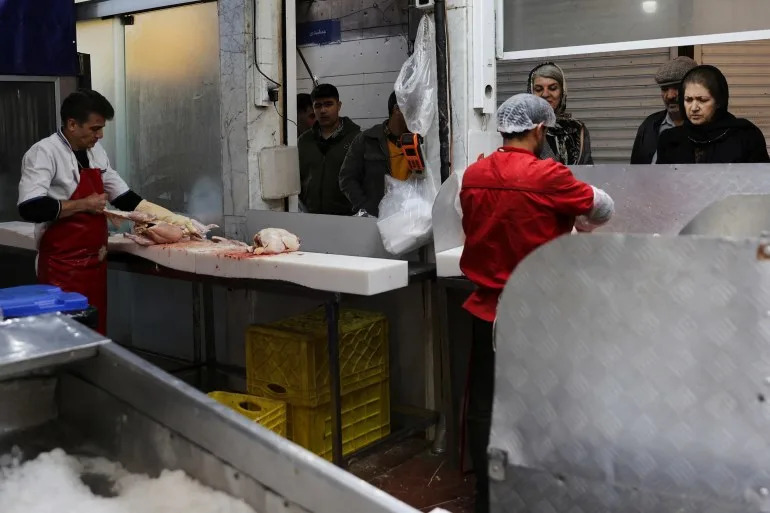
People shop at a market, amid the US-Israeli conflict with Iran, in Tehran, March 5, 2026 [Majid Asgaripour/WANA via Reuters]
Government Measures
Officials say they have expanded modest cash subsidies to help households afford essentials and broadened the list of subsidised items to include baby diapers. Provincial governors and ministers have been authorised to import essential goods with fewer bureaucratic hurdles to keep supplies flowing if the conflict persists. First Vice President Mohammad Reza Aref told state media authorities were concerned about medicine and medical equipment supply but said, “fortunately today conditions are good.” Independent verification of stock levels and medical supplies remains difficult amid disruptions.
Information Blackout and the Rise of a Black Market
Authorities have curtailed access to the global internet for a sixth consecutive day, routing most traffic to a domestic intranet that carries state-run news and local services. International monitors such as Cloudflare and NetBlocks reported that connectivity fell to below 1 percent of typical levels within hours of early strikes and has remained severely restricted. The limits have hampered independent reporting and verification of events on the ground.
State-controlled outlets have largely focused on official statements and reports of successful strikes, while local coverage of hits on police stations and paramilitary bases has been limited. With global access cut, the comment sections of a few local news sites have become some of the few remaining public forums—but authorities have already blocked or closed comment areas that were critical of state actors.
Reports also surfaced of telecom users receiving warnings after attempting to use VPNs; NetBlocks described an “increasingly Orwellian environment” as telcos and authorities discourage attempts to bypass the restrictions. A black market for proxy and VPN access has re-emerged, with users reporting very limited data packages sold at high prices by vendors inside Iran.
What Remains Unclear
Casualty and damage reports vary and are difficult to independently verify because of the communications blackout. International observers and journalists continue to rely on satellite data, eyewitness accounts when available, and social-media fragments that leak through limited channels. The duration of the internet restrictions and the wider course of the conflict remain uncertain.
Note: This article avoids unverified claims about individual high-profile deaths and relies on official statements and international monitoring groups where possible. Independent verification is constrained by the ongoing communications blackout.
Help us improve.