Summary: Hacked traffic cameras across Tehran reportedly fed live visual data into an AI-driven intelligence system that fused imagery, human reporting, signals intercepts and satellite photos to produce highly precise strike coordinates. Built over the past decade and supported by technologists and analysts, the "target production machine" has been used in previous operations and was reportedly employed in a recent U.S.-Israel daylight attack called "Operation Epic Fury." According to multiple sources and subsequent Iranian state announcements, the strike killed Supreme Leader Ali Khamenei and several senior Iranian officials.
How Hacked Tehran Traffic Cameras and an AI "Target Production Machine" Helped Pinpoint Iran’s Supreme Leader in "Operation Epic Fury"
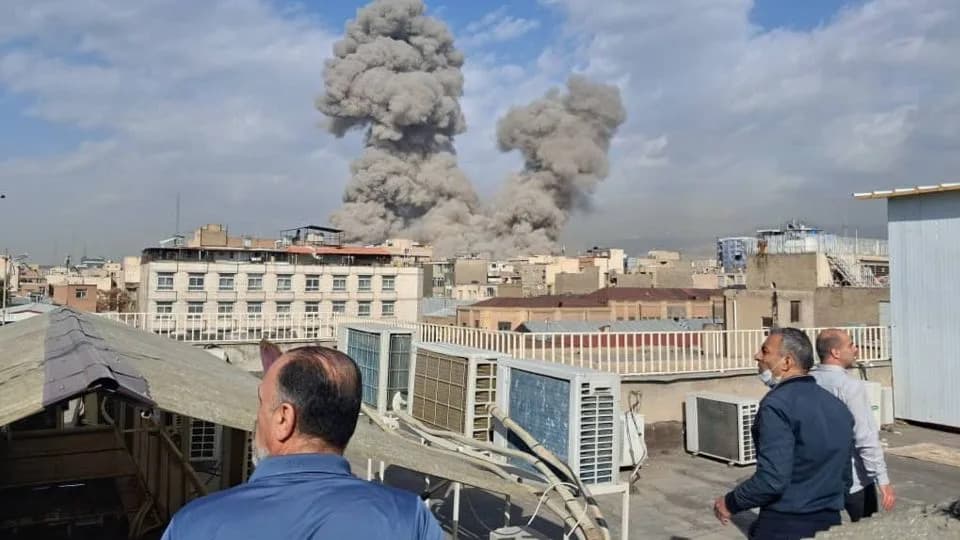
People watch as smoke rises on the skyline after an explosion in Tehran, Iran on February 28, 2026 - AP
Traffic cameras across Tehran, reportedly compromised years ago, provided live visual feeds that became a crucial layer of intelligence in a sophisticated targeting effort, according to Israeli officials.
Those feeds were only one element of a far broader system — parts of which were first disclosed by The Financial Times — that an Israeli source described as an AI-powered "target production machine." The apparatus reportedly ingested and fused visual intelligence, human reporting, signals intelligence, intercepted communications, satellite imagery and other inputs to build extremely detailed, time-sensitive portraits of activity across the city.
From that multi-source data, analysts say the system produced highly precise coordinates — often reduced to a 14-digit grid reference — that could be used to guide strikes. The scale and variety of the inputs required powerful computing resources and a multidisciplinary team of technologists, data analysts and engineers to validate recommendations and refine the process.
The system has a precedent. Israeli officials say the capabilities were used at the outset of a 12-day conflict with Iran last June, when the Israel Defense Forces deployed the same suite of tools in opening strikes that killed several senior Iranian figures, according to one source.
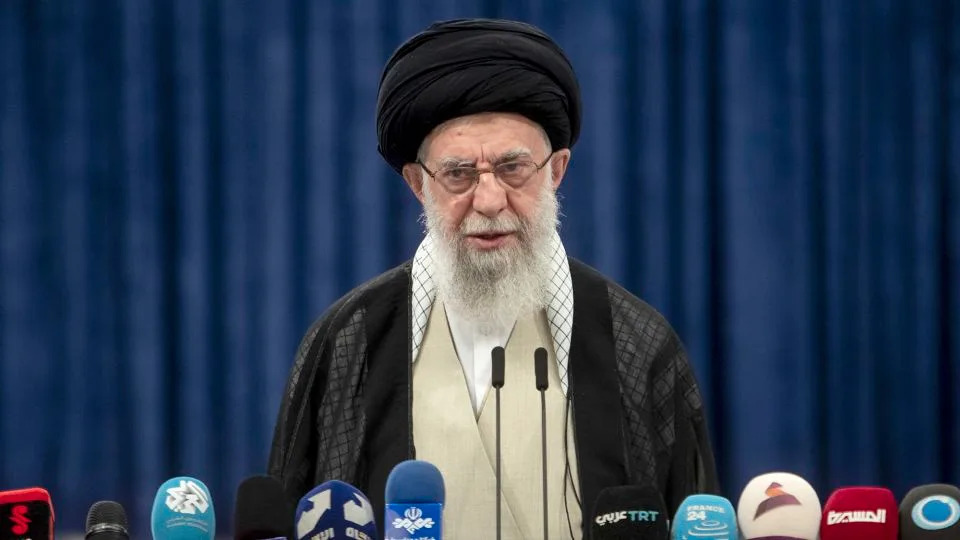
Iran's Supreme Leader Ayatollah Ali Khamenei, addresses the media after casting his vote in presidential runoff elections in Tehran in 2024 - Majid Saeedi/Getty Images
On a recent Saturday morning, sources report, the U.S. and Israel executed a large, joint daylight operation — authorized under the name "Operation Epic Fury" — that used the same fusion-driven targeting methods. The principal target reported by multiple sources was Supreme Leader Ali Khamenei. Israeli officials believed he was more vulnerable during daytime hours after previously sheltering in underground bunkers and curtailing communications.
According to accounts of high-level diplomacy and planning, Prime Minister Benjamin Netanyahu pressed his case with President Donald Trump in a private White House meeting on February 11, arguing contingency steps should talks with Tehran fail. In the days that followed, U.S. and Israeli military and intelligence channels reportedly moved from consultation to operational coordination.
Officials quoted in briefings described a message at 3:38 p.m. Eastern Time authorizing the opening strikes: "Operation Epic Fury is approved. No aborts. Good luck," attributed to top military leadership. Gen. Dan Caine told reporters the operation "was a daylight strike based on a trigger event conducted by the Israeli Defense Forces, enabled by the U.S. Intelligence Community." Those comments, officials said, likely referenced the joint salvo that reportedly killed Khamenei and multiple senior Iranian leaders — an outcome later confirmed by Iran’s state broadcaster, which announced that the Supreme Leader "has reached martyrdom."
While many of the technical and operational details remain classified or are disputed, the episode highlights how persistent cyber access, large-scale data fusion and human validation can combine into a modern targeting pipeline. That pipeline, according to reporting and sources cited in this account, has been central to past operations attributed to Israeli intelligence, including assassinations of nuclear scientists, exfiltration of Tehran’s nuclear archive and the killing of other high-value targets.
What This Means
The reported operation illustrates several trends in contemporary intelligence and warfare: the value of long-term cyber access to urban infrastructure, the role of AI and big-data processing in translating disparate streams of intelligence into actionable targets, and the continuing operational integration between allied intelligence communities. It also raises questions about oversight, attribution and the ethics of automated or semi-automated targeting systems.
Note: This account summarizes reporting from Israeli and U.S. sources and statements from officials; some details are contested and many operational specifics remain classified.
Help us improve.