
US Central Command released video showing missiles from a US Navy ship striking and reportedly destroying the IRGC headquarters in Tehran, while the Pentagon confirmed three US service members killed and five seriously wounded. The US-Israeli campaign began with strikes that reportedly killed Iran's supreme leader and prompted Iran to launch widespread missile and drone attacks across the Gulf. Regional states reported casualties and damage, maritime incidents were reported in the Strait of Hormuz, and Iran named interim leaders as it faces questions over succession. Claims from both sides remain subject to independent verification as the situation evolves.
US Says It Destroyed IRGC Headquarters; First US Combat Deaths Reported As Regional Violence Escalates
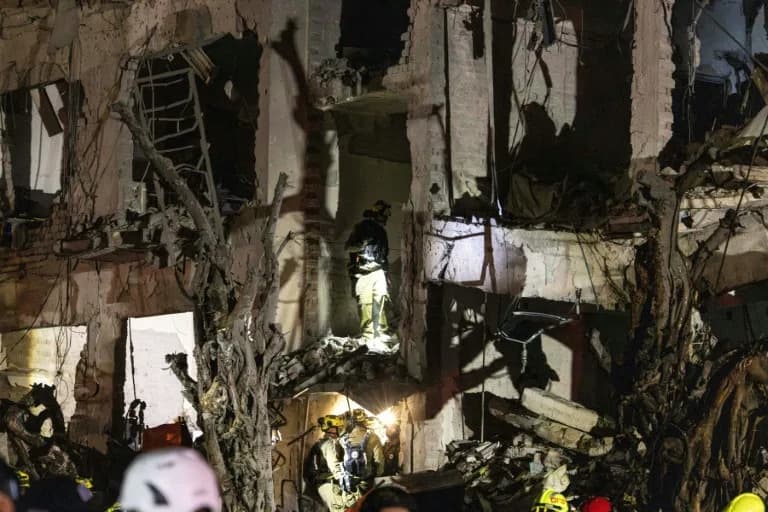
Israeli security forces inspect the site of an Iranian missile strike in Tel Aviv (JOHN WESSELS)(JOHN WESSELS/AFP/AFP)
The United States on Sunday said it destroyed the headquarters of Iran's Islamic Revolutionary Guard Corps (IRGC) and confirmed the first American combat fatalities in the campaign aimed at toppling Iran's government. CENTCOM posted video on X showing missiles launched from a US Navy vessel striking an urban compound in Tehran and reducing portions of it to rubble.
"America has the most powerful military on earth, and the IRGC no longer has a headquarters," CENTCOM said in its statement, which included footage of the strikes.
US Casualties and Military Statement
The Pentagon said three US service members were killed in action and five were seriously wounded; additional personnel sustained minor shrapnel injuries and concussions. "Major combat operations continue and our response effort is ongoing," the department added.
Escalation and Leadership Targets
The US and Israel launched coordinated strikes on Saturday that, according to multiple reports cited by officials, killed Iran's supreme leader, Ayatollah Ali Khamenei. Iran responded with large-scale missile and drone attacks across the region, striking or causing explosions in Saudi Arabia, the United Arab Emirates, Qatar, Bahrain, Oman and Israel.
Iran's Retaliation and Regional Impact
Iran's Revolutionary Guards described their action as a "large-scale" retaliation, firing missiles and deploying drones at Gulf installations. Iranian officials warned of further punishment for those they held responsible. Explosions shook Tehran as the attacks continued.
Several countries reported damage and casualties: Israel said at least nine people were killed in Beit Shemesh and announced the mobilization of about 100,000 reservists; the UAE reported three deaths and later withdrew its ambassador from Tehran and closed its embassy; Oman reported drone strikes on the Duqm commercial port that injured a foreign worker. Maritime security agencies reported attacks on three ships in the Strait of Hormuz after Iran had declared the waterway closed.
Claims, Counterclaims and Verification
Iran's Revolutionary Guards claimed they struck the aircraft carrier USS Abraham Lincoln, a claim the Pentagon disputed, saying the missiles "didn't even come close." President Trump said US strikes had sunk nine Iranian naval vessels and partially destroyed Iran's naval headquarters. Independent verification of some battlefield claims has been limited amid the rapidly unfolding conflict.
Domestic Reaction in Iran and Succession Plans
Iran's Red Crescent reported heavy casualties, saying strikes had killed around 201 people and injured hundreds more on Saturday evening. Iran's judiciary confirmed that senior figures including Ali Shamkhani and General Mohammad Pakpour were among the dead, according to state announcements.
Public reaction inside Iran was mixed: some initially celebrated reports of Khamenei's death, while pro-government demonstrations later formed, with chants of "Death to America!" State authorities named Ayatollah Alireza Arafi to join President Masoud Pezeshkian on an interim leadership council while a permanent successor is selected.
Humanitarian And Diplomatic Fallout
Gulf states and Western missions warned citizens to take precautions. Britain urged UK nationals in the Gulf to shelter in place; US missions in Jordan and Bahrain advised heightened caution near diplomatic sites and hotels. The widening of hostilities has raised diplomatic alarm and increased risks to commercial shipping and regional civilians.
Note: This account summarizes claims reported by military and governmental sources amid ongoing operations. Some details remain unverified independently as events continue to develop.
Help us improve.





















