The fragile Gaza ceasefire faces renewed strain after U.S. and Israeli strikes on Iran prompted Israel to close all crossings into the Gaza Strip, threatening supplies for more than 2 million people. Aid groups warn of rising prices, hoarding and imminent shortages; World Central Kitchen says it provides roughly 1 million meals daily and needs constant deliveries. While heavy fighting has eased since the Oct. 10 ceasefire, humanitarian needs remain acute and long-term challenges — disarming Hamas, deploying a stabilization force, and restoring governance — continue to block durable peace.
Gaza Ceasefire Fragile as Regional Strikes on Iran Threaten Aid and Relief
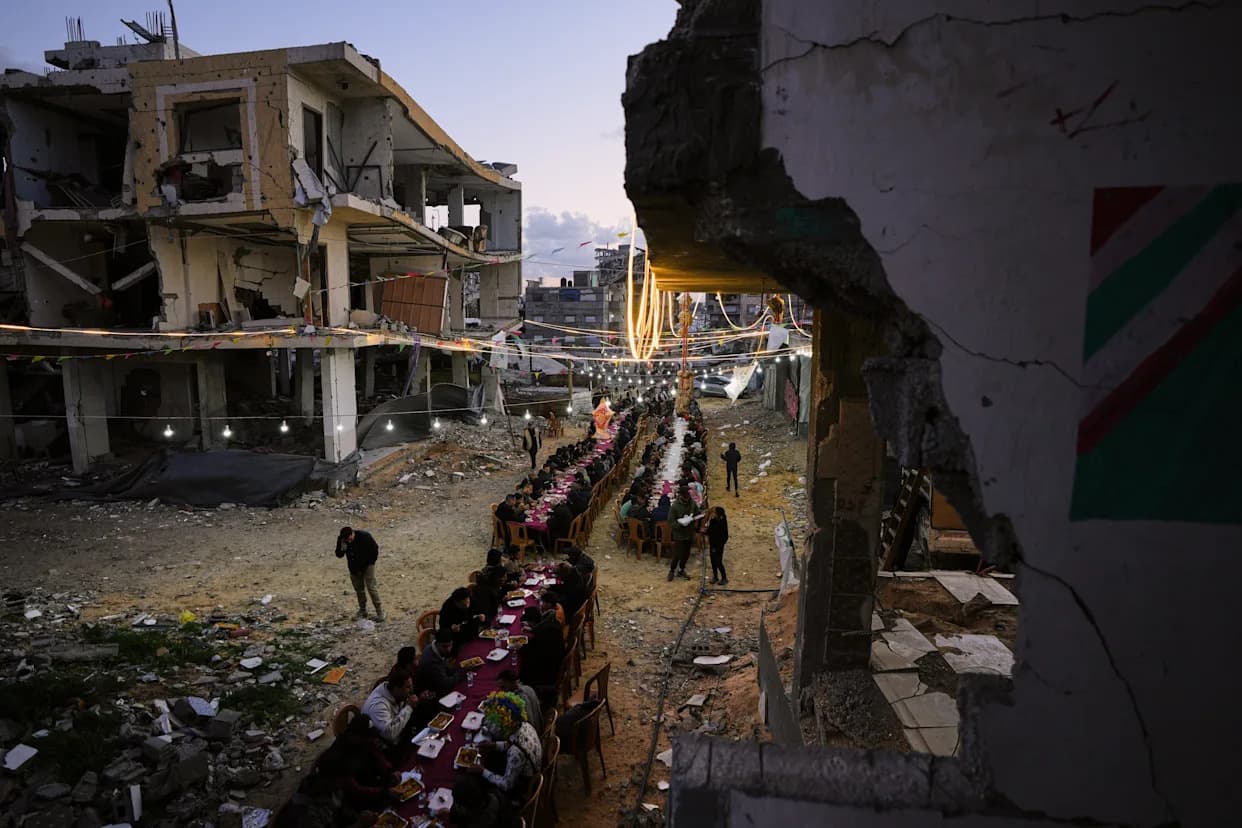
Palestinians gather for iftar, the fast-breaking meal, during the Muslim holy month of Ramadan amid the rubble of destroyed buildings in Gaza City, Thursday, Feb. 26, 2026. (AP Photo/Abdel Kareem Hana)(ASSOCIATED PRESS)
DEIR AL-BALAH, Gaza Strip — The fragile ceasefire in Gaza is at risk of being eclipsed by a widening regional confrontation after U.S. and Israeli strikes on Iran. In the immediate aftermath of weekend attacks, Israeli authorities closed all crossings into the Gaza Strip, heightening fears of shortages for more than 2 million residents already living with persistent humanitarian needs.
Crossings Closed, Supplies at Risk
The Coordinator of Government Activities in the Territories (COGAT), the Israeli military agency that manages civilian affairs in Gaza, said food stocks "are expected to suffice for an extended period" and announced that rotations of humanitarian personnel would be postponed. COGAT did not reply to an Associated Press request for comment on the closures.
Palestinians told reporters they rushed to markets, recalling the severe shortages and famine conditions that struck parts of Gaza last year. "When the crossings shut down, everything was suspended from the market," said Osamda Hanoda of Khan Younis. "Prices rise, and people live in misery."
Humanitarian Strain: Food, Fuel and Medical Needs
The U.S.-brokered ceasefire that began on Oct. 10 helped ease the heaviest fighting and allowed more aid into the enclave, but U.N. agencies and aid organizations warn that supplies remain insufficient. The U.N. World Food Programme reported that households in Gaza averaged two meals per day in February 2026, up from one meal in July, but still noted that one in five households consumed only one meal daily.
"We need food deliveries every single day to feed hungry families who are not part of this war," said José Andrés, founder of World Central Kitchen, which says it is providing about 1 million meals a day in Gaza. The group warned it would run out of supplies if crossings remain closed.
Reports from Gaza indicate renewed hoarding and sharp price increases for staples such as flour, milk and diapers. Displaced residents, including families from Rafah and Gaza City, described growing anxiety during the Muslim holy month of Ramadan, when food and communal evening meals are especially important.
Regional Fight Diverts Attention, Alters Local Dynamics
As strikes and explosions around Tehran dominated headlines, Israeli citizens were urged repeatedly to seek shelter, and Israeli authorities said their focus was on Iran. Some Palestinians said one immediate effect was a reduction in intense ground operations along parts of the dividing line inside Gaza. "The good thing is that the sound of booms and demolitions is rare now near the yellow line," said Ahmed Abu Jahl of Gaza City, noting fewer drone flights as well.
Despite the temporary lull in heavy fighting, major obstacles to a durable ceasefire remain: disarming Hamas, assembling and deploying an international stabilization force, and allowing a newly appointed Palestinian committee to enter Gaza to assume governance responsibilities.
Refocusing international attention and keeping humanitarian access steady are urgent priorities for aid groups and governments. With regional tensions rising and leaders scrambling to respond, Gaza’s civilian population risks being deprioritized precisely when daily deliveries of food, fuel and medical supplies are most critical.
— Ezzidin reported from Cairo and Anna reported from Lowville, New York.
For more coverage: AP: Israel-Hamas War
Help us improve.